The
Simrock Edition of the Well-Tempered Clavier II
Yo
Tomita
First
published online in April 2005
Last
revised on 25 November 2017
Introduction
Nicolaus Simrock of Bonn (founded in 1793) is one of the first
publishers who
engraved and marketed Bach's Well-Tempered Clavier.
One of the most notable features of his edition was that his WTC II
volume (plate number 138) appeared before WTC I (p/n 166), effectively
swapping the volumes. The WTC II volume presumably appeared between
February and 6 June 1801 (judging from the advertisements published
in the
Allgemeine
Musikalische Zeitung, Beylage of the Leipziger
Zeitung as well as Nägeli's letter to
Breitkopf in which he commented on the Simrock edition as reproduced by
Refardt).
Neither Nägeli nor Forkel appears to have managed to
publish their respective editions by this time. This makes Simrock's
WTC
II the first edition.
Today Simrock's edition of WTC II is known in many different
shapes, which can be distinguished by the different designs of
its title-page and the musical text. (NB. WTC I appears to be
much
simpler.) Simrock continued to sell this edition well into 1880s as its
catalogue Verzeichniss
des Musik-Verlages von N. Simrock in Berlin
(1880)
indicates.
From around 1856, Simrock decided to offer
the WTC as
an individual prelude and fugue pair as well, judging from the
reports in the Musikalisch-literarischer
Monatsbericht über neue Musikalien, musikalische Schriften und
Abbildungen (Aug. 1856-Apr 1857) and the catalogue
entries in the 2e
Supplément au Catalogue de Musique de N. Simrock à Bonn
(c.1860). One of the aims of this website is to
share
the information
with other scholars and librarians, so that we can learn a complex
history of Simrock's business activities.
Simrock's preparation of musical text and revisions
Simrock's musical text originates from the manuscript (now
lost) prepared by Neefe who died in 1798. This was in fact the main
sale's point in Simrock's advertisement published in the
Allgemeine
Musikalische Zeitung (February 1801,
erroneously printed as '1800'); but
there were
others who did not share his
view. Nägeli was one of these, as we learn from his letter to Breitkopf
dated 18 March 1801 (-- see
Refardt,
p. 391-3).
This may have been one of the reasons why Simrock
produced a newly engraved edition (with very light corrections) in
short space of time. Soon after the publication of WTC, he established
in 1802 a Paris branch that
was
managed by his brother Henri who was teaching singing and the horn at the recently established Paris Conservatoire
that may account for the
making of a new set of plates. The dedication of this edition
to the Paris Conservatoire as inscribed in the title-page
designs (see below) may
therefore have had some significant implication for Henri's business
ambition. At some point in time, Simrock
approached C. F. G. Schwencke to carry out thorough revision to the
musical text.
Few details are
known as to how and when Schwencke was recruited, and much research
still remains to be done. Curiously, this heavily revised edition
scarcely survives, implying that Simrock did not like Schwencke's work
after all.
Known extant copies of the Simrock WTC II examined
I have examined the text of the following specimens for this
study:
- A-Wn (Österreichische Nationalbibliothek, Vienna,
Musiksammlung): SH.J.S.Bach.58
- US-Ymayhall (Mayhall private collection, Youngstown, Ohio)
(sold in 2015 to the Central Conservatory of Music in Beijing)
- GB-Lbl (British Library, London): Hirsch III.57
- US-Pdandrea (Michael D'Andrea private collection, Princeton)
- US-BER (Riemenschneider Bach Institute, Berea, Ohio):
Kenney 2443
- PL-Wu (Warsaw University Library): Mus 3409
- GB-Btomita (Yo Tomita private collection, Belfast) (2
copies)
- GB-Lbl (British Library, London): e.113.aa
- US-BER (Riemenschneider Bach Institute, Berea, Ohio):
Kenney 2444
- GB-Er
(D1558 Tovey Collection, Reid Music Library, University of Edinburgh)
(no title-page, preludes and fugues nos.27, 15, 12 apparently sold
individually). Wove paper, no watermarks
New Information received
after 5 April 2005
- US-Pct (Carnegie Mellon University, Pittsburgh): 786.2187
B11W SI
- US-NORhc (The Historic New Orleans Collection, Williams
Research Center, New Orleans): M22 .B11 W6 S5 1800
- D-LEb (Bach-Archiv Leipzig Library, Leipzig): Rara III, 52
- US-SLug (Gaylord Music Library, Washington University, St
Louis): M22 B122 W6473
- F-Pn (Bibliothèque nationale de France, Paris): Ac.p.2273
- US-Brabin (Paul Rabin private collection, Boston)
- US-CAe (Eda Kuhn Loeb Music Library, Harvard University,
Cambridge, MA): Mus 627.1.400.5.
If you own a copy, please let me
know.
Classifying the extant copies
My examination of the above copies shows that the Simrock
edition of WTC II can be classified into one of the
following Types:
| Type |
Music
Engraving |
Title-Page |
Specimens examined |
Watermark
and other comments |
| 1a |
ME 1
throughout; Neefe |
TP 1 |
1 |
TP
printed with the main part; WM 1 throughout |
| 1b |
ME 1
throughout; Neefe |
TP 2 |
17 |
TP
printed with the main part; no WM (wove) throughout |
| 1c |
ME 1
throughout; Neefe |
TP 3 |
8, 16 |
TP
printed with the main part; WM 4 throughout |
| 2 |
ME 1
(pp.2-4) & ME 2 (pp. 5-97); Neefe |
TP 2 |
2
(no WM, wove = pp.2-4; WM 1 = pp.5-97) |
TP
printed with the main part |
| 3 |
ME 1
(pp.2-4) & ME 2 (pp. 5-97); Schwencke |
TP 2 |
3 (no WM, wove = pp.2-4; WM 1 = pp.5-97),
15 (WM 1) |
TP
printed with the main part. |
| 4a |
ME 2
throughout; Neefe |
TP 2 |
4,
11, 14 |
TP
and ME use different paper; all sources have WM 1 in main body; for TP,
4= laid, no WM; 11= wove, WM 1; 14=laid, WM 1) |
| 4b |
ME 2
throughout; Neefe |
TP 1 |
5,
6, 7a, 7b and possibly 13 (TP lacking) |
TP
and ME use different paper; TP = WM 2; ME = WM 1 |
| 5a |
ME 3
(p.2 only); ME 1 (the rest); Neefe |
TP 3 |
12 |
wove
paper, no WM |
| 5b |
ME 3
(p.2 only); ME 1 (the rest); Neefe |
TP 3a |
9 |
wove
paper, no WM |
| 6 |
ME 1
(with minor revisions); Neefe |
none |
10 |
wove
paper, no WM |
Assessment
Type 1 (1a, 1b, 1c) comes with the
title-page that is
printed on the reverse side of the first musical page where the first
half of the
C major Prelude is printed with page number ‘2’ engraved on the left
top corner.
Musical text comes from the first generation of engraving (ME 1) that
contains numerous
errors in musical text. Three kinds of the title-page are identified so
far. It seems logical to assume that 1c comes first, followed by
1a and 1b.
Type 2 and 3 also comes with the
title-page that is printed
on the reverse side of the first musical page, but comes with the mixed
state
of music engraving: pp.2-4 (including the title-page) is from the
initial
engraving (ME 1), and the remaining portion in the second generation of
engraving (ME 2) which corrects some engraving errors. A question must
be asked
why two stages of engraving are mixed: the fact that it involves the
title-page
(page 1) must means that the first four pages were printed earlier and physically connected; when
the new engraving with fewer errors (ME 2) became available, the publisher
made the hybrid
copies of ME 1 and ME 2. Even when further revision is made to
ME 2 by
Schwencke, this practice continued.
Type 4 (4a and 4b) comes with the
title-page that uses
different paper from the main body of the edition, and that its verso
side as
well as the recto-side of the first musical page (page 2) is blank.
Musical
text is ME 2 Neefe throughout. Types 4a and 4b are distinguished only
by the
title-page design. It is likely that 4a is an earlier batch; when this
elaborate design is used up, the publisher resorted to the left-over of
the
older design in the old stock. The dating of WM 2 may reveal the date
in future
study. Whether or not Type 4 comes earlier than Type 2 or 3 is yet to be figured out in future study.
Type 5 (5a and 5b) is marked by the
use of ME 3 on page 2,
and the remainder of the edition using ME 1 with minor modification
made to the
movement identifier (e.g. “Prelude | 1” in two rows), hinting that the
publisher made a renewed attempt to sell his editions by using the
oldest
plates that still had their working life.
Type 6 bears the same characteristics as Type 5 but was sold
as an individual prelude-fugue pair with thematic catalogue. This type was sold
between c.1856 and c.1890 or possibly later.
The above groups roughly follows my current theory of the chronological
order in which the edition was produced and sold. To improve this
theory, I still need to gather more information. I am
therefore looking
forward to hearing from you about your copy. Thank you!
Yo
Tomita
Acknowledgements
I am indebted to the private owners and music librarians who either
facilitated my examination of the sources in their possession or
provided information by answering my enquiries.
|
Supplements
Title Pages
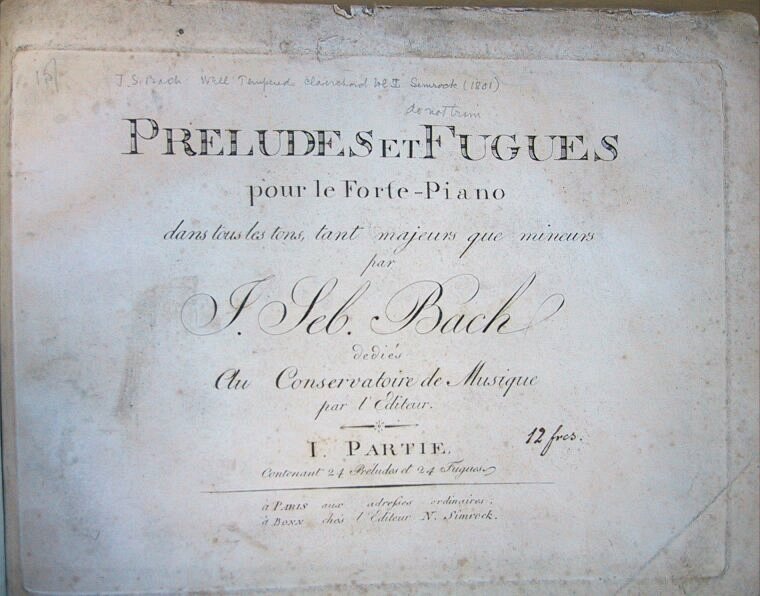
Type 1:
Designed with only alpha-numeric letters in 14 rows (including two
horizontal lines). Judging from the inclusion of Paris office above the
main office in Bonn, the dedication to the Paris conservatory, and the
fact that the design was copied by Broderip Wilkinson of London in
1802, it was made after the Paris branch was setup there by Henri in
1802. Some surviving copies have hand-written prices like this sample.
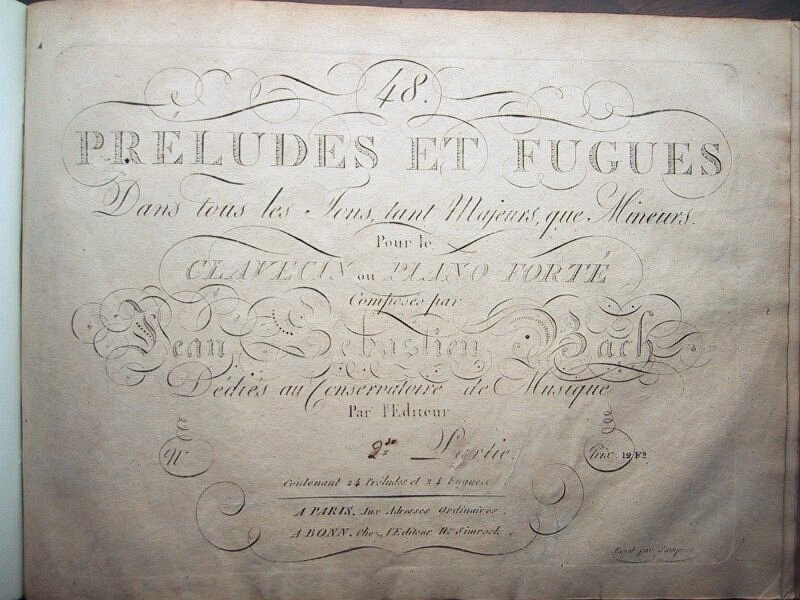
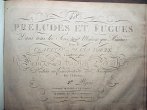
Type 2:
A more elaborate and decorative design, also in 14 rows of text. At
bottom right, we find the engraver's inscription:
'Ecrit par
Sampier'. It is likely to be intended as a replacement of Type 1,
as the original design looks much less attractive.
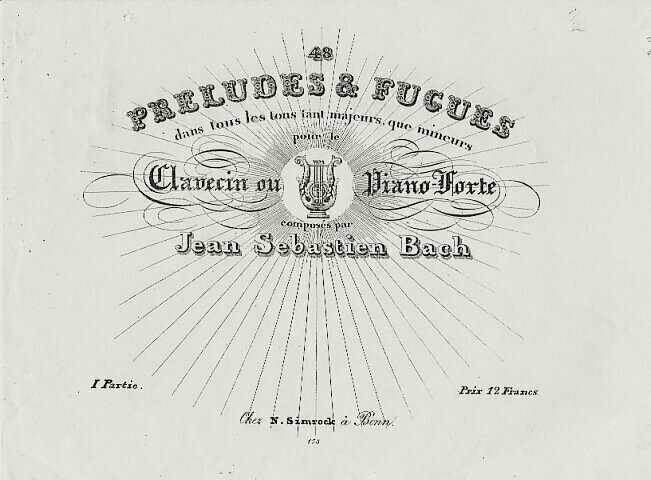
Type 3: Graphically conceived title-page placing a
lyre in the middle of the rising-sun type design. The text runs in 10
rows. Unlike other types, the first three rows of text are slightly
curved in bow shape, and the price and the plate number are part of the
original design, hinting that it was the initial design before the
Paris branch was setup in 1802.
Type 3a:An improved design of Type 3, using light
blue ink by double impression to enhance the design of radiance. (The
same process is seen in the title-page of II Lieferung of the score of
the B-minor Mass sold in 1845, hinting that this type dates from the
mid 1840s.)
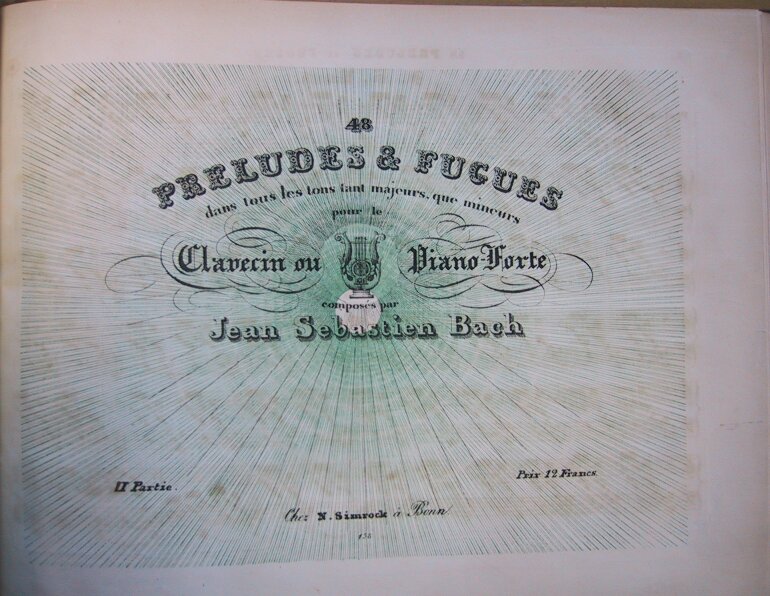
Type 3b: a revised design of Type 3, using light
green ink to enhance the design of radiance. Note also that the patch
of unpainted area is smaller than Type 3a.
| TP 1 |
TP
2 |
TP
3 |
TP
3a |
TP
3b |
 |
 |
 |
 |
 |
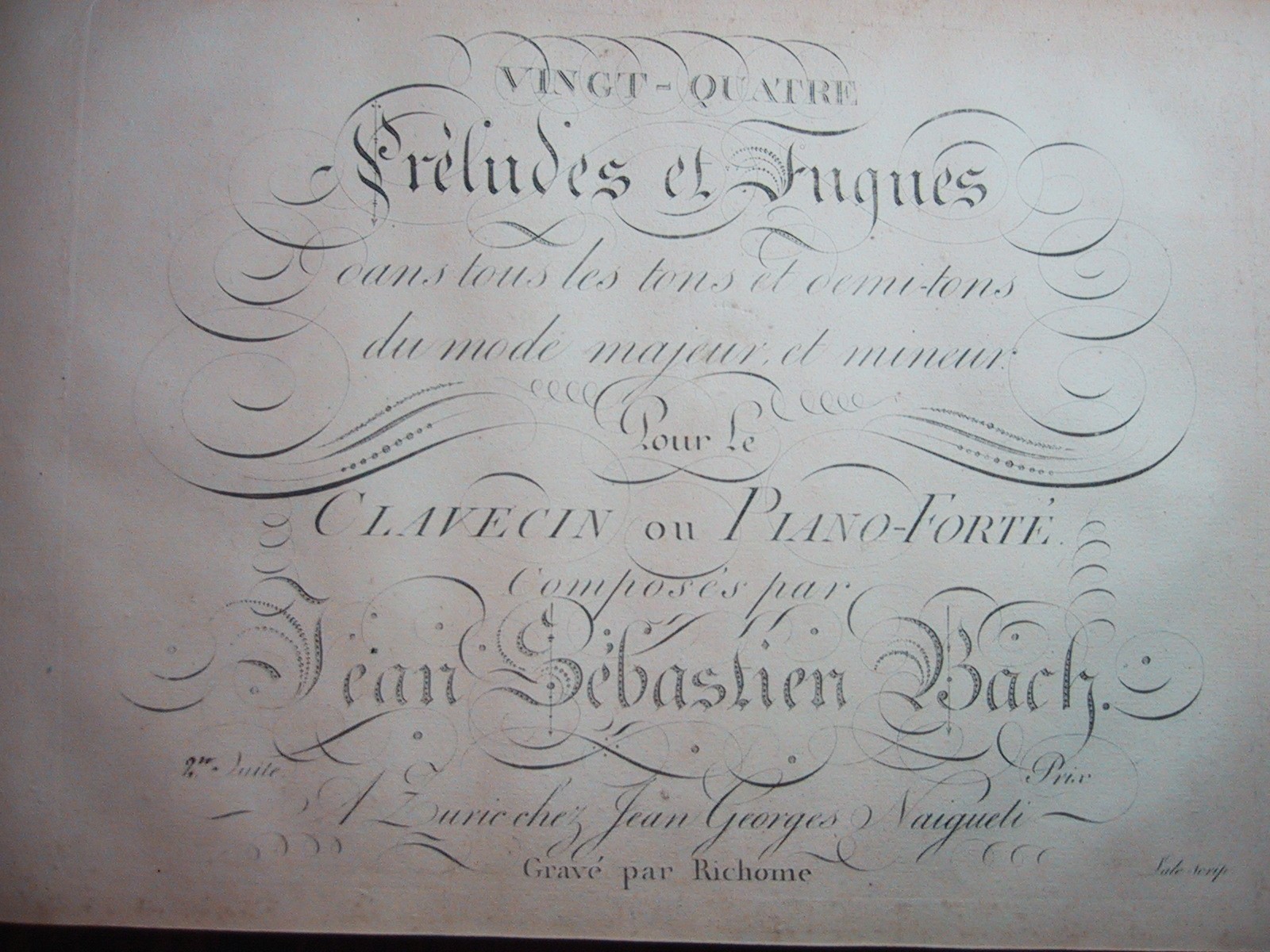
Together three different designs of the title-pages are known
to me. The last type has some variants by double impression using
colour ink.
TP 1: Designed with only alpha-numeric
letters in 14 rows (including two horizontal lines), which
reads: "Preludes et Fugues
| pour le Forte-Piano | dans
tous les tons, tant majeurs que mineurs | par | J. Seb. Bach | dediés |
Au Conservatoire de Musique | par l' Editeur. | ---*--- |
I. Partie. | Contenant
24 Préludes et 24 Fugues | -------------- | à Paris aux adresses ordinaires.
| à Bonn chés l' Editeur N. Simrock."
Judging from the inclusion of Paris office above the main office in
Bonn, the dedication to the Paris conservatory, and the fact that the
design was copied by Broderip Wilkinson of
London in 1802, it was made
after the Paris branch was setup there by Henri in
1802. Some
surviving copies have
hand-written prices like this sample.
TP 2: A more elaborate and decorative
design, also in 14 rows of text, which reads: "48. | PRÉLUDES ET FUGUES | Dans tous les tons, tant
Majeurs, que Mineurs. | Pour le | CLAVECIN ou PIANO FORTÉ | Composés par | Jean Sebastien Bach | Dédiés au Conservatoire de
Musique | par l' Editeur. | N° [to be filled]
[to be filled] Partie
Prix.
[to be filled] |
Contenant 24 Préludes et 24
Fugues. | -------------- | A PARIS. Aux Adresses
Ordinaires. | A BONN. Chés l'Editeur N. Simrock."
At bottom right, we find the engraver's inscription: "Ecrit par Sampier",
who,
according to one source, was active in
France around 1814,
but further work is needed to establish when this design was
introduced. Information in row 10 (work number, volume number and
price) is
supposed to be modified if required. At some stage, the plate was
revised to include both "I"
for the "Partie" (which was scratched out in this specimen and "2de"
is handwritten), and price "12
Fs".The
choice of typeface and
wording closely resemble to that of H.
G. Nägeli's edition may
not be coincidence: it is likely to be intended as a
replacement
of TP 1, as the original design looks much less attractive.
TP 3: Graphically conceived
title-page placing a lyre
in the middle of the rising-sun type design. The text runs in 10 rows,
which
reads: "48 |
PRELUDES & FUGUES | dans tous les tons tant majeurs, que
mineurs |
pour le | Clavecin ou [the image of lyre appears here] Piano-Forte |
composés par | Jean
Sebastien Bach | I
Partie.[left flush] Prix
12 Francs. [right flush] | Chez N. Simrock à Bonn. | 138."
Unlike other types, the
first three rows of text are slightly curved in bow shape, and the
price
and the plate number are part of the original design,
hinting that it was the initial design before the Paris branch was
setup in 1802.
TP 3a: An improved design of
TP 3, using
light blue ink by double impression to enhance the design of radiance.
(The same process is seen in the title-page of II Lieferung of the score of
the B-minor Mass sold in 1845, hinting that this type dates
from the mid 1840s.)
TP 3b: Another improved design of TP 3,
using
light green ink to enhance the design of radiance. Note also that the
patch of unpainted area is smaller than TP 3a.
The title-pages often appear to use a different type of paper
from the main body of
the edition; when this is the case, the verso side of the
title-page is blank (and the recto side of the first music
plates is also blank). Exceptions exist: in Sources 16 and 17 (and possibly Sources 1 and
8 as well, which needs to be checked),
Page 2 (the first page of the C major Prelude) is printed on the verso
side of the title-page. This is an important point of observation as it
concerns the circumstances of the production.
Music Engraving (page 2)
Type 1 is the initial design. There is space between
the brace and clefs.
Type 2
is the 2nd engraving (= WTC I engraving). There is no space between the
brace and clefs. Musical text received corrections mildly.
Type 3 is the 3rd engraving of this opening page
(page 2) only, accommodating the title of the work in the head margin.
ME 1 is the initial design. There is
space between the brace and clefs.
ME 2 is the 2nd engraving (= WTC I
engraving). There is no space between the brace and clefs. Musical text
received corrections mildly.
ME 3 is the 3rd engraving of this opening
page (page 2) only, accommodating the title of the work in the head
margin.
The form of trills
In addition to the shape of braces and clefs, ME 1 and ME 2 can also be distinguished by the shape of ornament. The
following images are taken from page 4.
 |
vertical "tr" used in ME
1. |
 |
slightly slant "lr" used in ME
2. |
Handling of
Plate-Number error on page 7
Plate numbers are printed uniformly at the centre of
the bottom margin as  .
.
-
In ME 1, the plate was
incorrectly numbered as "183" ( ). In addition, the plate number is missing from
pp. 46-47.
). In addition, the plate number is missing from
pp. 46-47.
-
In ME 2, this mistake was
noticed, and somehow left this place blank. (It is possible that the
wrong number was once engraved but subsequently removed.) Plate number
correctly appears in pp. 46-47.
-
In ME 3 (or more
accurately, it is the correction to ME 1),
the number was re-engraved as
 , which stands out as the
type-face is clearly different from the type used in the other pages.
, which stands out as the
type-face is clearly different from the type used in the other pages.
This sequence of corrections corresponds to the sequence of
musical text being corrected from ME 1 to ME 2.
Neefe vs
Schwencke
ME 2 has two variants: the second
generation of the engraving based on Neefe's exemplar
and the revision carried out by Schwencke.
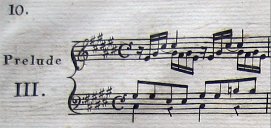
The easiest place to check if the Neefe's text (based on
M B/1974)
is replaced with that of Schwencke (using his own manuscript
P 204)
is the tenor line of the Prelude no.3 in C# major, page 10. Use the
following as a guide:
|
Neefe
|

Schwencke
|
Watermarks
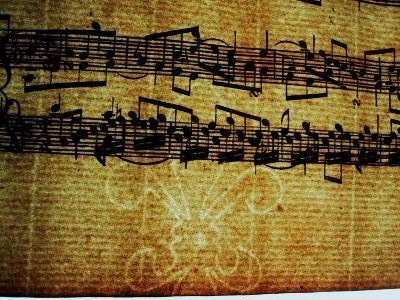
WM 1 [Laid Paper] -- (a) Strasburg shield; (b) "AIB"
(Hoboken Kat I (1967), p. 48, says 'VIB')
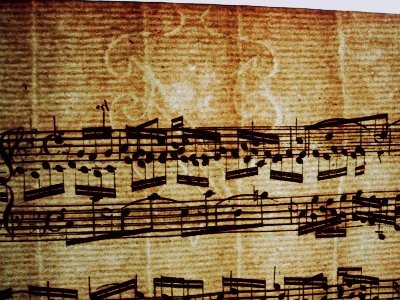 |
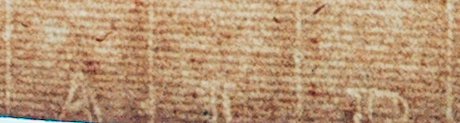

These watermarks are always found at the edge of the
paper where it was cut into halves. These pictures attempt to put the
watermarks back by placing the marching halves found on different
pages.
There is a report that this watermark also appears in
wove paper. (Source 11)
|
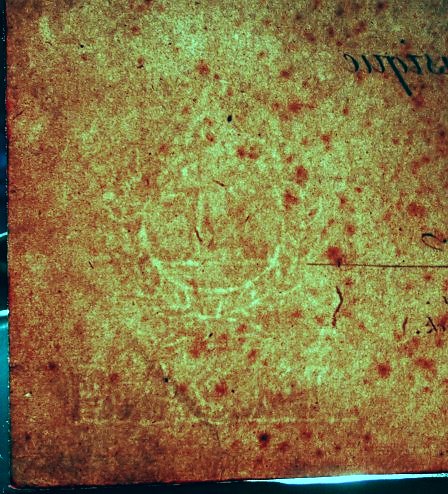
WM 2 [wove paper] title-page
|
This mark is found in the title-page of both of
my
copies. A wreath with something inside (letter "R"?), with letters
"BASEL" underneath.
Kenney 2443 does not
show any watermarks, but the paper is wove, and possibly the same paper
as that of my copies.
|
WM 3
[added in 5 July 2008]
Found in Source
15:
- first page of music: grape with "JKOOL"
- the rest: (a) large pedastal (or coat of arm) with
X-shape; (b) "D&Gbdaow" ('Dirk
Blauw'?)
|
|
WM 4
[added on 16 August 2016]
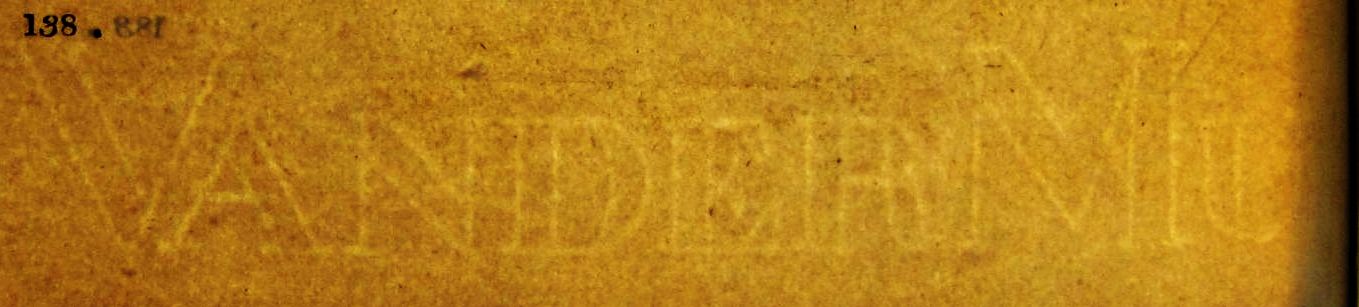 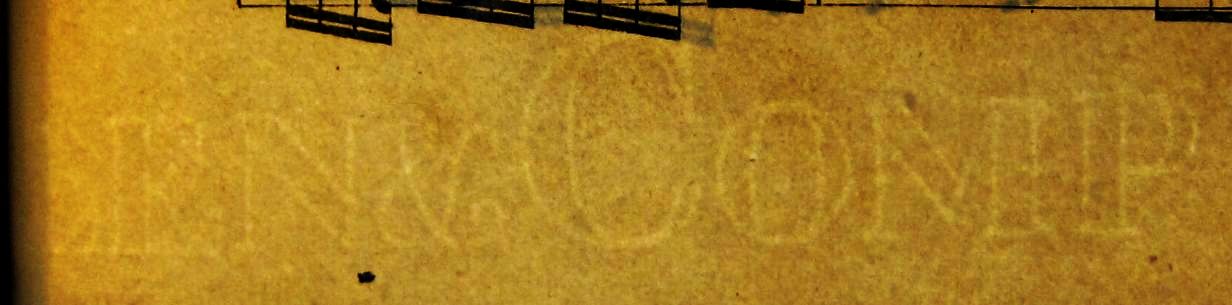
Found in Source 16:
- “VanderMeulen&Comp.” split in two leaves in
the middle
- Title-page is the first page of the first signature,
with Prelude in C major starting on its verso side.
- The paper is apparently in use between 1800 and 1810.
The van der Meulen paper mill was bought by the Brohl Wellepappe
company in 1919. (Information kindly provided by Paul Rabin).
|