Top
Skip to Content
LOGO(small) - Queen's University Belfast
  • Our linkedin
  • Our facebook
  • Our instagram
LOGO(large) - Queen's University Belfast
Thomas J. Moran Logo
  • Home
  • Training and Events
  • Funding
    • Doctoral Training Centres
    • U.S. Loans
  • Information
    • About the Thomas J. Moran Graduate School
    • Opening Hours & Where To Find Us
    • Facilities & Bookings
    • Frequently Asked Questions
    • History of the Graduate School
    • Our Team
    • Partnerships
    • Weekly Update
    • Graduate School Programme
    • Meet The Staff
    • Professional Code of Conduct
    • Wellbeing at The Graduate School
    • Childcare at Queen's
    • Postgraduate Welcome (Back) 2026
  • Development
    • Academic Essentials
    • Chartered Management Institute
    • Employability, Careers & Support
    • Enterprise & Innovation
    • Future-Ready Award
    • Master Your Leadership
    • Postgraduate-led Initiatives
    • Research Culture Celebration
    • The Graduate School Conference
    • Sir Peter Gregson Doctoral Programme
  • Study
    • Application Portal
    • Accommodation
    • Why study at Queen's?
    • Your Future Career
    • Find a PhD
    • Applied? What's Next
  • Blog
  • Home
  • Training and Events
  • Funding
    • Doctoral Training Centres
    • U.S. Loans
  • Information
    • About the Thomas J. Moran Graduate School
    • Opening Hours & Where To Find Us
    • Facilities & Bookings
    • Frequently Asked Questions
    • History of the Graduate School
    • Our Team
    • Partnerships
    • Weekly Update
    • Graduate School Programme
    • Meet The Staff
    • Professional Code of Conduct
    • Wellbeing at The Graduate School
    • Childcare at Queen's
    • Postgraduate Welcome (Back) 2026
  • Development
    • Academic Essentials
    • Chartered Management Institute
    • Employability, Careers & Support
    • Enterprise & Innovation
    • Future-Ready Award
    • Master Your Leadership
    • Postgraduate-led Initiatives
    • Research Culture Celebration
    • The Graduate School Conference
    • Sir Peter Gregson Doctoral Programme
  • Study
    • Application Portal
    • Accommodation
    • Why study at Queen's?
    • Your Future Career
    • Find a PhD
    • Applied? What's Next
  • Blog
  • Our linkedin
  • Our facebook
  • Our instagram
In This Section
  • AHSS
  • Business School
  • EPS
  • MHLS

  • Home
  • The Graduate School
  • Development
  • Sir Peter Gregson Doctoral Programme
  • Meet the Doctoral Scholars
  • MHLS

MHLS

  • Alexander Baine

    Evaluation of Handheld Optical Coherence Tomography To Assess the Presence of Retinal Disease in a Longitudinal Population-Based Study: NICOLA (Northern Ireland Cohort for the Longitudinal Study of Aging)

    IMany long-term studies rely on repeated eye scans, using Optical Coherence Tomography (OCT), to understand how vision changes as people get older. Traditionally, these scans are taken using large, stationary machines in specialist clinics. While effective, this approach can be inconvenient and sometimes impractical for older adults, people with limited mobility, or those who need frequent follow-up appointments. Handheld OCT scanners offer a more flexible alternative. They can be used in a wider range of settings and make it easier to collect scans from people who might otherwise struggle to attend regular clinic visits. However, because these devices are portable, the images they produce can vary in quality, making it difficult to compare scans reliably over time. The main focus of my work is to assess whether handheld scanning is truly feasible for long-term studies, and whether it can provide information that is consistent enough to be trusted. To do this, I create and use artificial intelligence models as a practical tool to analyse large numbers of scans in a consistent way. This allows subtle changes to be tracked over time, even when images are not perfectly captured. The aim is not to replace clinicians, but to understand whether handheld scanning, supported by intelligent analysis, can reduce barriers to participation, improve follow-up rates, and make long-term eye monitoring more inclusive. If successful, this approach could help reshape how eye health studies are carried out in ageing populations, making them more flexible, scalable, and patient-friendly.

    Visit Alexander's LinkedIn page here.

    Primary Supervisor - Professor Ruth Hogg

    Secondary Supervisors - Dr. Richard Gault & Dr. Abbas Haidar 

    Partner Organisation - Heidelberg Engineering


  • Kate Carlin

    Revolutionising Multiple Sclerosis and Alzheimer’s Disease Monitoring: The Role of Retinal Imaging in Understanding Disease Progression

    My PhD explores whether advanced retinal imaging can act as a non-invasive window into the brain to improve understanding and monitoring of neurodegenerative diseases, specifically Multiple Sclerosis and Alzheimer’s disease. Because the retina is part of the central nervous system, changes in its structure and microvasculature may reflect underlying brain pathology. Using multimodal imaging techniques across well-characterised clinical cohorts, I investigate whether retinal biomarkers can provide accessible, clinically meaningful tools for tracking disease progression and supporting earlier intervention.

    Visit Kate's LinkedIn here.

    Primary Supervisor - Professor Imre Lengyel

    Secondary Supervisor - Professor Denise Fitzgerald, Professor Tunde Peto & Dr Lajos Csincsik

    Partner Organisation - Optos PLC

  • Aidan Ruairidh Clancy

    Safeguarding drinking water from problem aquatic species: development and application of emerging technologies

    To trial the potential of several novel or understudied controls for the management of populations of cyanobacteria and zebra mussels, with a future potential implementation as part of reservoir management for harmful aquatic species.

    Visit Aidan's LinkedIn here.

    Primary Supervisor - Dr. Ross Cuthbert

    Secondary Supervisor - Professor Jaimie Dick & Andrew Marr

    Partner Organisation - NI Water

  • Lana Cook

    Understanding the lived experiences of people diagnosed with pancreatic cancer in Northern Ireland: A grounded theory approach

    This study aims to explore the experiences of people diagnosed with pancreatic cancer in Northern Ireland and develop a theory to explain the process of their journeys from (pre)diagnosis to survivorship or to end of life. This deeper understanding will help to inform priorities for future research, support interventions, policy, and services.

    Visit Lana's LinkedIn here.

    Visit Lana's Pure profile here.

    Primary Supervisor - Dr. Gary Mitchell

    Secondary Supervisors - Dr. Gillian Prue

    Partner Organisation -NIPANC

  • Emily Currie

    It's not always black and white: monitoring badger populations with thermal imaging

    I am using novel thermal imaging technologies to carry out density estimation of badgers, comparing new and traditional methods of non-invasively monitoring such nocturnal populations.

    Contact Emily here.

    Visit Emily's LinkedIn profile here.

    Primary Supervisor - Professor Jaimie Dick

    Secondary Supervisor - Dr. Neil Reid

    Partner Organisation - Ulster Wildlife & AgriSearch

  • Clara Dealey

    Innovative Multi-Omics to Improve the Detection, Diagnosis and Prognosis of Medical Conditions Arising From Cardiometabolic Syndrome in an Aging Population.

    This project aims to identify multiomic signatures associated with cardiometabolic syndrome in an aging population. Age-related diseases, such as metabolic syndrome, increase in prevalence as populations get older and costs the NHS over £6 billion annually. There is an urgent need to identify biomarkers that predict health and disease across the lifecourse, with a focus on enabling identification of those most at risk of disease development. This project merges demographic, clinical and biological datasets with MultiOmic Health’s expertise in applying novel AI techniques, to address a significant unmet need and public health priority.

    Visit Clara's LinkedIn page here.

    Primary Supervisor - Dr. Laura Smyth

    Secondary Supervisors - Professor AJ McKnight. Dr. Gareth McKay & Dr. Zeinab Abdelrahman 

    Partner Organisation -MultiOmic Health


  • Tiree McColgan

    The Role of Mesenchymal Stem Cell-Derived Extracellular Vesicles (EVS) in Systemic Lupus Erythematosus

    My PhD is exploring how stem cells and their secreted nanoparticles, extracellular vesicles, can alter the immune response in the autoimmune disease, systemic lupus erythematosus.

    Visit Tiree's LinkedIn page here.

    Visit Tiree's Pure profile here.

    Primary Supervisor - Dr. Dessi Malinova

    Secondary Supervisors - Dr. Selinda Orr

    Partner Organisation - GSK

  • Richard Murray

    Malignant Potential of Barrett’s Oesophagus: Morphomolecular Pathology Insights Using Multiomic Approaches.

    This project will focus on identifying biomarkers to stratify Barrett’s oesophagus patient’s risk of developing oesophageal adenocarcinoma. It will utilise numerous techniques to determine morphological and molecular features which are associated with disease progression. These will include artificial intelligence and genomic sequencing analysis techniques. Identification of novel morphometric or transcriptomic signatures will provide improved surveillance strategies for Barret’s patients including targeted interventions for high-risk individuals and a reduction of unnecessary procedures for those considered low risk.

    Visit Richard's LinkedIn page here.

    Contact Richard via email here.

    Primary Supervisor - Dr. Stephanie Craig

    Secondary Supervisors - Professor Richard Turkington & Professor Helen Coleman

    Partner Organisation - Breakthrough Cancer Research

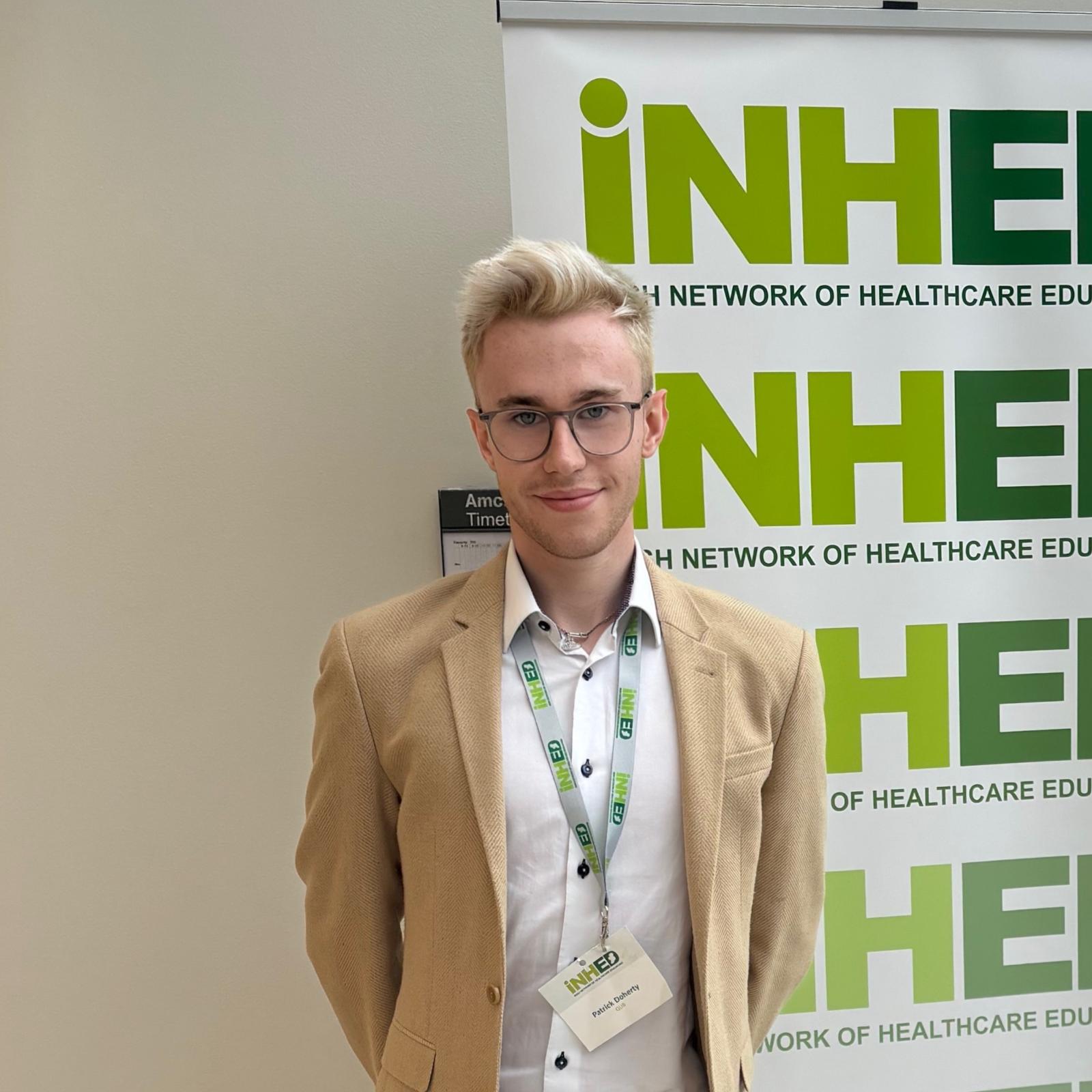
  • Patrick Doherty

    Interventions supporting community healthcare staff in the provision of oral healthcare to patients in supported living

    This research seeks to understand how training can support the delivery of oral healthcare in supported living settings. It will involve stakeholders across the sector to establish strategies for successful delivery and implementation of training interventions.

    Visit Patrick's ResearchGate Profile here.

    Contact Patrick via email here.

    Primary Supervisor - Dr. Patrick Stark

    Secondary Supervisors - Professor Gerry McKenna

    Partner Organisation - Department of Health - Chief Dental Officer

  • Olivia Jamison

    Testing of ‘Brain 101’ for supporting students with concussion in the classroom

    The Concussion Understanding Training in Education (CUTE) Project is a mixed-methods project. Stage 1: interviews to explore the lived experiences of children and young people who have sustained a concussion. Stage 2: a pilot randomised controlled trial testing Brain 101, a concussion education resource developed in USA, for use in schools in Northern Ireland.

    Visit Olivia's Pure Profile here.

    Contact Olivia via email here.

    Primary Supervisor - Professor Mark Linden

    Secondary Supervisors - Dr. Neil Heron

    Partner Organisation -Brain Injury Matters

  • Orlagh Gormley

    Development of a Primary Analytical Water Standard through Water Purification and Laboratory Testing

    My PhD project investigates the potential human health effects of exposure to micro- and nanoplastics of varying polymer types and particle sizes, alongside two selected pesticides. Human cell culture models are used to examine cellular and molecular responses following controlled exposure to these contaminants. Analytical chemistry and RNA sequencing are used to identify metabolic and gene expression changes, with the aim of improving understanding of toxicological mechanisms relevant to human health.

    Contact Orlagh via email here.

    Primary Supervisor - Professor Gary Hardiman

    Secondary Supervisors - Dr. Cuong Cao

    Partner Organisation - School of Biological Sciences, Queen’s University Belfast


  • Ben Hiley

    The wonder of algae: Effective solutions of algae extracts to reduce the environmental impact of ruminants and improve the animal performance and the quality of animal products.

    The project aims to find a natural, ideally seaweed-based feed additive which reduces the enteric methane emissions of ruminants (cattle and sheep). Primary aims include reducing methane emissions by ~20% whilst maintaining the productivity and wellbeing of the animal.

    Contact Ben via email here.

    Visit Ben's LinkedIn here.

    Primary Supervisor - Dr. Katerina Theodoridou

    Secondary Supervisor -Sharon Huws

    Partner Organisation - Olmix

  • Caitlin McShane

    Adolescents’ Psychosocial Experiences when affected by Parental Pancreatic Cancer

    This PhD study aims to explore the psychosocial experiences of adolescents who have had a parent diagnosed with pancreatic cancer. Following a systematic review of the existing research, we intend to interview young people aged 10-24 years in the UK who experienced their parent's pancreatic cancer diagnosis during their adolescent years. We will also interview their parents, who can provide an additional perspective of this phenomenon. Beyond documenting and analysing their experiences, this PhD will involve the use of a participatory approach, the World Café, which will bring young people, families, healthcare professionals, and support organisations together to share experiences and identify potential solutions for improving psychosocial support. This research will provide in-depth insights into what it really means to be a young person when your parent has pancreatic cancer. By understanding these experiences, we aim to better inform solutions that could ease their journey through a challenging time.

    Visit Caitlin's Pure profile here.

    Contact Caitlin via email here.

    Primary Supervisor - Dr. Gary Mitchell

    Secondary Supervisor - Dr. Lisa Graham-Wisener

    Partner Organisation - NIPANC (Northern Ireland Pancreatic Cancer)

  • Christopher Mellon

    Integrating biological, chemical and physical control of invasive terrestrial plants: From ecological theory to practical solutions

    My project's aim is to control invasive terrestrial plant species using novel techniques in an attempt to find alternatives to glyphosate herbicide.

    Visit Christopher's LinkedIn here.

    Contact Christopher via email here.

    Primary Supervisor - Dr. Ross Cuthbert

    Partner Organisation -Practical Waste Solutions

  • Caitlin Taylor

    Development and testing of a proof-of-concept Cathepsin S ProteaseTag Activity-Based Immunoassay

    Development and testing of a proof-of-concept Cathepsin S ProteaseTag Activity-Based Immunoassay

    Primary Supervisor - Dr Richard Williams

    Partner Organisation - ProAxsis

  • Pedro Sebastian Londono Ruiz

    Novel Nanocrystals-in-Nanofibres eye patch for the ophthalmic delivery of corticosteroids in inflammatory eye disease.

    Ocular inflammation, including uveitis, postoperative inflammation, and allergic conjunctivitis, is commonly treated using topical corticosteroid eye drops. However, conventional eye drops suffer from extremely low ocular bioavailability (typically less than 5%) due to rapid tear turnover, limited corneal permeability, and nasolacrimal drainage. These limitations necessitate frequent dosing, reduce therapeutic efficacy, and may increase the risk of systemic absorption and steroid-related side effects. To overcome these challenges, this project proposes the development of a novel nanotechnology-based ocular patch designed to enhance drug bioavailability, prolong retention time, and provide controlled release of anti-inflammatory corticosteroids.

    Visit Pedro's LinkedIn page here.

    Primary Supervisor - Dr. Alejandro Paredes

    Partner Organisation - Euroapi


  •    


Meet the Doctoral Scholars
  • Meet the Doctoral Scholars
  • AHSS
  • Business School
  • EPS
  • MHLS
QUB Logo
Contact Us

The Thomas J. Moran Graduate School,
Queen's University Belfast,
University Road,
Belfast,
BT7 1NN

GET DIRECTIONS

+44 (0)28 9097 2585
graduateschool@qub.ac.uk

Quick Links

  • Home
  • Weekly Update
  • Contacts and opening hours
  • Frequently asked questions
  • Funding

Social Media

© Queen's University Belfast 2024
  • Privacy and cookies
  • Website accessibility
  • Freedom of information
  • Modern slavery statement
  • Equality, Diversity and Inclusion
  • University Policies and Procedures
Information
  • Privacy and cookies
  • Website accessibility
  • Freedom of information
  • Modern slavery statement
  • Equality, Diversity and Inclusion
  • University Policies and Procedures

© Queen's University Belfast 2024

Manage cookies