

DEIB Statement: February 2026
A welcome from our new Director of Diversity, Equity, Inclusion, and Belonging; Dr Janine Swail.
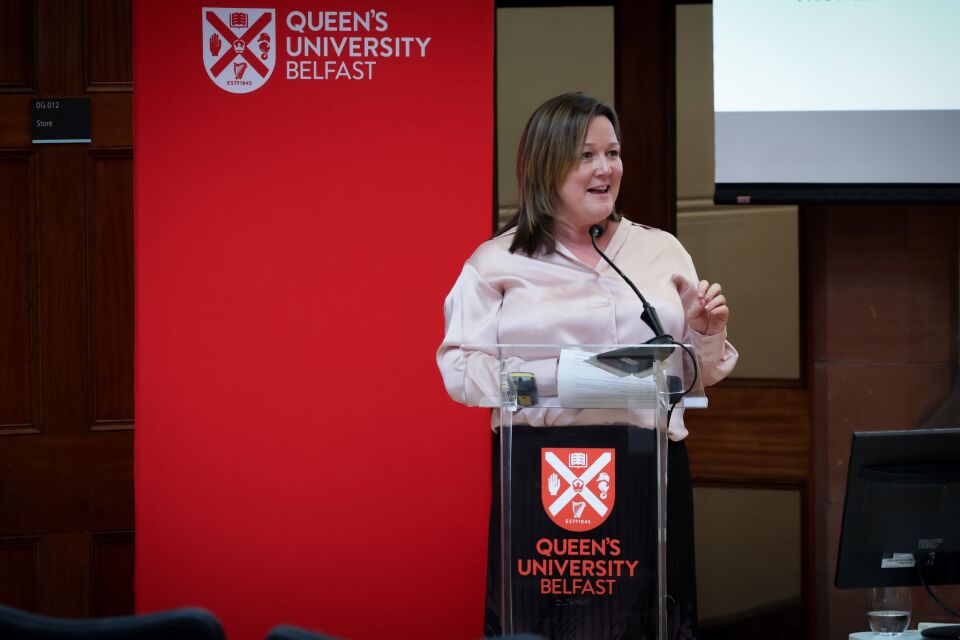
'Who cares!'
We’ve all heard it, maybe even said it ourselves. It’s that quick, dismissive phrase we use when something feels distant from our priorities. Yet, what happens if we shift the tone, and ask instead: 'Who cares?'
That small change turns a shrug into a question. Who cares about how people experience this place? Who notices when someone feels they don’t belong? Who takes responsibility for making sure every voice is heard?
For me, that question lies at the heart of Diversity, Equity, Inclusion and Belonging (DEIB). These four words can sometimes sound like policy language, but really, they’re about something much simpler: care. How we care for one another as colleagues, as learners, and as people.
When we talk about diversity, we’re recognising that each of us brings something unique in our stories, our identities, our perspectives. Equity ensures that everyone has fair access to opportunities, not just in principle but in practice. Inclusion is about creating space for all those voices to be heard. And belonging, perhaps the most personal of all, is about that deep sense that ‘this is a place for me.’
Care, in this context, is not soft. It’s strategic, intentional, and essential. The evidence is clear: teams that value inclusion and diversity perform better (Roberson, 2025; Breuillot, 2021). They are more innovative, resilient, and better at solving complex problems. Beyond the data, there’s a moral truth too that people do their best work when they feel seen, respected, and valued.
This matters just as much for staff as it does for students. Our students come to us with diverse identities, abilities, and life experiences. The way we respond to that diversity shapes not just their learning, but their sense of who they can become. They also look to us to model the kind of inclusive leadership they’ll need in the world beyond. They notice when our actions align with our values. Every decision we make from how we design our curriculum to how we run our lectures, sends a message about what, and who, we care about.
For staff – academic and professional, the same principle applies. Inclusion is not only about representation; it’s about culture. It’s about the small daily signals: who gets listened to in meetings; whose ideas are credited; who feels empowered to speak up. True belonging isn’t achieved through strategy documents alone; it’s built in moments of care, empathy, and accountability.
And that’s the thing about DEIB: it isn’t the responsibility of one committee or one Department. It belongs to all of us. It’s in the way we listen to each other, how we challenge bias (our own and others’), and how we show up, especially when it would be easier not to.
So, Who cares?
Well, we all should. Because our culture is shaped not by grand gestures, but by everyday actions. When care becomes collective, belonging becomes real.
And maybe that’s the transformation we’re working towards — from 'Who cares!' said with indifference, to 'Who cares?' asked with curiosity, compassion, and courage and ultimately calls us to action.
References
Breuillot, A. Exploring the Role of Diversity Management During Early Internationalizing Firms’ Internationalization Process. Manag Int Rev 61, 125–156 (2021). https://doi.org/10.1007/s11575-021-00440-3
Roberson, Q. 2025, "How Integrating DEI Into Strategy Lifts Performance", MIT Sloan Management Review, vol. 66, no. 2, pp. 62-65.
-600x399.jpg)