

Using a co-design approach to develop a health and wellbeing programme for youth in the Market
In November 2025, Dr Stephanie Maguire brought together QCAP researchers, the Market Development Association, St. Malachy's Youth Club and 25+ young people (16-20) to collaboratively develop a youth-led health and wellbeing programme.
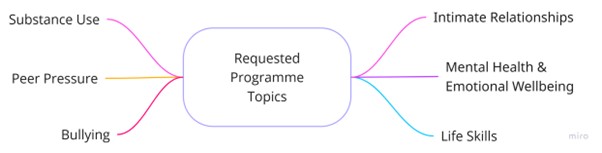
The co-design approach aimed to ensure programme development was driven by youth and community member input, resulting in a programme that is inclusive and contextually relevant to the needs, values and priorities of the end-users. The first co-design workshop focused on identifying young people’s key health and wellbeing priorities. Through brainstorming activities and group discussions, the young people highlighted six main areas of concern (Fig. 1).
Fig.1 Programme topics highlighting the key health and wellbeing priorities identified by young people for inclusion in the programme
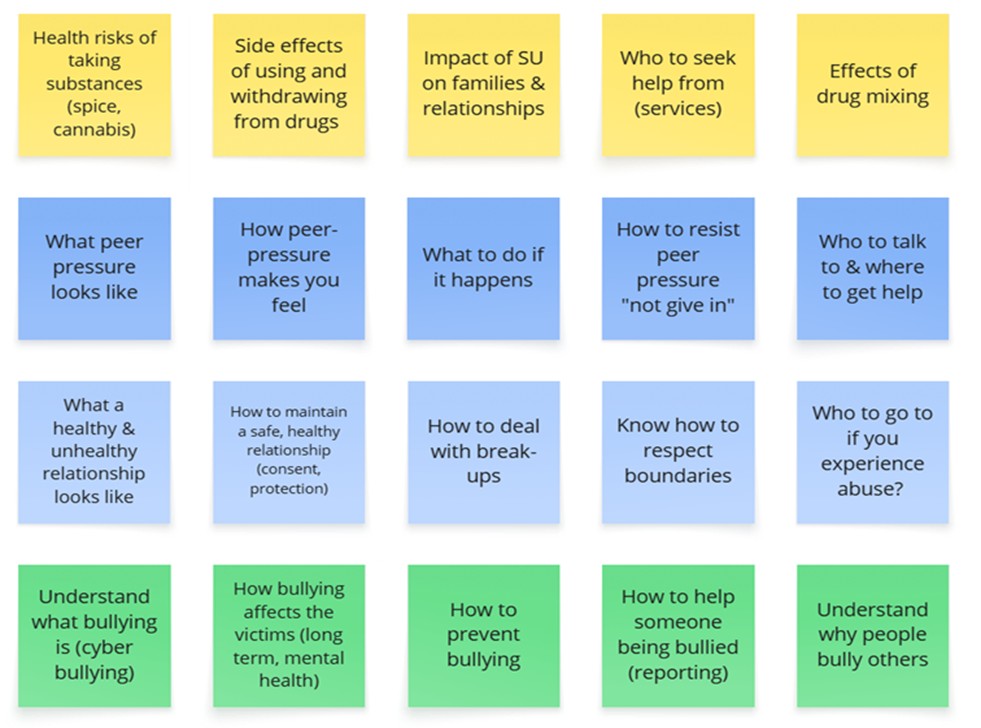
In the second co-design workshop, the core programme content was developed (Fig.2), and programme implementation was discussed.
Fig.2 A sample of co-created content for the health and wellbeing programme
Young people outlined clear preferences for how the programme should be structured and delivered, emphasising a regular, consistent schedule of 1.5-hour weekly sessions over six weeks, preferably in the evenings at the Market Community Centre. The young people valued varied and engaging content, including a different topic each week, a mix of theoretical and practical activities, short stories, videos, lived experiences, and physical activity, as well as input from local community members. Interactive, activity-based learning was strongly favoured, with group discussions, team-building exercises, inside and outside activities, and immersive experiences such as a “stay-awake” event suggested to enhance engagement and peer connections. The young people also stressed the importance of a welcoming, inclusive, mixed-gender environment, with diverse facilitators, and identified social media as the most effective way to promote the programme. Overall, their input reflects a commitment to creating a fun, engaging, and community-centred programme tailored to their unique health and wellbeing needs.