
Scholarships and Funding
175 fully funded PhD studentships for 2026–27
Includes full tuition fees
Tax-free Living Allowance
(Current stipend £20,780 pa)
Research training support and development opportunities
WHY CHOOSE A FUNDED PHD AT QUEEN'S?
- World-class research environment – Queen’s is a Russell Group university with international research partnerships
- Professional development– all DfE funded PhD students can access specialist training through the Thomas J Moran Graduate School, including Chartered Management Institute qualifications
- Collaborate with industry and government partners through research that makes a difference
- Vibrant postgraduate community with dedicated study space, events, and wellbeing support
- 175 fully funded PhD studentships for 2026-27 now open at Queen's
HOW TO APPLY
- Explore available PhD projects in HAPP and select the one that matches your interests
- Contact the listed supervisor for details or guidance
- Apply online via the Queen’s Postgraduate Admissions Portal
- Recruitment open now for a September 2026 start
DEPARTMENT FOR THE ECONOMY (DFE) STUDENTSHIPS
28 DfE studentships are being offered by The Faculty of Arts, Humanities and Social Sciences commencing September 2026.
Deadline for DfE studentships is Tuesday 13 January 2026
A range of DfE studentships are being offered in the School of History, Anthropology, Philosophy and Politics. Explore available PhD projects in HAPP and select the one that matches your interests.
These studentships will cover maintenance and fees for a maximum of three years. Full details on PhD application process
For further information contact Angela Anderson, Research and Postgraduate Administrator, HAPP. Email: happresearch@qub.ac.uk
Belfast’s ‘bad girls’ and gender-based discrimination, c.1870-1920
Professor Elaine Farrell
This history PhD focuses on the lives of Irish girls and women who entered the Salvation Army Belfast Rescue Home in the nineteenth and early twentieth centuries, based on rich records in the Salvation Army International Heritage Centre.
Observing the Heavens from the ‘Periphery’: Astronomy in Ireland 1640-1830
Dr Leonie Hannan
To explore the history of Irish astronomical activity, 1640-1830, and reveal a community of star-gazers on the island before the so-called ‘Golden Age of Irish astronomy’. Working with the historical observatory at Armagh, this research will offer new insight into Ireland’s vibrant intellectual culture in an era of ‘scientific revolution’ and ‘Enlightenment’.
Our Place: Our Stories: History and Placemaking among Belfast's Underserved Communities
Professor Olwen Purdue
This project will employ innovative approaches (such as Participatory Action Research) to explore the potential of community engaged history and placemaking to disrupt the power dynamics that normally exist in the development of historical narratives, support communities in engaging with complex pasts, and amplify marginalised and silenced voices and diverse perspectives in the historical narratives of this city by focusing on the histories of everyday life.
Creative Practices and Processes for Building Safer Communities.
Professor Fiona Magowan
This project will look at the power of art, music and theatre in building safety, peace and inclusivity through socially engaged performative practice. It will examine the dynamics of cultural spaces and relations that are generated by the arts and consider how these can foster empathy and nonviolence amongst ethnic minorities as well as divided communities.
This project ethnographically examines migrant and refugee access to housing in Northern Ireland as a key issue in migrant integration and wellbeing. By taking a material culture approach, it interrogates the notion of ‘access’, and understands integration and wellbeing as grounded in the every-day experiences of housing infrastructures.
Childcare provision in late twentieth-century Northern Ireland (1960s-1990s)
Dr Niamh Cullen
To explore the history of childcare provision in the late twentieth century, through the lens of gender and social history, as well as emerging international understandings of infant and child development after 1945.
Is Misogynistic Speech Hate Speech? Misogyny, Power, and the Boundaries of Expression
Dr Suzanne Whitten
This project involves a political philosophical analysis of misogynistic and/or sexist speech, exploring: i) The harm of such speech; and ii) The justifiability of various interventions in response to such speech, particularly those that must be balanced against the right to freedom of speech.
Art and enhancing community engagement with and support for net zero and climate action
Professor John Barry
Developing more effective modes of engaging communities and increasing their understanding and support for the Net Zero energy transition.
Online Misogyny and radicalisation: Ending violence against women and girls
Dr Mike Bourne
It is increasingly recognised that online misogyny contributes to and facilitates violence and women and girls (VAWG). With rising numbers and prominence of violence against women and girls in Northern Ireland and beyond this project seeks to generate deeper understanding of how extreme misogyny is cultivated online and how it can be tackled.
The Politics of Belonging in Housing for Asylum Seekers in Belfast & N Ireland
Dr Heather Johnson
This project explores the role of housing as it impacts the wider politics of belonging for asylum seekers and refugees in Northern Ireland. With links to questions of safety, access to support services, and anti-immigration and racist crime, the research explores how housing and the imagination of ‘home’, impact and shape these politics – and how change might be possible.
Global drivers of fossil fuel demand in the Net Zero transition
Dr Stefan Andreasson
Local energy transitions are shaped by global drivers of energy supply and demand. This project enables policymakers and industry to better understand the challenges and opportunities shaping pathways to Net Zero emissions and will inform these actors about the benefits and costs inherent in regional and national Net Zero frameworks as determined in some significant part by shifting dynamics in the global energy system.
Public consultation plays an established role in policy-making, providing citizens with the opportunity to express their views in between elections and, potentially, to influence decisions taken by elected politicians. The process of public consultation is designed to strengthen the democratic legitimacy of policy-making by promoting, for example, citizen participation, deliberation, and responsiveness. In Northern Ireland, the Executive’s 2024-27 Programme for Government (PfG) pledges “to maximise input and consensus” on the development of policies relating to its nine priorities (NI Executive, 2024: 11). The role of public consultation processes in achieving these aims merits empirical investigation.
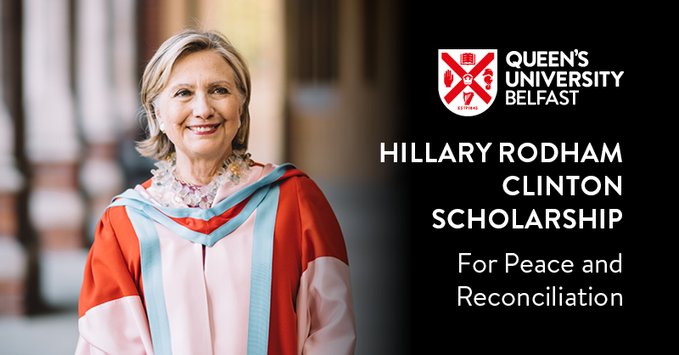
The University will provide a full tuition-fee waiver to an exceptional female student from the USA who wishes to pursue study in a field related to politics, conflict transformation or human rights.
This award, created in the former Senator’s name, honours her long-standing commitment to peace, stability and education. The deadline is Friday 30 January 2026
Find out about the Hillary Rodham Clinton Scholarship
Arts and Humanities 2026-2030
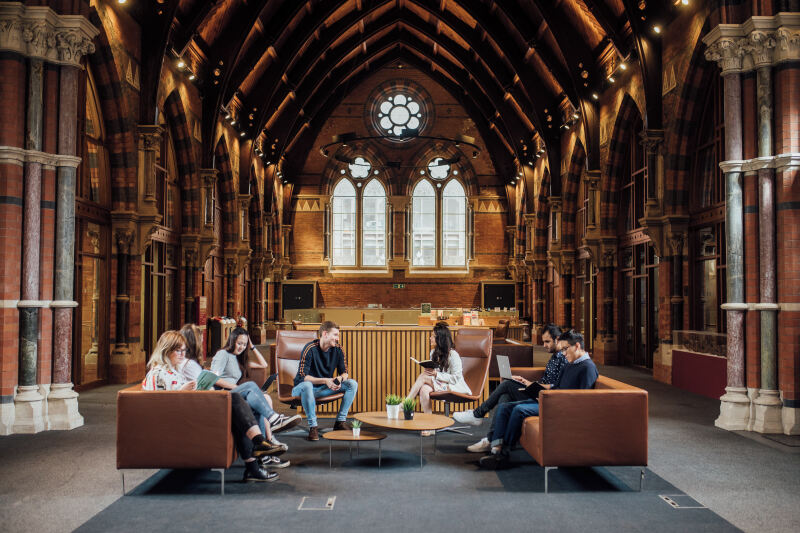
Queen’s is delighted to be among the 50 higher education institutions selected by the Arts and Humanities Research Council (AHRC) to receive funding through the new AHRC Doctoral Landscape Awards. The deadline is Tuesday 13 January 2026.
Full details of the AHRC Doctoral Landscape Awards
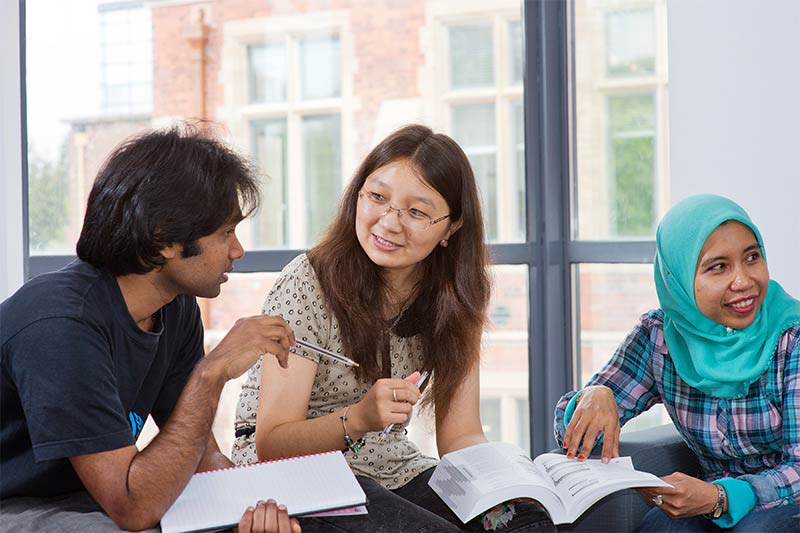
This DTP will focus on the provision of exceptional Postgraduate social sciences training, offering over 50 fully-funded studentships per year to outstanding researchers. NINE is an exciting collaboration with 7 other partner institutions - University of Newcastle, Durham University, Ulster University, University of Northumbria, University of Sunderland and Teesside University.
You apply to QUB using the Queen's Portal and indicate that you wish to be considered for a funded scholarship from NINE DTP. The deadline is Friday 9 January 2026.
Full details on NINE Doctoral Training Programme
Fulbright Scholarship in Conflict, Security and Contested Pasts
The Fulbright-Queen’s University Belfast Award in 'Conflict, Security and Contested Pasts' covers a taught master’s degree in the school of History, Anthropology, Philosophy and Politics at the university.
Find out more about this ScholarshipMore information including other Funding and Scholarships opportunities
-
Learn more about research degrees at Queen's
Your research journey starts at Queen's. Find out more about research degrees.
- Undergraduate Funding and Scholarships Finder
The Funding and Scholarship Finder helps prospective and current students find funding to help cover costs towards a whole range of study related expenses. Find out more about Funding and Scholarships.
- International Scholarships
Up to £7,500 Reduction on Tuition Fees for International Students. Find out more about International Scholarships.