
Development, Cognition & Neuroscience
The Development, Cognition, and Neuroscience theme brings together two complementary research subgroups with interests in learning, decision making, movement, and adaptation across the lifespan. Across the theme, researchers investigate core cognitive and neural processes—such as executive functions, perceptual decision making, motor control, and neural plasticity—using behavioural experiments, longitudinal designs, motion capture, EEG, fNIRS, computational modelling, and brain–computer interfaces. A shared translational focus links fundamental science to real world challenges in education, clinical practice, mobility, and wellbeing.
The Development & Cognition sub-group specialises in the emergence of cognitive, linguistic, mathematical, and socioemotional abilities from early childhood through adulthood. Strengths include research on temporal cognition, reasoning and decision making, bilingualism, maths and literacy development, executive functions, mind wandering, and the developmental impact of adversity. The work of the sub-group aims to inform educational practice, support school readiness, guide interventions for underachievement, and contribute to youth mental health tools and policy relevant insights into decision making.
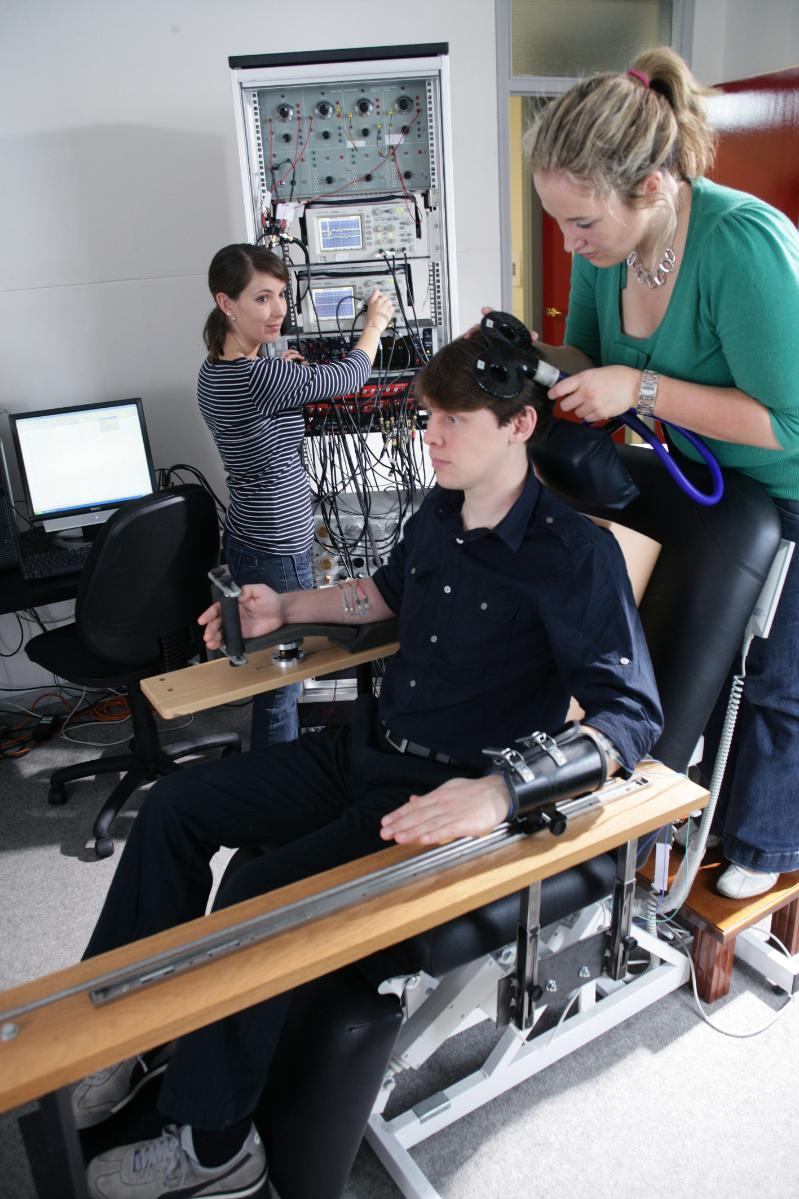
The Brain & Behaviour sub-group focuses on the neural and biomechanical bases of movement, coordination, and skilled performance. Research spans gait, balance, posture, auditorymotor and eye–hand coordination, and motor learning in both typical and clinical populations. Strong translational strands include fall risk reduction, neurorehabilitation after stroke, mobility enhancement in Parkinson’s and Multiple Sclerosis, and the development of neurofeedback, brain-computer interfaces, and human–robot interaction technologies.
Work in this theme relates to several United Nations Sustainable Development Goals, including Goal 3 (Good Health and Well-Being) and Goal 4 (Quality Education).
Beta bursting activity
Showing brain activity occurring in ‘bursts’ within the 15-30Hz ‘Beta’ frequency range during recordings where participants are engaging their brain’s ‘stopping’ networks – ie. It is the brain’s ‘breaking system’ upon hearing a cue to STOP moving.

RESEARCH AREAS









The hub facilitates research, evidence, data and expertise to take advantage of opportunities and find place-based solutions to challenges that matter to the local community of people living with Parkinson's in NI. The hub will also provide information to shape regional economic, community and health-care policy as it relates to Parkinson's and other related neurological conditions.

Psychologists at QUB are leading attempts to understand relationships between time, decision making, and emotions such as regret and relief experienced when we compare outcomes of actual choices to outcomes of choices that we might have made.
Read more Read less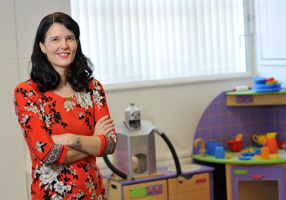
An interdisciplinary three-year project funded by the AHRC, led by Christoph Hoerl (Philosophy, Warwick) and Teresa McCormack (Psychology, Queen's University Belfast) to provide an empirically informed critical examination of the relationship between our everyday understanding of time, and time as typically understood within modern science.
Read more Read less
Led by Dr Teresa Rushe and Dr Tara O'Neill, the research study looks into the psychological outcomes of growing up in adversity, as well as the mediators and moderators of outcome in high risk populations in Northern Ireland.
- As well as working on a dyscalculia screening tool, the theme collaborates with researchers in Canada on a British Academy project that provides guidance for teachers in immersion education and other dual-language settings.
- The theme is involved in an evaluation of audio description for blind and partially sighted users in live tours, currently being applied to Titanic Belfast.
- A collaboration with animators on the scientific development of an education focused pre-schooler TV show on the development of listening skills is supported by Future Screens NI.
- The theme also collaborates with Advice NI testing the efficacy of a future thinking intervention in promoting adherence to debt advice.
- The theme's work on the Northern Ireland Childhood Adversity study (NICAS) researching the psychological outcomes of growing up in adversity with the aim of getting the A.C.E. agenda on the programme for Government.