Top
Skip to Content
LOGO(small) - Queen's University Belfast
  • Our facebook
  • Our youtube
  • Our instagram
LOGO(large) - Queen's University Belfast

School of

Psychology

  • Home
  • Study
    • Undergraduate Study
    • Postgraduate Taught Courses
    • Postgraduate Research Courses
    • Psychology Student Profiles
    • Student Experience
    • Student Blog
  • Research
    • Our Research Groups
    • Research Environment & Culture
    • Research Facilities
    • Spinout Companies
  • International
  • PsychologyAtWork
    • Placements for Psychology students
    • Mentoring
  • News
    • News Archive
  • Events
  • People
    • Academic Staff
    • Professional Services Staff
    • #WhoWeAre
  • About Us
    • Contact us
    • Alumni
    • Jobs With Us
    • Diversity and Inclusion
    • Green Initiative
    • Take a Virtual Tour of Queen's
  • Home
  • Study
    • Undergraduate Study
    • Postgraduate Taught Courses
    • Postgraduate Research Courses
    • Psychology Student Profiles
    • Student Experience
    • Student Blog
  • Research
    • Our Research Groups
    • Research Environment & Culture
    • Research Facilities
    • Spinout Companies
  • International
  • PsychologyAtWork
    • Placements for Psychology students
    • Mentoring
  • News
    • News Archive
  • Events
  • People
    • Academic Staff
    • Professional Services Staff
    • #WhoWeAre
  • About Us
    • Contact us
    • Alumni
    • Jobs With Us
    • Diversity and Inclusion
    • Green Initiative
    • Take a Virtual Tour of Queen's
  • Our facebook
  • Our youtube
  • Our instagram
In This Section
  • Social Interactions
  • CIIR

  • Home
  • School of Psychology
  • Research
  • Our Research Groups
  • Social Psychology and Social Issues

Social Psychology and Social Issues

Group of academics in Social psychology research group

The Social Psychology and Social Issues research theme focuses on understanding the complex interplay between individual development, social interaction, and the broader societal structures that shape human experience. We are centrally concerned with the United Nations Sustainable Development Goals, specifically Goal 10 (Reduced Inequalities), Goal 16 (Peace, Justice, and Strong Institutions), and Goal 4 (Quality Education), as we strive to promote social cohesion and equity across the lifespan. 

Members of the group have interests in intergroup relations and peacebuilding, child and adolescent development in social contexts, social justice and prejudice reduction, and the psychological impact of socio-economic disparity. We also explore the future of human connection, investigating how digital tools, non-verbal communication, and AI ethics influence social inclusion and wellbeing. 

The group embraces a range of methodological approaches, including longitudinal developmental studies, experimental social psychology, psychometric validation, and innovative qualitative and arts-based methods. We are committed to working in partnership with external stakeholders—including schools, healthcare providers, NGOs, and policymakers—as critical enablers for achieving Sustainable Development Goals by mobilizing resources and sharing knowledge across sectors. 

The Social Psychology and Social Issues research theme includes three specialized hubs that allow for focused collaboration and research activity: 

  • The Centre for Identity and Intergroup Relations (CIIR) 
  • The Kids in Context Lab 
  • The Social Interactions Lab 
QUB-Psychology-2H2V-ciir
Centre for Identity and Intergroup relations

Advancing the academic and public understanding of key societal challenges.

Centre for Identity and Intergroup relations : Link - https://www.qub.ac.uk/research-centres/ciir/
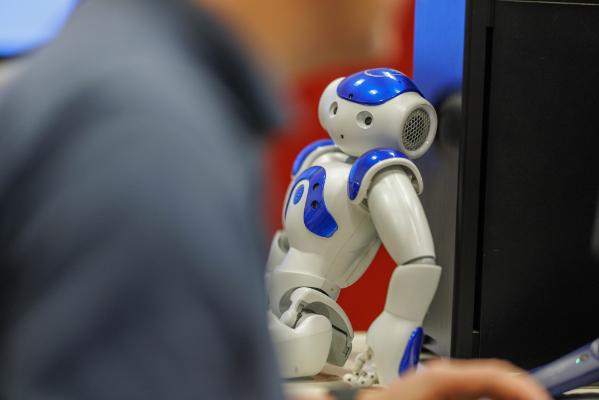
Nao Autonomous Programmable Humanoid Robot
Social Interactions

The Social Interaction area of research focuses on understanding emotion and social behaviour through affective computing processes.

Social Interactions : Link - /schools/psy/Research/OurResearchGroups/SocialPsychologyandSocialIssues/SocialInteractions/
kids in context rainbox text
Kids In Context Lab

Kids in Context research investigates the development of social cognition with a particular emphasis on how children and adults categorize others into social groups, and how these categories then guide further inferences and behaviour.

Kids In Context Lab : Link - https://www.qub.ac.uk/research-centres/kidsincontext/
Research Areas
Intergroup Rel's in Schools, Communities and Workplaces - Prof Rhiannon Turner

My research involves developing and evaluating interventions designed to promote more positive intergroup relations in schools, communities and workplaces. In particular, I focus on interventions that bring together people from different social groups (for example on the basis of ethnicity, nationality, religion, sexuality), or which help to increase people’s interest and confidence in engaging with people from different backgrounds.

Intergroup Rel's in Schools, Communities and Workplaces - Prof Rhiannon Turner : Link - https://pure.qub.ac.uk/en/persons/rhiannon-turner
Intergroup Relations, Intergroup Conflict & Social Change - Dr Danielle Blaylock

Danielle is an applied social psychologist with a specific focus on intergroup relations, intergroup conflict and social change. As an applied researcher these theoretical constructs are examined within real-world contexts, particularly those found within divided communities. Current projects explore the impact of intergroup contact experienced through various contact-based initiatives on the promotion of positive intergroup relations. She is currently leading the evaluation of the European Union’s PEACE IV Children and Young People programme and the Collaboration and Sharing in Education Project (CASE) delivered by the Education Authority and Léargas.

Intergroup Relations, Intergroup Conflict & Social Change - Dr Danielle Blaylock : Link - https://pure.qub.ac.uk/en/persons/danielle-blaylock
Social Cognition - Dr Jocelyn Dautel

My research investigates the development of social cognition with a particular emphasis on how children and adults categorize others into social groups, and how these categories then guide further inferences and behaviour. I am also interested in children's reasoning about language and accent as social categories that influence multiple aspects of person perception and social evaluation.

Social Cognition - Dr Jocelyn Dautel : Link - https://pure.qub.ac.uk/en/persons/jocelyn-dautel
Dr Gulseli Baysu
Cultural Diversity & Immigration - Dr Gulseli Baysu

Dr. Baysu is a social and political psychologist. Her research focuses on the social psychology of cultural diversity, immigration and integration, educational success of immigrants and minorities, intergroup relations, identity politics and political participation of minorities. In 2018, she received a grant from Jacobs Foundation as the Principal Investigator in the project “Cultural diversity approaches in schools and their implications for student achievement and adjustment”. She was also awarded with Advanced Research Center Distinguished Visiting Fellowship of City University of New York where she worked for 6 months as a Visiting Professor. Please check her latest research at https://bold.expert/stereotyping-affects-school-engagement/

Cultural Diversity & Immigration - Dr Gulseli Baysu : Link - https://pure.qub.ac.uk/en/persons/g%C3%BClseli-baysu
Gender Equality and Reactions to Diversity - Dr Ioana Latu

My research focuses on understanding and reducing intergroup biases, with a specific focus on gender biases in organisational and academic contexts. I am particularly interested in analysing the interpersonal mechanism through which women are negatively influenced by existing implicit and explicit gender stereotypes in social interactions such as job interviews and negotiations. My research also seeks to understand and reduce potentially negative attitudes towards gender equality initiatives in masculine domains.

Gender Equality and Reactions to Diversity - Dr Ioana Latu : Link - https://pure.qub.ac.uk/en/persons/ioana-latu
Dr Mengyao Li
Conflicts, political violence, and resistance - Mengyao Li

My research lies at the intersection of social, political, and peace psychology. It broadly focuses on the psychological processes of intergroup conflicts and their resolution, group-based violence, national and ethnic identity, transitional justice, as well as civil resistance and social change. In collaboration with colleagues from different parts of the world, I am currently investigating the long-term impact of historical collective trauma on contemporary conflicts from both victim and perpetrator perspectives. In another cross-national project, I am conducting qualitative and quantitative studies to understand political resistance in repressive contexts. I have a particular interest in contextualizing psychological research and extending it to underrepresented regions and marginalized groups. My research draws on theories from various disciplines, such as political science, international relations, and health psychology. It utilizes multiple methods, including surveys, experiments, field experiments, archival analyses, and interviews.

Conflicts, political violence, and resistance - Mengyao Li : Link - https://pure.qub.ac.uk/en/persons/mengyao-li
Dr Gary McKeown
Social & Communicative Interactions - Dr Gary McKeown

My interests include social and communicative interactions, social signal processing and affective computing, laughter and humour, cognition and emotion, cross-cultural emotion perception, the evolution of human communication and language, embodied conversational agents, risk perception and communication, opinion dynamics, and agent-based modelling.

Social & Communicative Interactions - Dr Gary McKeown : Link - https://pure.qub.ac.uk/en/persons/gary-mckeown
Dr Magdalena Rychlowska
Social Functions of Facial Expressions - Dr Magdalena Rychlowska

Magdalena is a lecturer at Queen's University Belfast and a research fellow at the University of Wisconsin-Madison. She earned her PhD in 2014 from the University of Clermont Auvergne. Her research focuses on production, perception, and social functions of facial expressions, in particular smiles and laughter.

Social Functions of Facial Expressions - Dr Magdalena Rychlowska : Link - https://pure.qub.ac.uk/en/persons/magdalena-rychlowska
Communication and conflict - Dr Andrew McNeill

Dr McNeill's research focuses on the intersection of communication and conflict. This research has covered the communicative function of identifying as a victim of conflict, the role of political apologies, and the role of accents in communicating group identity. It has also examined how we communicate online about pandemics, conflicting nutrition information and political issues. He employs a range of quantitative and qualitative methods, but particularly enjoys applying rhetorical and discursive psychology to the analysis of social problems.

Communication and conflict - Dr Andrew McNeill : Link - https://pure.qub.ac.uk/en/persons/andrew-mcneill
Researchers
Dr Phoebe McKenna-Plumley

Phoebe works as a Research Fellow in the School on a Royal Society of Chemistry-funded project exploring presence, perceptions, and engagement with LGBTQ+ inclusion symbols in STEM departments in the UK and US. Her research interests primarily focus on social health, particularly with respect to loneliness, inclusion, and wellbeing, using quantitative, qualitative, and evidence synthesis methods.

Dr Phoebe McKenna-Plumley : Link - https://pure.qub.ac.uk/en/persons/phoebe-mckenna-plumley-2
Caitlin McShane

Caitlin is currently working within the Kids in Context team under Dr. Jocelyn Dautel as a research assistant across two projects.  One is a Templeton World Charity Foundation funded project, titled 'Communicating Truth: Consumption and transmission of polarized information amongst young people'. This project uses mixed-methods to investigate polarized information transmission, epistemic vigilance and truth-seeking amongst youth in Northern Ireland.  The second project, as part of the Developing Belief Network, examines children's reasoning about ethno-religious categories in the context of historically divided Northern Ireland.  She is particularly interested in understanding children and young people's development, social experiences and psychosocial outcomes using mixed-methods.

Caitlin McShane : Link -
Current Research Projects
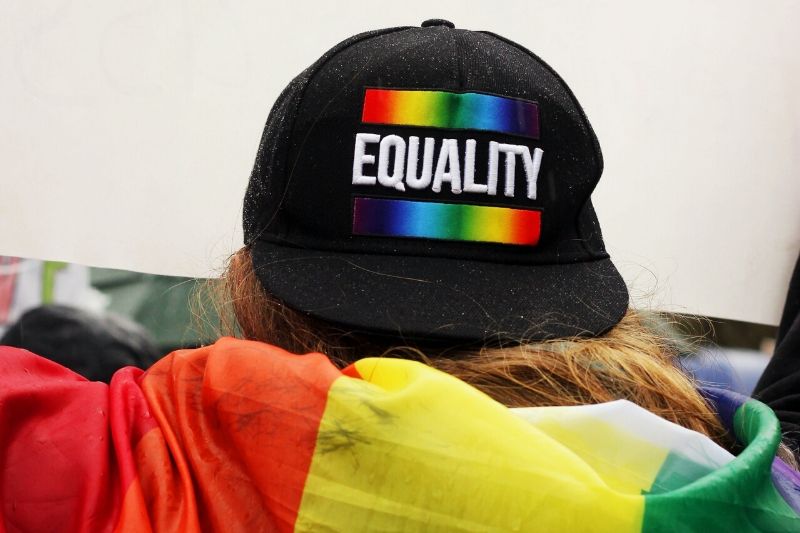
Equality and Reactions to Diversity
Gender Equality

An EPSRC project was developed with the following aims:

  1. To gather new evidence about how GEIs should be designed and implemented, so that STEM academics have positive attitudes towards them and engage with them.
  2. To use this evidence to design a unique set of training resources to chage attitudes towards GEIs, and test these resources across thje three institutions.
  3. To make these resources freely available to all EPS departments in the UK.

Photo of Gary McKeown
AI
Emotional & Empathic Artificial Intelligence

Dr Gary McKeown has created a research programme at the School of Psychology that seeks to understand human emotional communication in itself but with an added application of informing computational science and commercial partners how to take advantage of these discoveries.

This research has led to theoretical work on human communication and on the importance of storytelling and how understanding emotional reactions to scenarios provides the basis of good storytelling—important for advertising and broadcasting impact, and technological innovations in understanding expressions and reactions. The storytelling work was central to the impact with Red Bull Media House informing their multimedia storytelling of Red Bull extreme sports athletes. Together with Red Bull the team also developed of a Virtual Reality Mountain Bike Experience).

Dr McKeown’s has work resulted in a long term collaboration with an affective computing company, and three Knowledge Transfer Partnerships funded by the ESRC and Invest NI. The first two of these partnerships were given the highest rating of "Outstanding" by the KTP assessors, while the third is on-going.

Read more Read less

zoomed in Dictionary entry for the word Democracy
A Comparative Analysis of:
Nativist Populist Rhetoric and the Development of a Novel Psychological Intervention Using a Social Identity Approach

Through a mixture of language analyses and psychological experiments, this research programme investigated the narratives that populists use to influence public understandings of group identities, and whether these could be challenged. Initial research from my PhD focused on politicians and News Media, as two of the most prominent sources of populist political narratives, across three liberal democracies (UK,US, and Australia). 

Find out how this project is developing
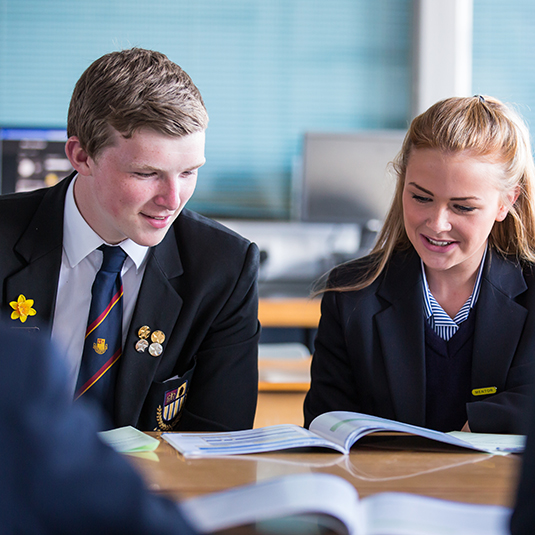

Education With Purpose
Shared Education
Shared Education
  • We have provided expert testimony on intergroup contact and its benefits to the NI Department for Education commissioned Independent Review of Integrated Education
  • We are involved in EU Special Funding Body project to evaluate the impact of the PEACE IV Programme on Children and Young People
  • We are involved in an ESRC GCRF Networking Grant which aims to implement and evaluate Shared Education in NI to the Balkans region
  • By exploring the way in which identity and intergroup relations play out within divided societies, our work directly impacts programmes and policies to promote social cohesion.
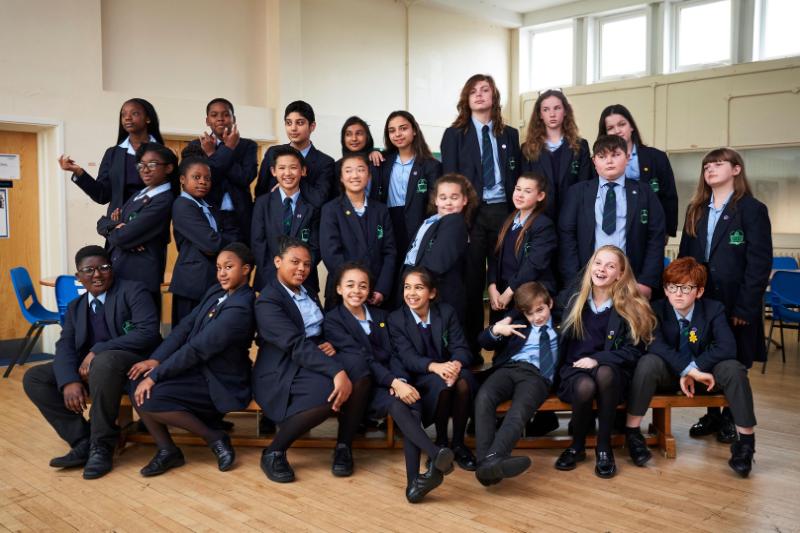
The School that tried to end racism Class Photo
Intergroup REL's in Schools, Communities and Workplaces
Racism in Schools

Professor Turner’s is interested in intergroup contact and prejudice looking at predictors and outcomes of different forms of intergroup contact in reducing prejudice, including cross-group friendships.

She took part in an award winning Channel 4 documentary on tackling racism in schools. Based in a London comprehensive school and spread across three weeks, a multicultural class of 24 Year 7 students took part in a series of activities as part of their normal school day. Taught by their regular teachers, the pupils were observed by a team of experts through each stage of the experiment.

Watch how the experiment took place and its outcome.


Research Students
Below are some of the topics our students are researching to complete their PhD
Student Name Thesis title PhD Supervisor
Olivia Crawford Navigating childfreedom: identity disclosure, communication strategies and adjustment in childfree individuals. Dr Tanya Gerlach
Nicole Devlin Intergenerational trauma, identity, and well-being: How the trauma of the Troubles conflict has impacted social identities in Northern Ireland. Dr Gulseli Baysu
Cara Pritchard-Tate Investigating the psychological consequences of and attitudes towards repressive anti-protest measures in democratic contexts. Dr Mengyao Li
Risa Rylander   Dr Jocelyn Dautel
Mia Oliver Exploring attitudes to GEI’s through Intersectionality  Dr Ioana Latu
Nina Briggs Not just black and white: Expanding the contact hypothesis to inter-minority contexts Dr Danielle Blaylock
Bethan Iley A game-based training intervention to reduce negative and conspiratorial attitudes towards gender equality initiatives in Science, Technology, Mathematics and Engineering. Dr Ioana Latu
Bronagh Allison Motivations for gossip: communication in social status enhancement Dr Gary McKeown
Anna Hollis   Dr Gary McKeown
Samantha Darragh   Dr Thomas Schultz-Gerlach
Read more Read less

Social Psychology and Social Issues
  • Our Research Groups
  • Social Interactions
  • CIIR
QUB Logo
Contact Us

School of Psychology

David Keir Bldg
18-30 Malone Rd
Belfast
BT9 5BN

GET DIRECTIONS

Phone :+44 (0)28 9097 5445
E-mail: psychology@qub.ac.uk

Quick Links

  • Home
  • Study
  • Careers
  • Research


© Queen's University Belfast 2024
  • Privacy and cookies
  • Website accessibility
  • Freedom of information
  • Modern slavery statement
  • Equality, Diversity and Inclusion
  • University Policies and Procedures
Information
  • Privacy and cookies
  • Website accessibility
  • Freedom of information
  • Modern slavery statement
  • Equality, Diversity and Inclusion
  • University Policies and Procedures

© Queen's University Belfast 2024

Manage cookies