

QCAP Researcher attends the Community of Practice for Collaborative Social Care Pathways in Dundalk
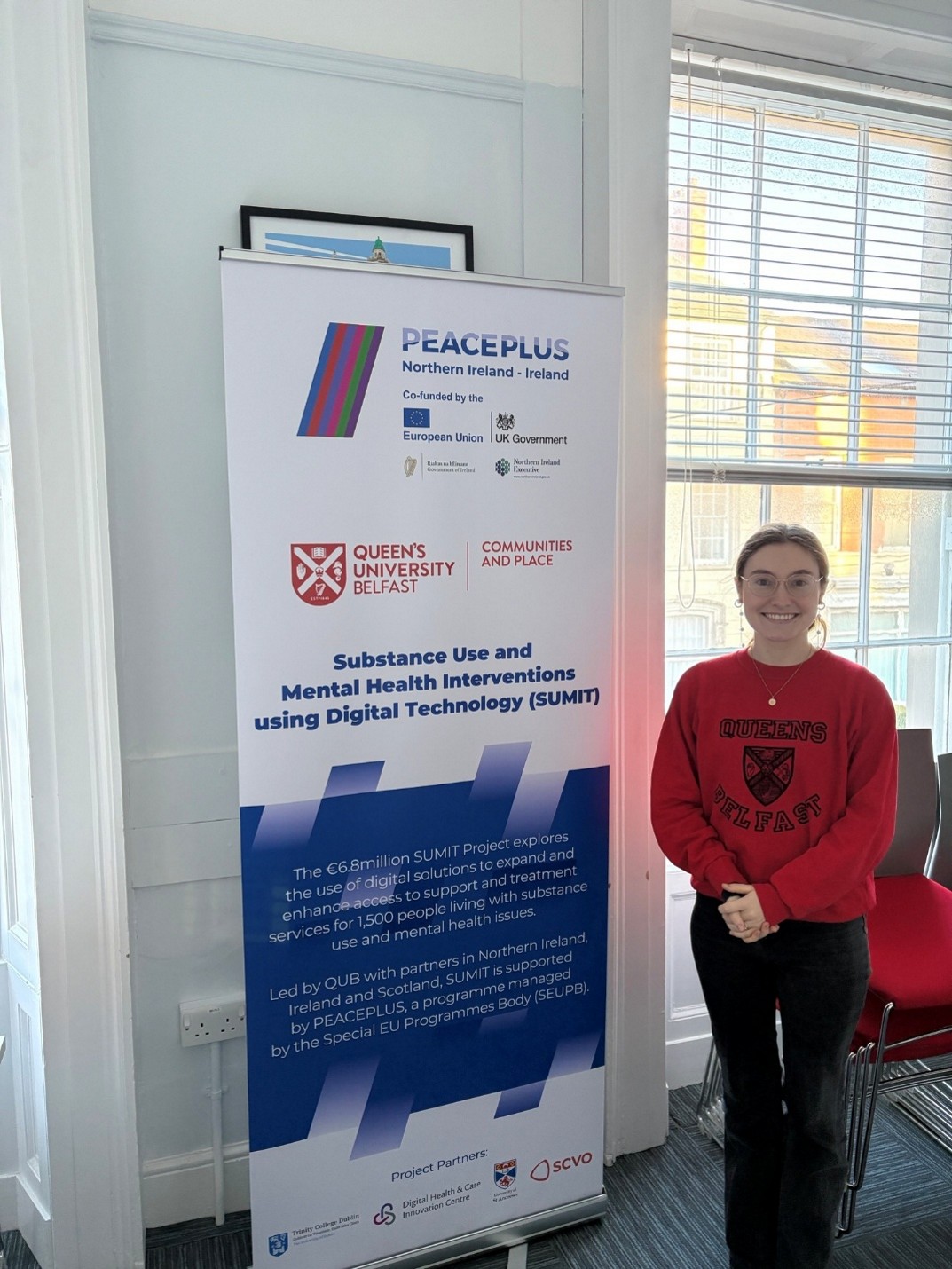
Dr Ceri Welsh, Community Researcher for the SUMIT Northeast Demonstrator site, was delighted to attend a Community of Practice at Dundalk Institute of Technology with associate partners-Northeast Regional Drug and Alcohol Task Force.
Louth Leads the Way in Collaborative Social Care
In November 2026, a Community of Practice (CoP) convened at Dundalk Institute of Technology (DkIT), bringing together social care practitioners, community organisations, academics, and statutory partners from across Louth. The CoP built on a dual diagnosis pathway developed by Louth Meath Mental Health Services, Dundalk East Mental Health Social Work, and Turas, with a strong focus on social determinants of health, mental health equity, and rights-based practice. This work is grounded in Irish mental health policy and the HSE Model of Care for Dual Diagnosis.
The Substance Use and Mental Health Interventions using Digital Technology (SUMIT) project, led QCAP, works with Turas Counselling in Dundalk and The Red Door Project in Drogheda. The Northeast Community Research Fellow for SUMIT, Dr Ceri Welsh, co-located between QCAP and the Louth sites, was invited to participate in the DkIT CoP. Their involvement was particularly timely following the announcement of DkIT’s new university college status, with students receiving qualifications through QUB—an important step in strengthening research links, community engagement, and cross-border collaboration.
The session opened with a mapping of the local social care landscape, identifying key actors across community, statutory, academic, and advocacy sectors. While strong networks already exist, participants highlighted the need for clearer and more visible pathways linking community-based supports with health and mental health services.
Two working groups explored current challenges in social care pathways. Key themes included the need for shared language and terminology, and concerns around funding models that no longer reflect contemporary substance use patterns, such as the rise in street tablets and “chems.” Participants called for more flexible, responsive funding aligned with current risks and realities. Operational challenges were also discussed, including inadequate staffing and security for night-time services, with agreement that infrastructure and safeguards are essential for effective delivery.
To maintain momentum, a four-person steering committee was established to guide the ongoing development of the CoP and to plan a follow-up event in early 2026. This initial meeting marks a significant step forward in strengthening social care in Louth through collaboration, connection, and a shared commitment to integrated, compassionate, place-based responses.