

Falling for Medellin
Fionntan Hargey, Market Development Association Medellín QCAPture Series 5/6.
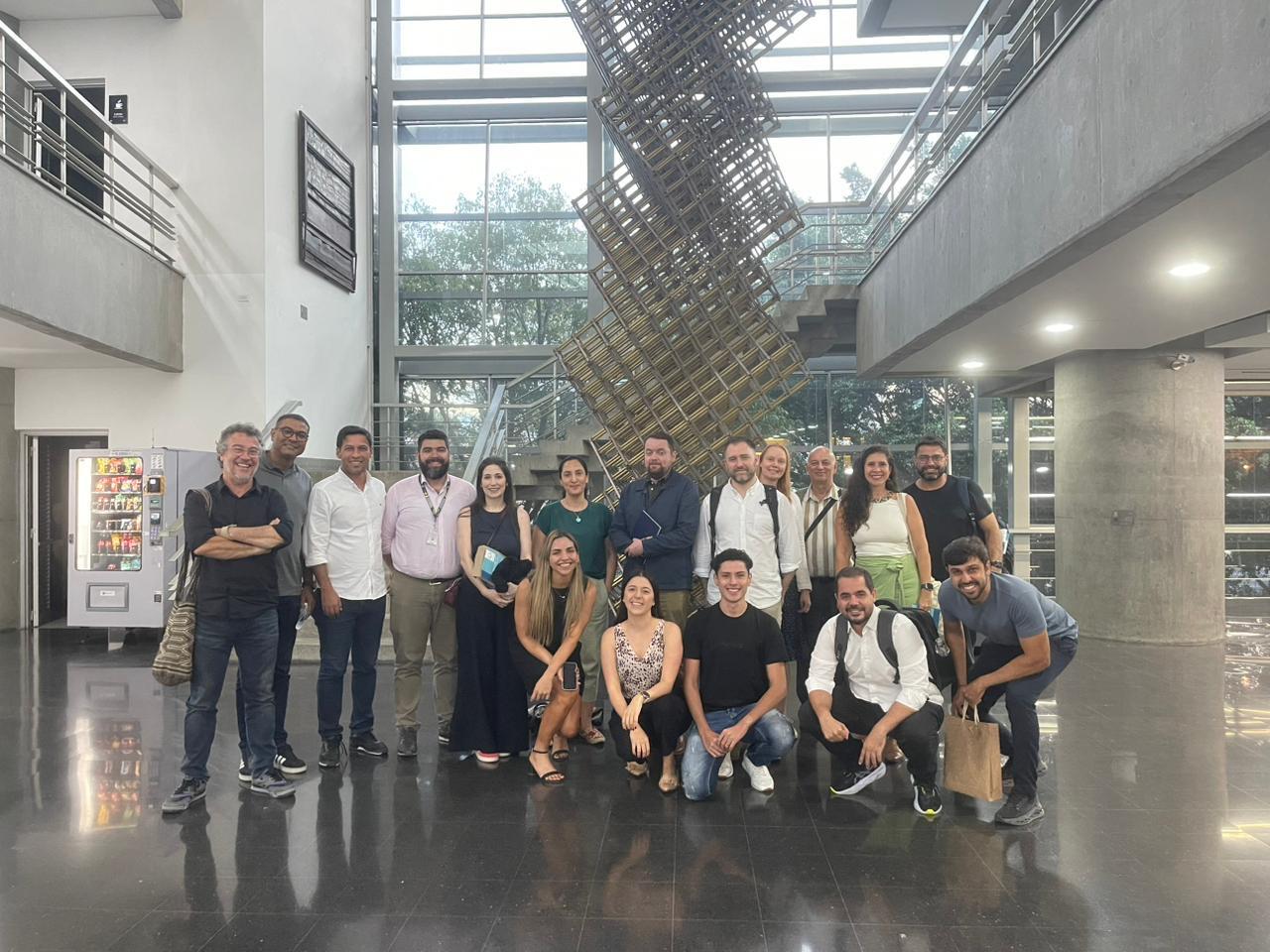
Fionntán Hargey, is a leading community development and regeneration champion for the Market Development Association (MDA) and lead community partner of the Belfast Community Research and Innovation Network (BCRIN). He advocates rights based, community-led approaches to socio-economic change and resident well-being. He is actively strengthening collaboration between communities, researchers and civic partners to drive inclusive innovation.

There are some obvious parallels between Medellín and Belfast. Geographically both cities sit within valley basins, and historically were the industrial heartlands of their respective societies. Tragically, they also wracked with violence in the latter decades of the 20th century. Today both cities continue to strive to overcome these legacies, while also facing the deeper structural challenges presented by revolutionary changes within the global economy.
Infrastructure for inclusion
Medellín is an impressive city, from its Andean setting, to its vibrant culture and welcoming people. In terms of innovation, a particular point of note is the degree of integration in regional and civic governance, along with its universities, research institutes and other partners in coordinating economic development in the City. This high degree of integration very much gives the feel that everyone is pulling in the same direction when it comes to the economic and social challenges faced by the City.
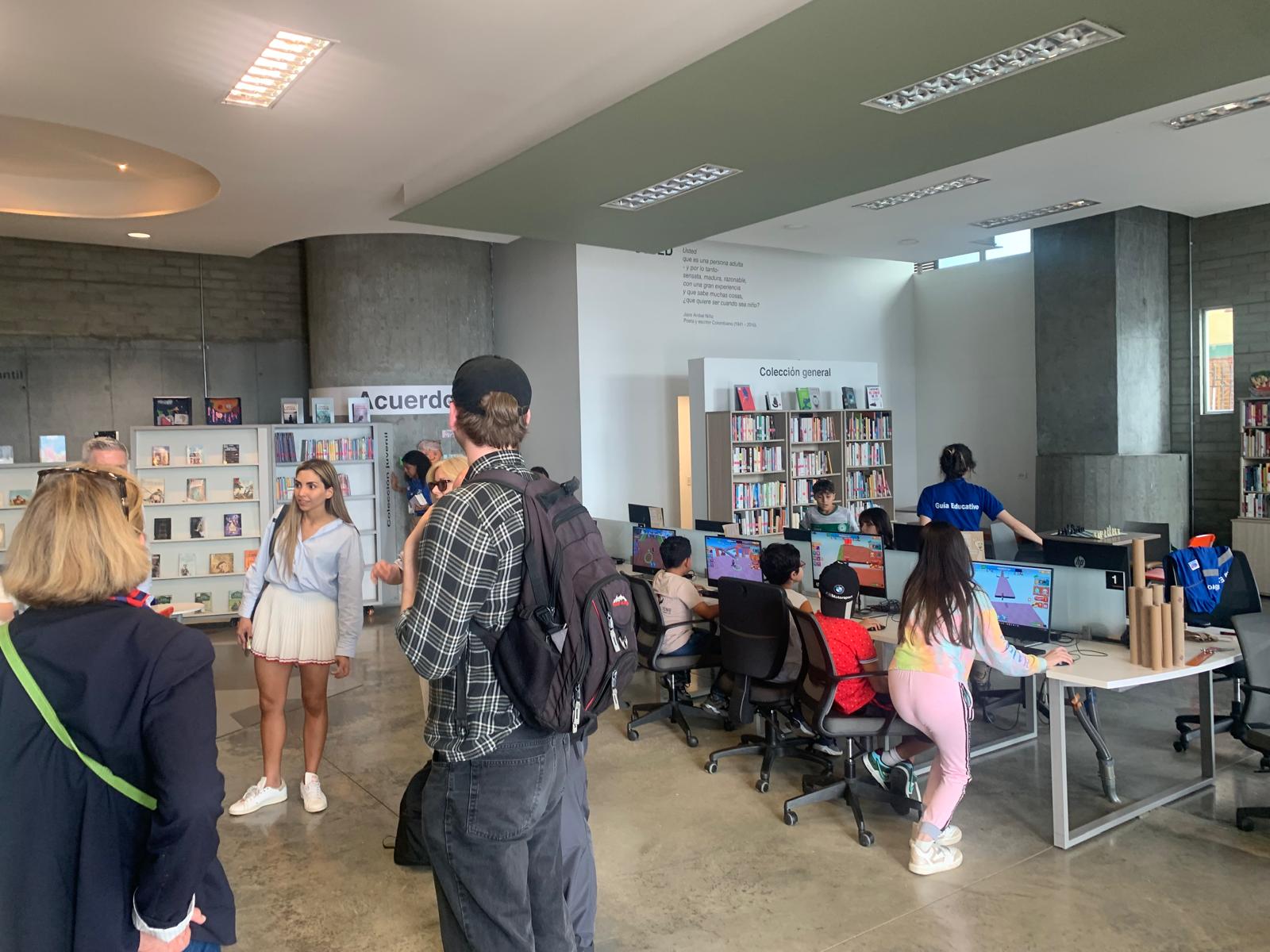
One sees this in the ‘social urbanism’ which has helped guide development in recent decades. For instance, the transport infrastructure is not only highly integrated, but has built within it as various stations a range of social infrastructure, such as libraries and education centres, along its route at various stations, up to the favelas on the mountainside. These provide spaces for the educational and cultural development within the most marginalised communities, particularly for children. Likewise, the busy transport system is also used to promote wider cultural transformation within the city. This ranges from campaigns to promote civic courtesy and patience (‘Choose Calm’) through to combatting misogyny, sexual assault and ‘machismo.’ This socio-cultural infrastructure is also used to promote classic and new literature via the distribution of free paperbacks – supporting both literacy and cultural production within the City.
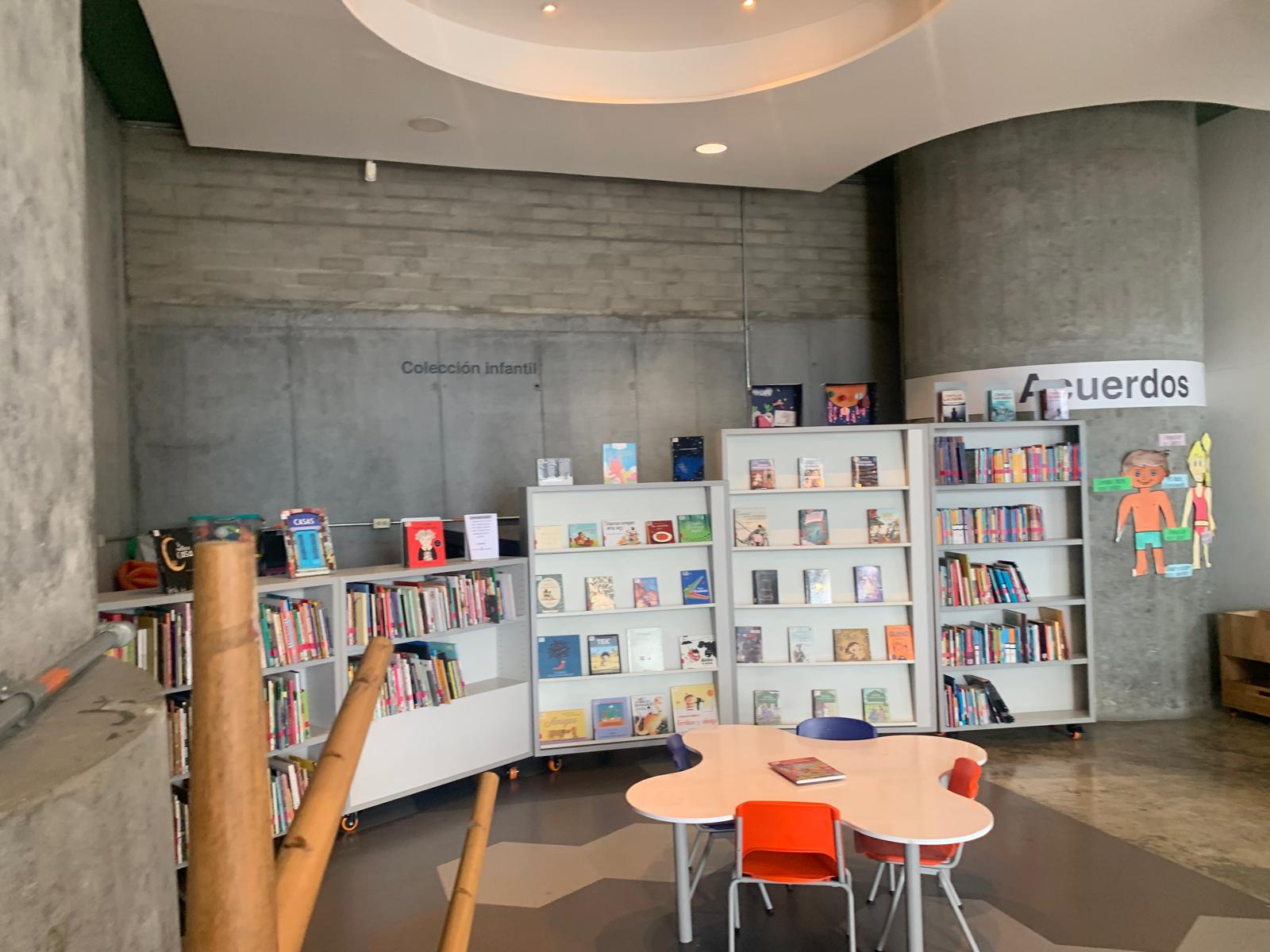
Other impressive social infrastructure projects included the MOVA teacher innovation centre, bringing children and educators form across the City to cutting edge educational hub, and Parque Explora, whose integration of a science museum, aquarium and planetarium belies the extraordinary educational STEAM programmes they roll out to thousands of children across Medellín on an annual basis, laying the foundations for future pathways to careers and projects.
Infrastructure for Empowerment
A lacuna in all of this was the mechanism for how communities, particularly the most marginalised, participate and shape the civic agenda. A paternalistic approach to urban development, no matter how well meaning, will always fall short if the people most effected by these processes are not involved in shaping them. In this there is another unfortunate comparison with Belfast where, if the inequalities are less stark, the processes of marginalisation are perhaps more subtle.
Despite the systemic underinvestment, Belfast does however have a strong and vibrant community sector, which is increasingly looking at how working class communities can integrate and shape the processes of urban development and innovation, as instanced in recent initiatives such as the Belfast Community Research and Innovation Network, which brings together six Inner-City communities along with Queen’s University to look at these issues. Communities in Belfast have a proven track record of asserting their Right to the City, and shaping it in their interests. This social infrastructure will be of vital importance to ensuring future innovation is truly inclusive and represents a wider social good, rather than a narrow economic benefit to a few.
Conclusion
As there are much commonalities between the two cities, there is also much to learn from each other, and a continuing dialogue on the issues touched on here and in the companion articles in this series could only prove fruitful to both the people of Belfast and Medellín.