
Top Skip to main content
Skip to Content
LOGO(small) - Queen's University Belfast
  • Our facebook
  • Our linkedin
  • Our instagram
LOGO(large) - Queen's University Belfast

School of

Biological Sciences

  • Home
  • Study
    • Undergraduate Courses
    • Postgraduate Taught Courses
    • Fieldwork Opportunities
    • Peer Mentor Scheme
    • Scholarships and Awards
    • Course Accreditations
  • Research
    • Research Themes
    • Research Impact
    • Research Culture
    • Recent Research Outputs
    • Postgraduate Research
    • PhD Opportunities
    • Find a PhD Supervisor
    • Centre of Excellence for Agri-Food Microbiomes (CEAM)
  • International
    • Partnerships
    • Students
    • Opportunities
    • Take a Virtual Tour of Queen's
  • Employability
    • Business Engagement
    • Employer Testimonials
    • Undergraduate Careers & Placements by Sector
    • Postgraduate Careers & Placements by Sector
    • Student Experiences
    • Alumni Profiles
    • News, Programmes and Events
  • About
    • Facilities
    • Gibson Institute
    • Athena Swan
    • Laboratory Efficiency Assessment Framework (LEAF)
    • Applying for Honorary and Visiting Titles
    • Nursing Mothers and Parents’ Room & Quiet Room
  • People
    • Key Contacts
    • School Management Committee
    • Academic Staff
    • Professional Services Staff
    • Technical Staff
    • Research Staff
    • Honorary Staff
  • Staff Profiles
    • Dr Connor Bamford
    • Dr Simon Cameron
    • Prof Lisa Connolly
    • Mr Ronan Cunning
    • Dr Lucia Lombardi
    • Prof Aaron Maule
    • Ms Alison Meredith
    • Dr Linda Oyama
    • Prof Paulo Prodöhl
    • Dr Rachel Wheatley
  • News
  • Graduation
    • 2025
  • Events
  • Home
  • Study
    • Undergraduate Courses
    • Postgraduate Taught Courses
    • Fieldwork Opportunities
    • Peer Mentor Scheme
    • Scholarships and Awards
    • Course Accreditations
  • Research
    • Research Themes
    • Research Impact
    • Research Culture
    • Recent Research Outputs
    • Postgraduate Research
    • PhD Opportunities
    • Find a PhD Supervisor
    • Centre of Excellence for Agri-Food Microbiomes (CEAM)
  • International
    • Partnerships
    • Students
    • Opportunities
    • Take a Virtual Tour of Queen's
  • Employability
    • Business Engagement
    • Employer Testimonials
    • Undergraduate Careers & Placements by Sector
    • Postgraduate Careers & Placements by Sector
    • Student Experiences
    • Alumni Profiles
    • News, Programmes and Events
  • About
    • Facilities
    • Gibson Institute
    • Athena Swan
    • Laboratory Efficiency Assessment Framework (LEAF)
    • Applying for Honorary and Visiting Titles
    • Nursing Mothers and Parents’ Room & Quiet Room
  • People
    • Key Contacts
    • School Management Committee
    • Academic Staff
    • Professional Services Staff
    • Technical Staff
    • Research Staff
    • Honorary Staff
  • Staff Profiles
    • Dr Connor Bamford
    • Dr Simon Cameron
    • Prof Lisa Connolly
    • Mr Ronan Cunning
    • Dr Lucia Lombardi
    • Prof Aaron Maule
    • Ms Alison Meredith
    • Dr Linda Oyama
    • Prof Paulo Prodöhl
    • Dr Rachel Wheatley
  • News
  • Graduation
    • 2025
  • Events
  • Our facebook
  • Our linkedin
  • Our instagram
In This Section

  • Home
  • School of Biological Sciences
  • News
  • Archive

Archive

Pets or threats? Goldfish might be harmful for biodiversity

25 May, 2022

A new study has highlighted the potential threat of pet fish to biodiversity.
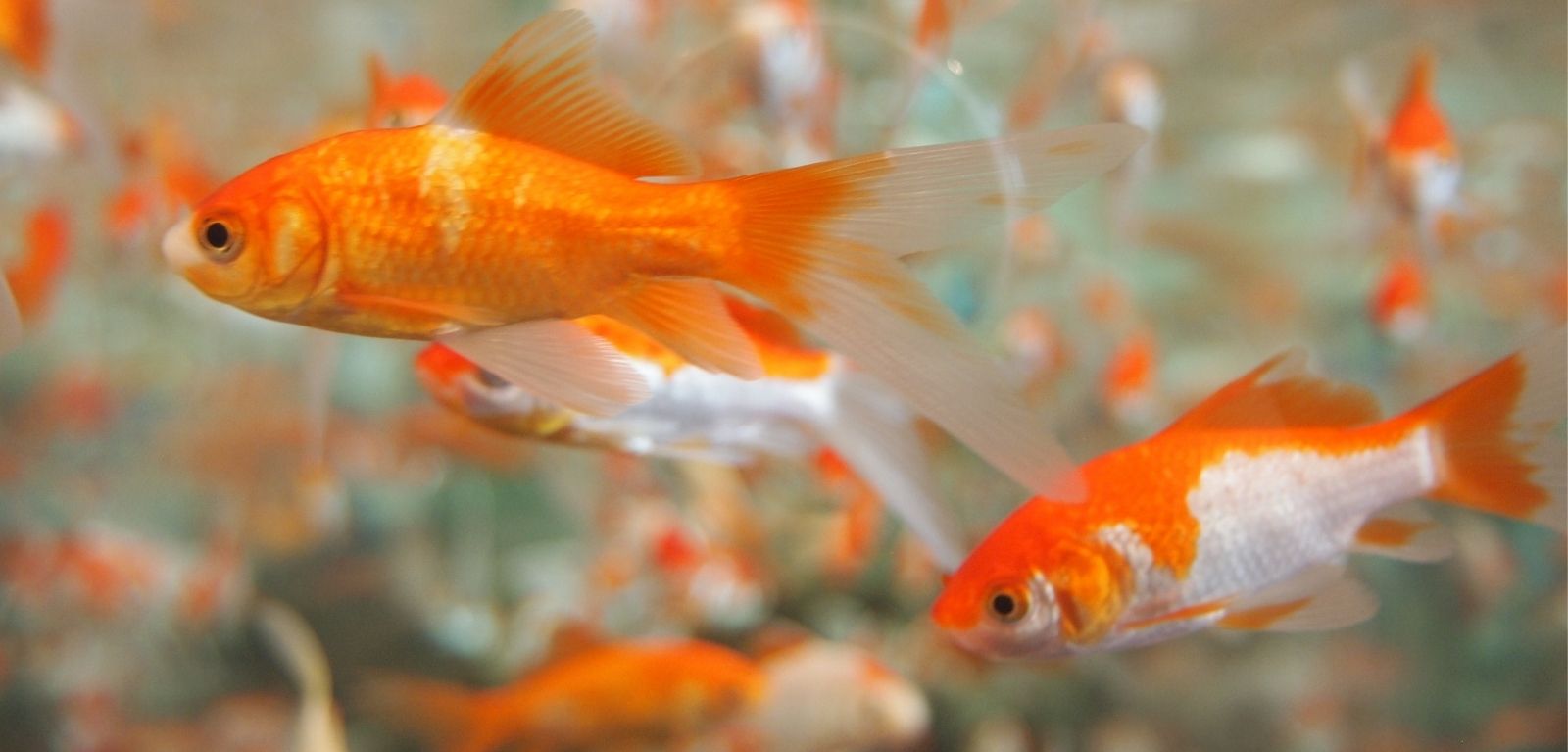
Invasive species are one of the leading causes of global biodiversity loss, and the pet trade is responsible for a third of all aquatic invasive species. Pet owners releasing unwanted pets into the wild is a major problem. Whilst many believe this is a humane option, new research suggests that attempting to ‘save’ the life of a goldfish could in fact lead to catastrophic outcomes for native biodiversity.

To better understand the ecological risks posed by species within the pet trade, the researchers focused on the two most commonly traded fish species in Northern Ireland: goldfish and the white cloud mountain minnow.

The globally popular goldfish was first domesticated over a thousand years ago and has since established non-native populations around the world. The white cloud mountain minnow on the other hand is a species with a limited invasion history to date.

This study, published in NeoBiota, developed a new method for assessing the ecological impacts and risks of potential pet trade invaders, based on availability, feeding rates and behaviour. The research showed goldfish to be voracious, consuming much more than the white cloud mountain minnow or native species. In terms of behaviour patterns, goldfish were also found to be much braver, a trait linked with invasive spread.

Lead author, Dr James Dickey from Queen’s University Belfast, explains: “Our research suggests that goldfish pose a triple threat. Not only are they readily available, but they combine insatiable appetites with bold behaviour. While northern European climates are often a barrier to non-native species surviving in the wild, goldfish are known to be tolerant to such conditions, and could pose a real threat to native biodiversity in rivers and lakes, eating up the resources that other species depend on.

“Our research highlights that goldfish are high risk, but we hope that the methods developed here can be used to assess others in the pet trade across Ireland and further afield. Readily available species are most likely to be released, so limiting the availability of potentially impactful ones, alongside better education of pet owners, is a solution to preventing damaging invaders establishing in the future.”

The research led by Queen’s University Belfast was funded by the Alexander von Humboldt Foundation, Inland Fisheries Ireland and the Department of Agriculture, Environment and Rural Affairs (DAERA) NI. The study was presented at the International Conference on Aquatic Invasive Species in Oostende, Belgium along with a range of other leading research from Queen’s on alien species.

Media

Media enquiries to comms.officer@qub.ac.uk

Share
Latest News
  • Remembering Professor Simon Doherty - our colleague, friend and mentor
    18 December, 2024
  • £14 Million in Funding Announced for Five Research Projects into Land Use and Net Zero
    29 November, 2024
  • Queen's-led project to drive better health outcomes and local economy with AI
    21 November, 2024
  • SBS Professor Awarded World’s Most Prestigious Food Science Prize
    20 November, 2024
  • Global Issues Poster Symposium 2024
    20 November, 2024
QUB Logo
Contact Us

School of Biological Sciences

Queen's University Belfast
School of Biological Sciences
19 Chlorine Gardens
Belfast BT9 5DL
Northern Ireland

GET DIRECTIONS

  • Phone: +44 (0)28 9097 5787
  • Email: sbsigfsoffice@qub.ac.uk 

Quick Links

  • Home
  • Study
  • Research
  • People
© Queen's University Belfast 2026
Privacy and cookies
Website accessibility
Freedom of information
Modern slavery statement
Equality, Diversity and Inclusion
University Policies and Procedures
Manage cookies