
Research Themes
Research Themes
Research at the School of Biological Sciences spans everything from agri-food, human nutrition and health and disease to ecosystems and biodiversity. We aim to develop and apply the breadth and power of modern scientific methods to major societal challenges involving biological organisms. In so doing, to provide the understanding and ability to improve the way we produce and consume food, prevent and overcome disease in people, plants and animals, and protect the natural world.
Our Three Research Themes:

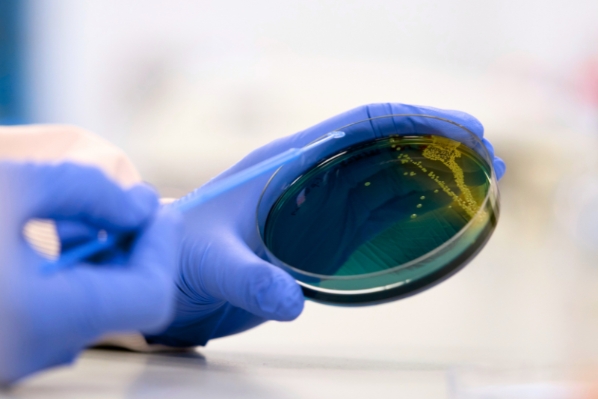

This theme focuses on how agri-food systems can be better positioned to provide safe and healthy diets and high quality of animal products and support human and animal health in a way that is environmentally sustainable and resilient to climate change.
Underpinning these goals, the disciplinary expertise of the theme integrates basic and applied research from animal health and welfare, nutrition, performance and environmental impact (e.g. greenhouse gas emissions from livestock) to chemical contaminant detection, food microbiology, fraud detection, food systems traceability and transparency, consumer food choice and food supply chain management. Supported by underpinning technological expertise in cutting edge molecular, genomic, transcriptomic/proteomic, metabolomic and computational methods, the goal of the theme is to transform agri-food systems so that they benefit both human nutrition and health while simultaneously reducing the greenhouse gases emissions from livestock production systems, protecting ecological resources, supporting livelihoods and affordable foods, and upholding social, cultural, and ethical values.
From Soil to Fork
Our food research is built from the ground up. From the soil to the sea, our experts in Biological Sciences and Agriculture & Forestry are discovering how to harness natural resources more effectively.
Learn More
Theme Leads
The Understanding Health and Disease research theme covers humans, plants, and animals with research strengths in prevention, diagnostics, surveillance, epidemiology, and treatments.
We study how health can be improved through food and nutrition and how diseases can be tackled by understanding their fundamental molecular mechanisms. Our researchers work in human cancer and genetic diseases, in infections caused by bacteria, fungi, viruses, and parasites, and in how global health and disease are affected by climate change. We recognize that the only way to tackle the problems we face as a society is to take an interdisciplinary approach to our research. This means we have expertise in broad areas including molecular biology, biochemistry, bioinformatics, genomics, transcriptomics, modelling, bioanalytical chemistry, proteomics, metabolomics, microbiology, parasitology, and plant biology. We work internationally with researchers and partners in universities, charities, non-governmental organisations, industry, and government agencies to tackle local and global challenges.
A Future Without Researchers Is a Future Without Solutions
Antimicrobial resistance (AMR) is one of the world’s most pressing, but often invisible, challenges. Framing AMR as both a visible and invisible war, Dr Linda Oyama invites us to see it not only as a scientific problem but also as a societal one that requires empathy, creativity, and collaboration.
Learn More
Theme Leads
This theme covers research in biodiversity and ecosystem services for environments ranging from tropical forests to deep oceans, using field techniques and skills such as wildlife tracking, taxonomy, geostatistics, molecular and genetic ecology, environmental microbiology, microbial ecology, food web analysis, microcosm and mesocosm experiments, and mathematical/computational methods.
Within this theme we also study the behaviour and temperament of wild, agricultural or domestic animals and their implications for welfare and ability to respond to environmental change. Potential research projects include phylogenetic analysis of rare and newly discovered species, examination of ecological interactions in tropical systems, agricultural soils, or marine communities, using state-of-the-art genetic analysis, surveys using drones or satellite tagging, or experiments in tanks and field plots, including careful and ethical examinations of animal behaviour. Projects range from theoretical analysis of stability in ecosystems, through discovery of new species and mechanisms of interaction, or responses to climate change, to the assessment of agri-environment schemes, development of new methods for commercial fisheries management and economic evaluations of conservation measures. Projects very often have an international dimension and include collaboration with other researchers worldwide.
Fighting Hidden Climate and Environmental Threats
Invasive species are an escalating global issue, wreaking havoc on ecosystems and economies. Research at Queen's is uncovering the true costs of these biological invasions, paving the way for informed policy and better management practices to mitigate the damage.
Learn More