
Developing Native Oyster restoration in modified water bodies

Martha McKee, MSC
As part of BRICONS, this project will increase knowledge on the potential for utilising native oyster reef restoration in developed coastal environments, as a nature-based solution to combat the predicted effects of climate change.
The population of the native oyster of Ireland and the UK, Ostrea edulis, has been in steady decline over the last century. Subsequently, the ecosystem services that this species provide (sediment stabilisation, water filtration, habitat creation, biodiversity promotion) have been diminished or lost entirely. This is most evident in highly modified bodies of water, such as ports and harbours, due to high levels of anthropogenic activity.
Belfast Harbour is considered one such site, with high levels of pollution, dredging for shipping access and consistent development along the coastline. Despite playing a crucial role in various economies, these attributes mark Belfast Harbour as a location vulnerable to sea level rise and coastal erosion under climate change predictions. It is vital that this vulnerability is addressed.
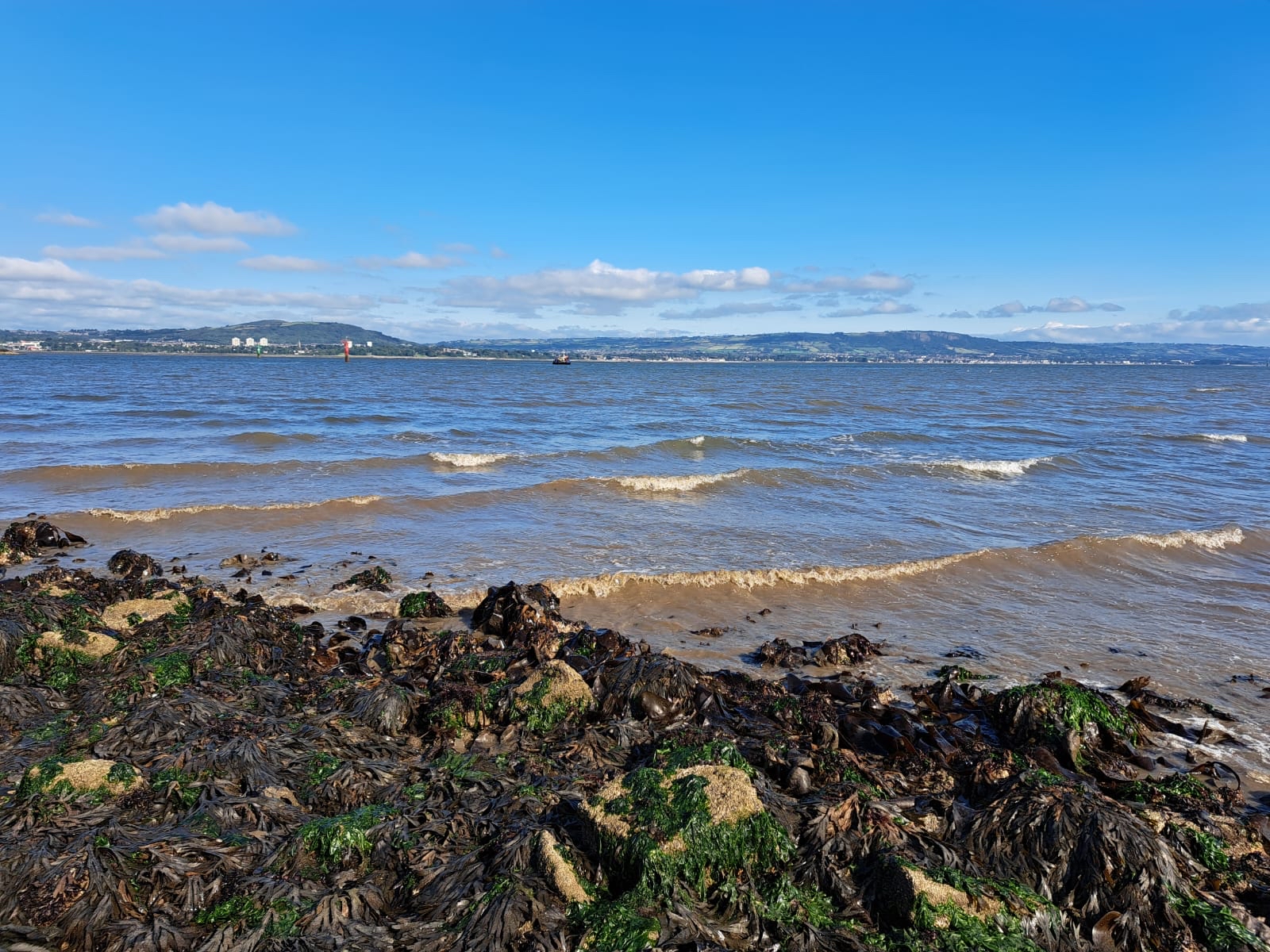
Trial site in Belfast Harbour (cred: Dr Annika Clements)
By restoring native oyster reefs in Belfast Harbour, notable benefits in reducing the impact of climate change, alongside promoting biodiversity and wider ecosystem resilience may be possible. The outcomes will help develop practical guidance for ports and harbours to adopt oyster restoration as a tool for climate adaptation and marine biodiversity recovery.