
Top Skip to main content
Skip to Content
LOGO(small) - Queen's University Belfast
  • Our facebook
  • Our linkedin
  • Our instagram
LOGO(large) - Queen's University Belfast

School of

Biological Sciences

  • Home
  • Study
    • Undergraduate Courses
    • Postgraduate Taught Courses
    • Fieldwork Opportunities
    • Peer Mentor Scheme
    • Scholarships and Awards
    • Course Accreditations
  • Research
    • Research Themes
    • Research Impact
    • Research Culture
    • Recent Research Outputs
    • Postgraduate Research
    • PhD Opportunities
    • Find a PhD Supervisor
    • Centre of Excellence for Agri-Food Microbiomes (CEAM)
  • International
    • Partnerships
    • Students
    • Opportunities
    • Take a Virtual Tour of Queen's
  • Employability
    • Business Engagement
    • Employer Testimonials
    • Undergraduate Careers & Placements by Sector
    • Postgraduate Careers & Placements by Sector
    • Student Experiences
    • Alumni Profiles
    • News, Programmes and Events
  • About
    • Facilities
    • Gibson Institute
    • Athena Swan
    • Laboratory Efficiency Assessment Framework (LEAF)
    • Applying for Honorary and Visiting Titles
    • Nursing Mothers and Parents’ Room & Quiet Room
  • People
    • Key Contacts
    • School Management Committee
    • Academic Staff
    • Professional Services Staff
    • Technical Staff
    • Research Staff
    • Honorary Staff
  • Staff Profiles
    • Dr Connor Bamford
    • Dr Simon Cameron
    • Prof Lisa Connolly
    • Mr Ronan Cunning
    • Dr Lucia Lombardi
    • Prof Aaron Maule
    • Ms Alison Meredith
    • Dr Linda Oyama
    • Prof Paulo Prodöhl
    • Dr Rachel Wheatley
  • News
  • Graduation
    • 2025
  • Events
  • Home
  • Study
    • Undergraduate Courses
    • Postgraduate Taught Courses
    • Fieldwork Opportunities
    • Peer Mentor Scheme
    • Scholarships and Awards
    • Course Accreditations
  • Research
    • Research Themes
    • Research Impact
    • Research Culture
    • Recent Research Outputs
    • Postgraduate Research
    • PhD Opportunities
    • Find a PhD Supervisor
    • Centre of Excellence for Agri-Food Microbiomes (CEAM)
  • International
    • Partnerships
    • Students
    • Opportunities
    • Take a Virtual Tour of Queen's
  • Employability
    • Business Engagement
    • Employer Testimonials
    • Undergraduate Careers & Placements by Sector
    • Postgraduate Careers & Placements by Sector
    • Student Experiences
    • Alumni Profiles
    • News, Programmes and Events
  • About
    • Facilities
    • Gibson Institute
    • Athena Swan
    • Laboratory Efficiency Assessment Framework (LEAF)
    • Applying for Honorary and Visiting Titles
    • Nursing Mothers and Parents’ Room & Quiet Room
  • People
    • Key Contacts
    • School Management Committee
    • Academic Staff
    • Professional Services Staff
    • Technical Staff
    • Research Staff
    • Honorary Staff
  • Staff Profiles
    • Dr Connor Bamford
    • Dr Simon Cameron
    • Prof Lisa Connolly
    • Mr Ronan Cunning
    • Dr Lucia Lombardi
    • Prof Aaron Maule
    • Ms Alison Meredith
    • Dr Linda Oyama
    • Prof Paulo Prodöhl
    • Dr Rachel Wheatley
  • News
  • Graduation
    • 2025
  • Events
  • Our facebook
  • Our linkedin
  • Our instagram
In This Section

  • Home
  • School of Biological Sciences
  • News

News

Queen’s launches innovative reporting system to tackle mosquito-borne disease threats in NI

30 March, 2026

Researchers from Queen’s University Belfast are calling for support as they launch the first public mosquito reporting system for Northern Ireland (NI).

mosquito on a leaf

Mosquitoes play an important role in the natural environment. However, some species are a public biting pest and can pose a health risk.

To tackle mosquito-borne disease threats in NI, Queen’s has launched MosquitoNI, a project that is examining the species present in NI and the viruses they may carry. It will also uncover how future climates could change risks.

The study aims to encourage the public to submit sightings of mosquitoes found here through the ‘Report a Mosquito’ form on the website, a first for the region. The website also includes information about how to identify and photograph mosquitoes, as well as on the research project itself.

Queen’s will lead the 4-year BBSRC-funded project with co-leads at University of Glasgow and the UK Centre for Ecology and Hydrology.

Vector-borne diseases cause over 700,000 human deaths annually worldwide, with mosquitoes posing the greatest burden. The scale of this threat is connected to environmental degradation including urbanisation, agricultural intensification and climate change, with invasive species shifting the distribution, abundance, and activity patterns of vector mosquitoes, their viruses, and the risks of associated pathogens.

Dr Ross Cuthbert from the School of Biological Sciences at Queen’s said:

“This project aims to challenge the narrative that mosquitoes do not exist in Northern Ireland, with risks shifting as climate changes and species invade from more tropical regions.

“Mosquitoes are generally overlooked here, and in many other temperate areas worldwide. The cooler climate on the island of Ireland has been traditionally thought to limit mosquito abundance and stifle disease risk. However, previous research at Queen's found surprisingly high numbers of mosquitoes across Northern Ireland. Last year, thousands of mosquitoes were collected in specialised traps set around various wetlands and urban sites where mosquitoes breed. So far, around 20 different species have been found across the island of Ireland.”

While mosquito-borne diseases have not been detected in Ireland, the collections included species which are known to vector diseases of concern elsewhere in the world, indicating overlooked risks in Northern Ireland.

Queen’s PhD student Ryan Carmichael is involved in the project, he commented:

“Last year, we identified numerous mosquito species present in Northern Ireland, including evidence of the presence of human-biting species. This year, we intend to continue mosquito surveillance to build our understanding of mosquito vector ecology, and gain insights into whether mosquitoes here are currently carrying diseases.”

The team require public support to help increase the geographic coverage of the sample in NI, helping fill crucial blind spots. By reporting mosquito sightings and uploading photographs online, the researchers can identify potential hotspot areas, understand how various species are distributed, and improve public involvement locally.

You can find more information and learn how to get involved via the MosquitoNI website: www.mosquitoni.com
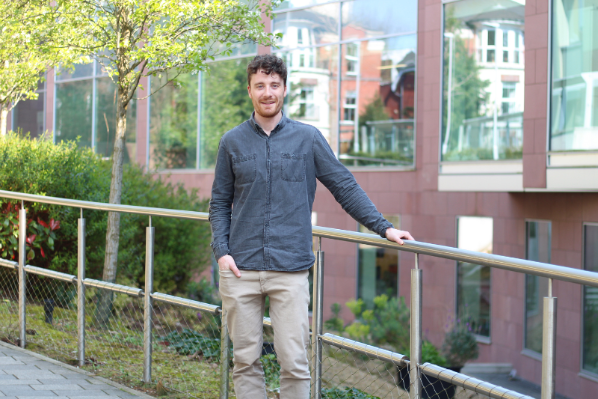
Photo: Dr Ross Cuthbert
Dr Ross Cuthbert
School of Biological Sciences
View Profile
Media

For media enquiries, please contact Grace White at Queen’s Communications Office: g.white@qub.ac.uk

Share
Latest News
  • Queen’s launches innovative reporting system to tackle mosquito-borne disease threats in NI
    30 March, 2026
  • Biological and Environmental Sciences retain top 200 position in global subject rankings
    26 March, 2026
  • Queen’s academic appointed to UK Government Evaluation and Trial Advice Panel
    24 March, 2026
  • Queen’s scientists unveil new tool to measure invisible ecosystem invaders
    10 March, 2026
  • Sofina Foods CEO Delivers 2026 George Scott Robertson Memorial Lecture
    3 March, 2026
QUB Logo
Contact Us

School of Biological Sciences

Queen's University Belfast
School of Biological Sciences
19 Chlorine Gardens
Belfast BT9 5DL
Northern Ireland

GET DIRECTIONS

  • Phone: +44 (0)28 9097 5787
  • Email: sbsigfsoffice@qub.ac.uk 

Quick Links

  • Home
  • Study
  • Research
  • People
© Queen's University Belfast 2026
Privacy and cookies
Website accessibility
Freedom of information
Modern slavery statement
Equality, Diversity and Inclusion
University Policies and Procedures
Manage cookies