Jetset Your Degree - Shiting Lu
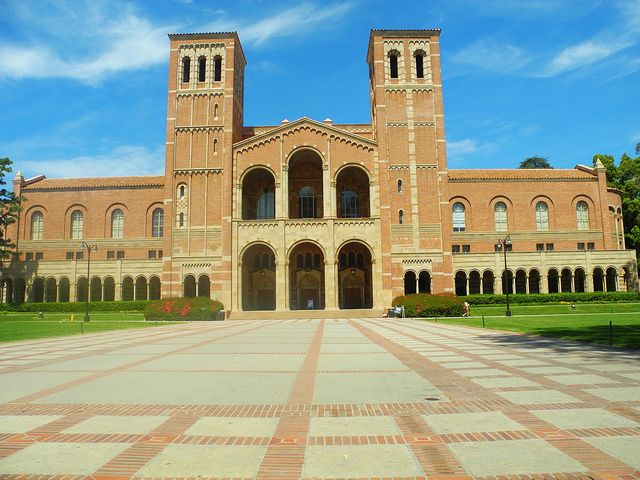
It is my great honour to spend ten days at the Special Collections Room at Charles E. Young Research Library, University California Los Angeles to conduct my research on Chinese-American novelist Lisa See’s three representative historical works on Chinese women and history.
The library is open to public and I applied an online account to browse their online archives of special collections and identify the materials needed for my research. I have requested nineteen archival boxes from The Lisa See Papers (1973-2016) and read the publicity materials, manuscripts, edited notes of the three novels. The librarians and archivists are knowledgeable and helpful to guide me to access, process, and return archival materials in the reading room.
It is enjoyable to sit in the reading room all day with other researchers. Listening to the soft sound of page turning makes me feel calm. As I look through the manuscripts and edited notes of the three selected novels as well as publicity materials and book reviews, I find there are obvious deletions and revisions on Lisa See’s descriptions of Chinese women’s body and sexuality, language and voice, as well as intricate mother-daughter and sisterly bonds, which constitute great paratextual materials to my ongoing PhD project. It makes me excited!
The Lisa See archive is an ideal fit for my research on this novelist and her Chinese-American literary output, providing insights into her diasporic family background, feminist awareness, and intercultural sensitivities. I finished all the requested boxes before the end of the trip. But due to limited time, I took loads of photos instead of processing them carefully. I am organising the files and collating information these days and hopefully they’ll be parts of my thesis.
I truly appreciate the opportunity to conduct this archival research at another end of the world. It not only provides a wealth of unpublished resources for my thesis, but also improves my abilities as an independent researcher. Throughout the whole process I learned how to organise an archival visit for my project, from applying travel grants, getting in touch with a librarian, familiarising with the online systems to visiting the onsite reading room, retrieving items from the archives, recording them for further analyses, and most importantly, weaving original materials into scholarly arguments.
The hands-on engagement with these rare academic resources helps me deepen the understanding of Lisa See’s historical novels set in premodern China and her unique representations of Chinese and Chinese-American women for an English audience. These publicity materials, manuscripts and notes, magazines, newspaper clippings, correspondence letters, and even class papers allow me to unearth unique insights into See’s creative process and the broader cultural contexts that inform her writing of Chinese women.
Last but not least, this research trip enriches my academic profile and strengthens my future career prospects. I wish to become a scholar in the field of Chinese-American literature and translation studies, focusing on the intersection of gender, diaspora, and identity. I will definitely engage more confidently with academic and public audiences in my area of study after this archival visit.