Friday 24 April 2026, 4pm
- Date(s)
- April 24, 2026
- Location
- 01/003, 27 University Square, Queen's University Belfast
- Time
- 16:00 - 18:00
Over the past twenty years, public history has come of age. The convergence of media technologies has changed the manner and scale of how publics access, interpret, present, and preserve historical knowledge. Old binaries of producer/consumer and professional/amateur have blurred in a post-colonial, digital world. Historical authority, which was monopolized by academics in the mid-twentieth century, has become more democratized. Public history in Asia has followed a somewhat different trajectory. It is technologically driven; it pushes on disciplinary boundaries; and it calls for strong regional collaborations. This talk explores a range of public history practices and reflects on the emergent opportunities and challenges in selected Asian countries.
Speaker
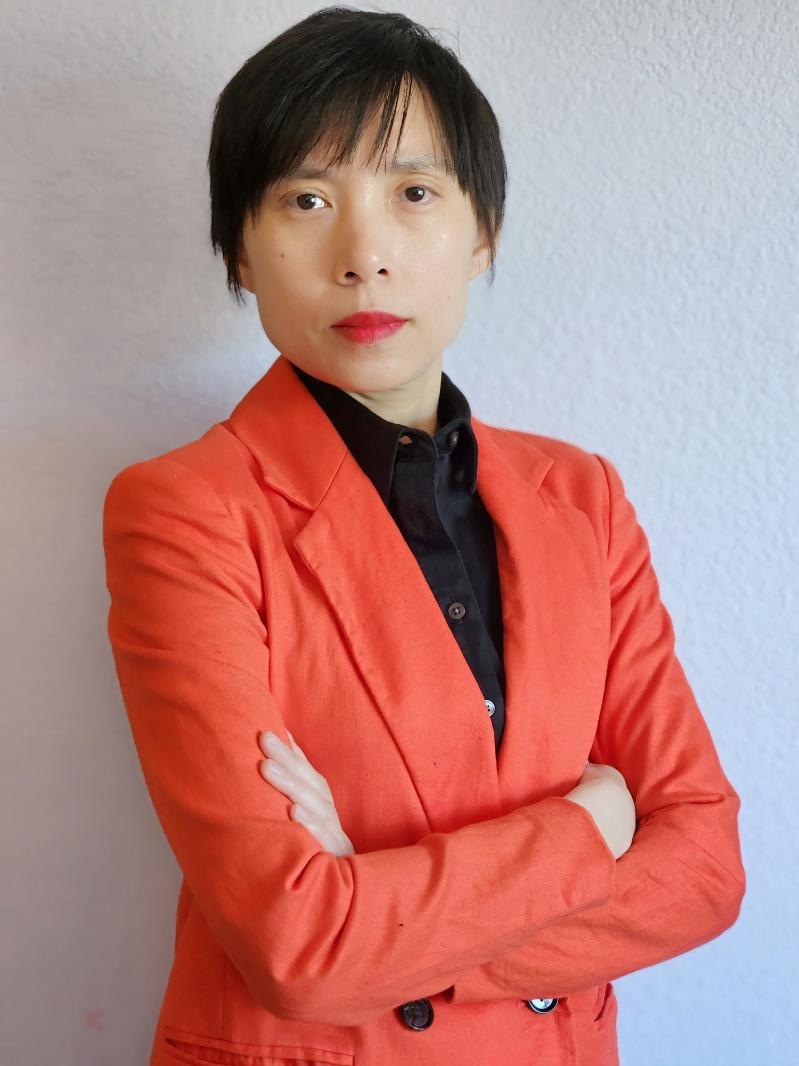
Na Li, Associate Professor of History at the National University of Singapore, is a public historian and urban planning scholar who explores the intersection of public history and urban preservation. Her first book, Kensington Market: Collective Memory, Public History, and Toronto’s Urban Landscape investigates ethnic minority entrepreneurs in one of the most diverse neighborhoods, Kensington Market in Toronto, incorporates collective memory in the urban landscape interpretation, and suggests a Culturally Sensitive Narrative Approach to urban preservation.
Since 2013, Na Li has worked as Research Fellow/Professor at two prominent universities in China, Chongqing University (2013-2017) and Zhejiang University (2017-2023). With these two critical positions, she has developed and managed the first public history program in China, along with many local museum exhibition programs, heritage site interpretation, oral history, historic preservation, and
digital public history projects. In 2018, she founded the first public history journal in China, Public History: A National Journal of Public History (《公众史学》). As the leading force of establishing public history in China, she has successfully organized a series of national conferences and training programs, including the National Public History Seminar (Chongqing 2013), National Conference on Public History (Suzhou 2013; Hangzhou 2018), and the Public History Faculty Training Programs in China (Shanghai 2014, Chongqing 2015, Hangzhou 2019).
During her decade long work, Na Li has pioneered the field of public history in China. Her second book, Public History: A Critical Introduction (《公众史学研究入门》), surveys key issues in public history. As the first scholarly work on public history in Chinese language, this book, now listed as one of the key readings for many fledgling public history programs in China, addresses the global implications of public history. Her third monograph, Seeing History: Public History in China, as part of Public History in International Perspective: Theory, Method, and Public Practice, is ground-breaking in many ways. This is the first scholarly work to explore public history in China and its global implications, especially how, prompted by new media technology in the past two decades, public history in China has created a fertile ground for international dialogues and collaborations.
Na Li’s work contributes to a better understanding of public history at a global scale. She has served on the Board of Directors for the National Council on Public History in the US (2017-2020) and the Steering Committee for the International Federation for Public History (2024-2028). She has also worked as International Affiliate of the Centre for Oral History and Digital Storytelling at Concordia University in Canada (2011-2021), Associate of Australian Centre for Public History, University of Technology Sydney in Australia (2014-present), and Associated Researcher of Chair of Public History, University of Vienna (2023-2024). She is working on her new book project, The Making of Asian Public History.