Skip to Content

History and heritage
1908_Charter-lpr
IT ALL STARTED IN 1845
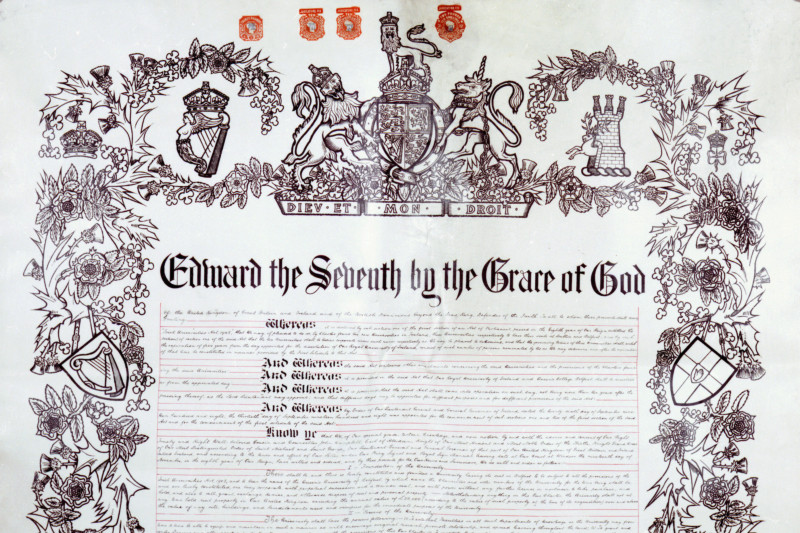
Queen’s University Belfast was founded by Royal Charter in 1845.

Founded by Queen Victoria, the Queen's University in Ireland, was designed to be a non-denominational alternative to Trinity College Dublin which was controlled by the Anglican Church.

The University was made up of three Queen's Colleges - in Cork, Galway and Belfast. Although it was the first University in the north of Ireland, Queen's drew on a tradition of learning which goes back to 1810 and the foundation of the Belfast Academical Institution.

Its collegiate department, which provided University-style education, closed with the establishment of Queen's and four of its professors and many of its students transferred to the new college.

The most significant date in the early years of the University's life was 1908 when the three Queen's Colleges, and the Royal University (which replaced the Queen's University in Ireland in 1879), were dissolved and replaced by the Queen's University of Belfast and the National University of Ireland.

As an independent institution, governed by its own Senate, Queen's flourished. Increasing student numbers and new staff were accommodated in a number of new buildings and the academic programme increased in range. Arts, Science, Law and Medicine were supplemented by Faculties of Commerce, Applied Science and Technology, Agriculture, and Theology.

Today, Queen's is one of the leading universities in the UK and Ireland, providing world-class education underpinned by world-class research.

Read more Read less
Lanyon 1949-lpr
THE HEART OF THE UNIVERSITY
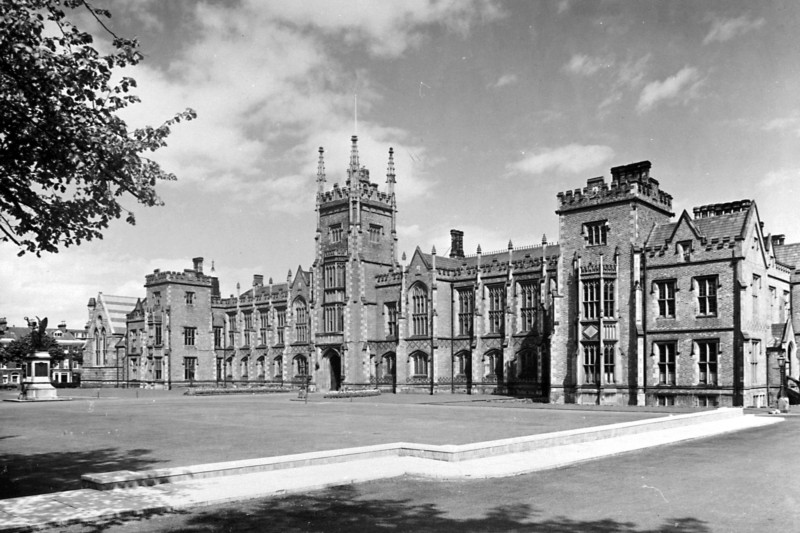
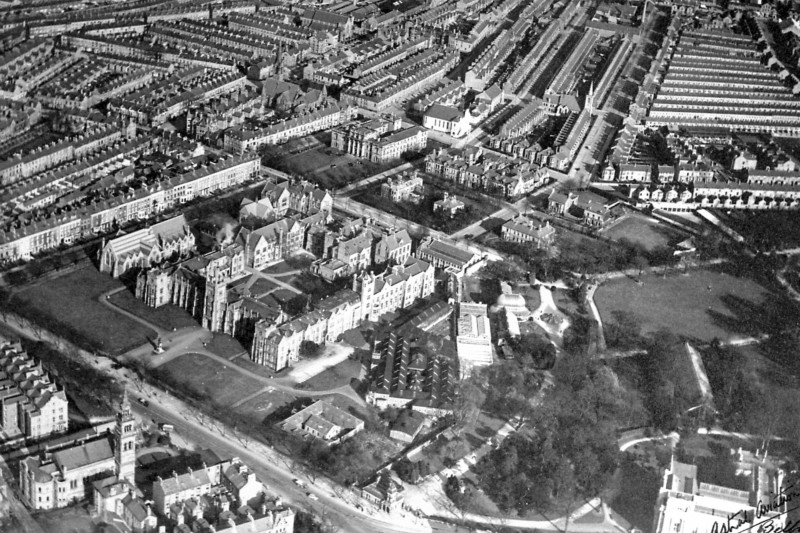
The magnificent main building was designed in 1849 by Sir Charles Lanyon.

He was also responsible for designing other Belfast landmarks such as Belfast Castle, Crumlin Road Gaol and the Customs House.

Since then, the University estate has grown to more than 300 buildings - many of them listed for their architectural importance.
QUB 1930-lpr
INTERTWINED WITH BELFAST’S HERITAGE
From the beginning, Queen’s has enjoyed strong links with the city of Belfast.

They even share a motto - Pro Tanto Quid Retribuamus: "What shall we give in return for so much?"
first grad
FROM SMALL BEGINNINGS…
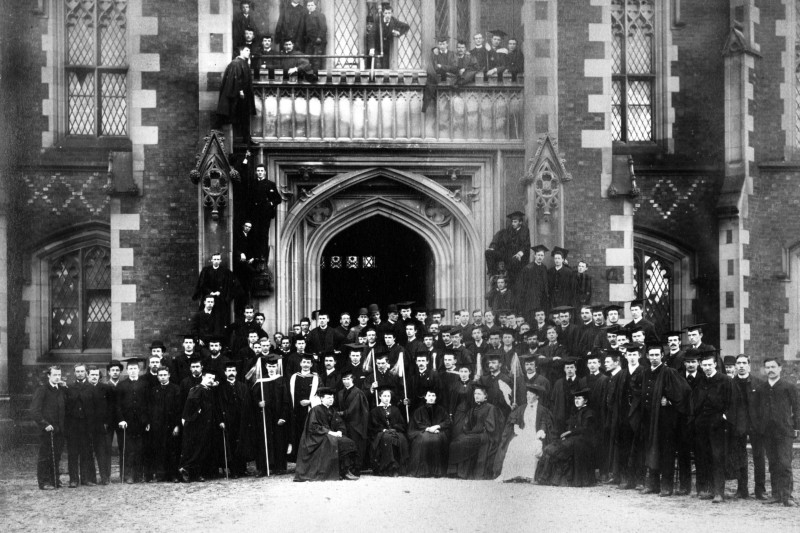
The first intake to Queen's was just 90 students.

In 1909 there were around 600 students, mostly drawn from the historic nine counties of Ulster.

Today there are approximately 23,000 from the UK and Ireland and more than 80 other countries.
Thomas Hamilton-lpr
THE FIRST VICE-CHANCELLOR
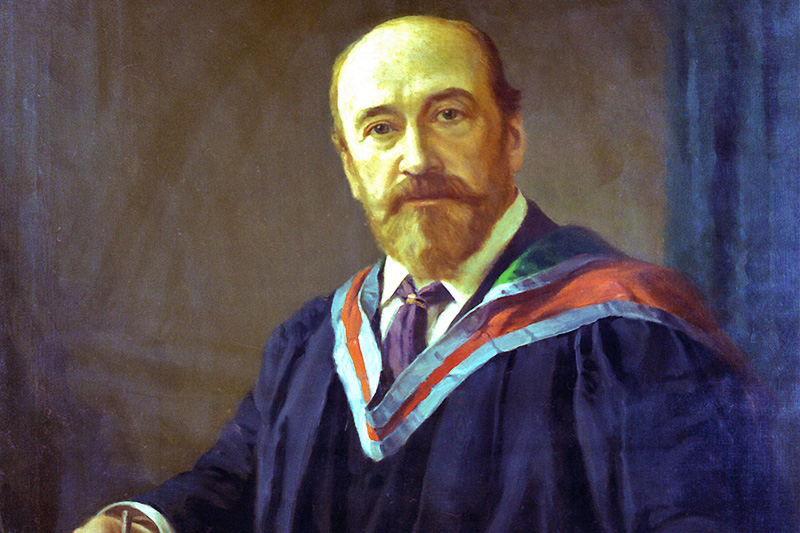
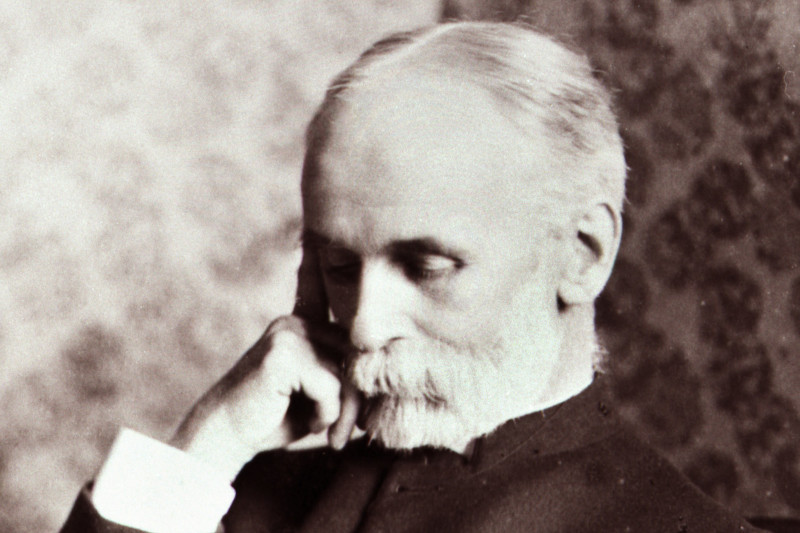
Rev Thomas Hamilton, a Presbyterian Minister and academic, was Queen's first official Vice-Chancellor.

Hamilton was an accomplished fundraiser who guided the university through a period of change and expansion. He launched a major campaign urging the Government to increase its grant to Queen's, and he appealed to the public for endowments. Some things never change.

The young university continued to expand and develop under the vice-chancellorships of classicist Sir Richard Winn Livingstone, political economist Sir Frederick Ogilvie and historian Sir David Keir, while Sir Eric Ashby - later Lord Ashby - played a major role in ensuring Queen's reputation on the national stage.

Dr Michael Grant, a renowned classicist, was chosen to follow Ashby. He was succeeded by physicist Sir Arthur Vick, described as one of the most able administrators to hold the post. Sir Arthur was followed by Sir Peter Froggatt who guided the University with ability, good humour and integrity through a period of great financial upheaval for the higher education sector.

He was followed by Sir Gordon Beveridge, who led Queen's during one of the most challenging periods in its history. By the time of his retirement in 1997 Queen's was in a healthy financial position, and had developed and enhanced its commitment to equality issues, becoming an exemplar in this field.

His successor was the visionary Canadian, Professor Sir George Bain. Under his leadership, the University implemented far-reaching restructuring and investment programmes and initiated the Campaign for Queen's - the most ambitious fundraising exercise in the University’s history.

He was followed by Professor Sir Peter Gregson, a Fellow of the Royal Academy of Engineering, who led the University into the Russell Group of the UK’s top 20 research-intensive universities in 2006 and to the title of UK Entrepreneurial University of the Year in 2009. He has also led the development of formal strategic international partnerships between Queen’s and leading universities around the world, notably in the United States, India, Malaysia and China.

He was followed by Professor Patrick Johnston. Professor Johnston joined Queen’s in 1996 as Professor of Oncology, later leading the establishment of the Centre for Cancer Research and Cell Biology and becoming its Director. Prior to taking up his post of President and Vice-Chancellor, he was Dean of the School of Medicine, Dentistry and Biomedical Sciences. His own research focus over 25 years was on the understanding of mechanisms of drug resistance to therapeutic agents.

The next President and Vice-Chancellor of Queen’s University Belfast will be Professor Ian Greer. Professor Greer has an international reputation of academic excellence and has held major strategic and leadership roles in higher education for some 25 years, most recently at The University of Manchester and at the University of Liverpool.

Read more Read less
William-Whitla_2H
SIR WILLIAM WHITLA
A major Queen’s benefactor was the distinguished Belfast physician Sir William Whitla.

The Sir William Whitla Hall opened in 1949 and his former home at Lennoxvale is the residence of the Vice-Chancellor.
Tyrone Guthrie
DISTINGUISHED CHANCELLORS
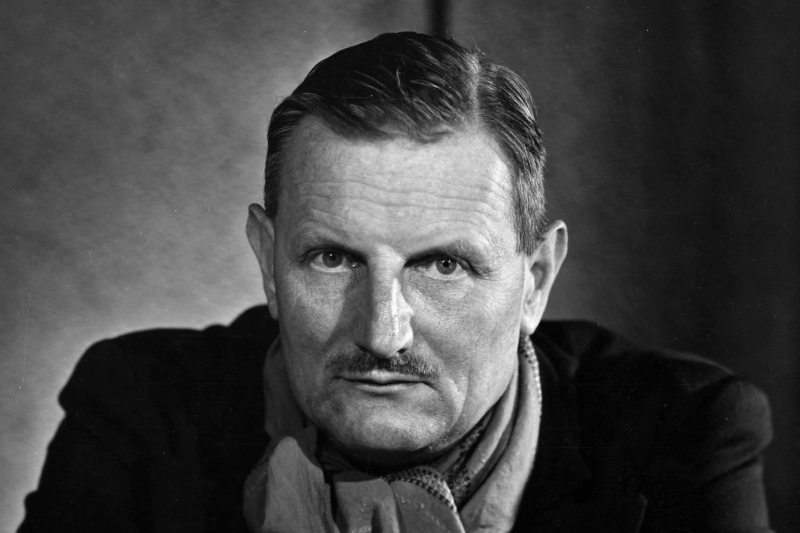
Chancellors of Queen’s have included the theatrical producer Sir Tyrone Guthrie.

More recently Senator George Mitchell, key figure in the Northern Ireland Peace Process, held the position.
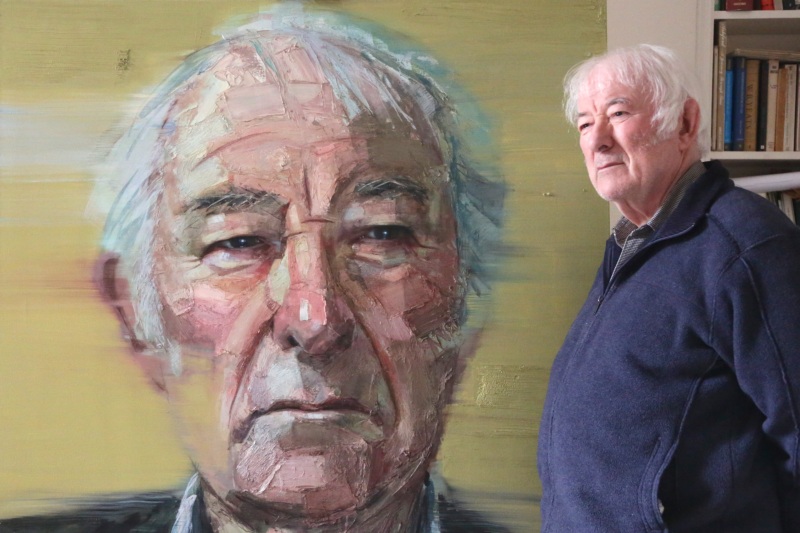
Seamus Heaney with his portrait
QUEEN’S NOBEL LAUREATES
World renowned poet and Queen's alumnus Seamus Heaney won the Nobel Prize for Literature in 1995.

Northern Ireland’s former First Minister and Queen's graduate, Lord Trimble, won the Nobel Peace Prize in 1998.

BORN FROM ROYALTY

At Queen’s, we are proud of our connections to the Royal Family and their support for the University since the Queen’s Colleges were formally brought into existence on 30 December 1845 and named in honour of the reigning monarch, Queen Victoria.

HISTORIC BUILDINGS
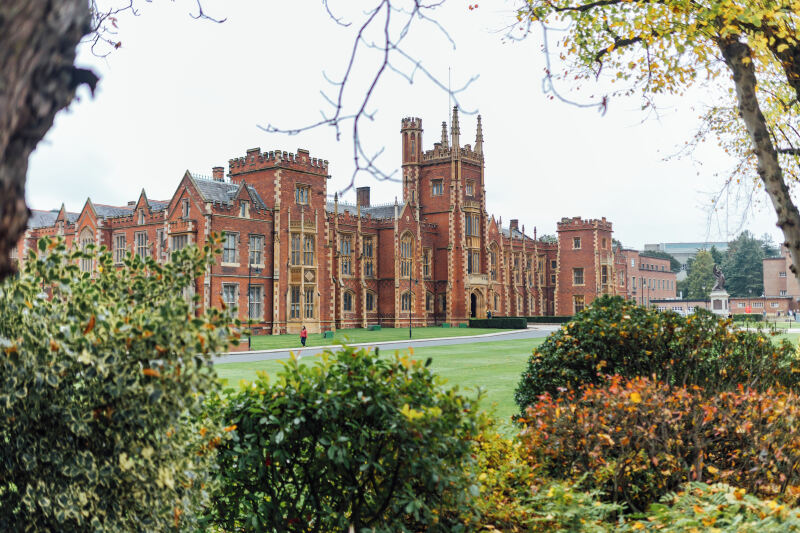
Lanyon Building

The centrepiece and the enduring symbol of Queen’s University is the original building, completed in 1849.

It is now known as the Lanyon Building after its architect, the renowned Sir Charles Lanyon. His design borrows from the Gothic and Tudor character of the great medieval universities, and in particular from Magdalen College, Oxford.
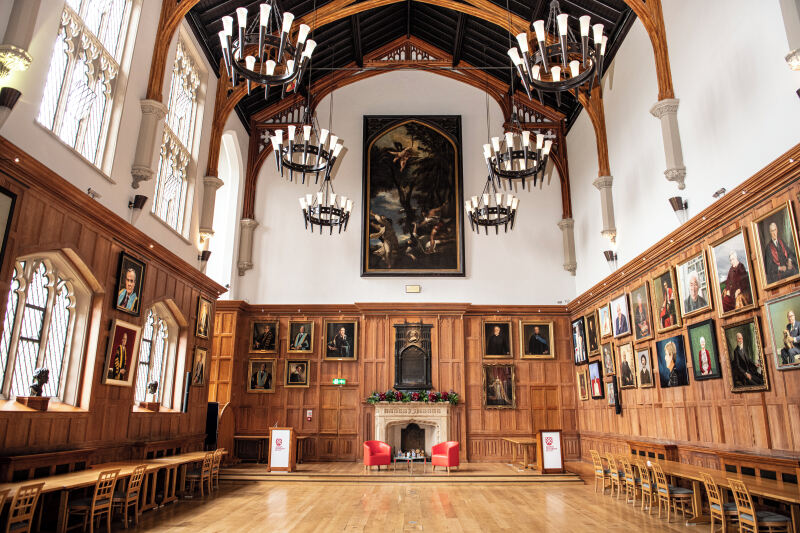
Great Hall

The magnificent panelled walls of the Great Hall hold a selection of portraits from the University’s art collection, creating a warm, powerful and theatrical space at the heart of the University.
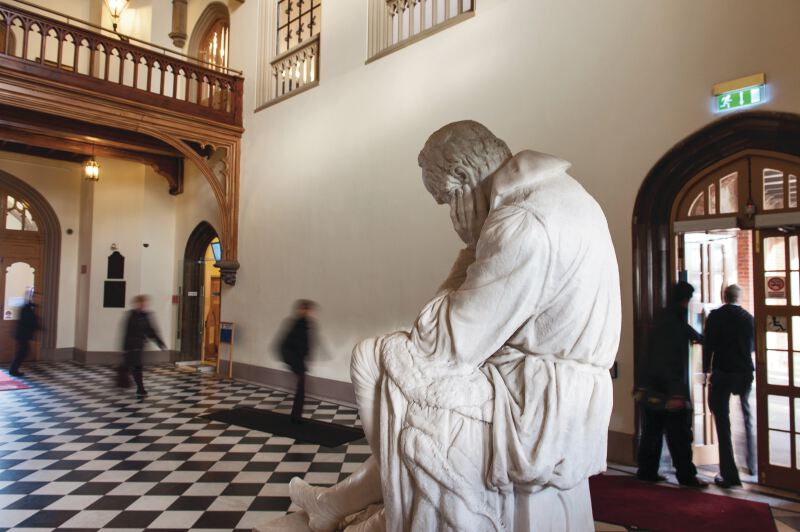
Black and White Hall

The Black and White Hall can be found through the main doors of the Lanyon Building.

The central statue of Galileo, by Pio Fedi, was installed in the hall in 2001 as part of the restoration of the adjacent Great Hall.
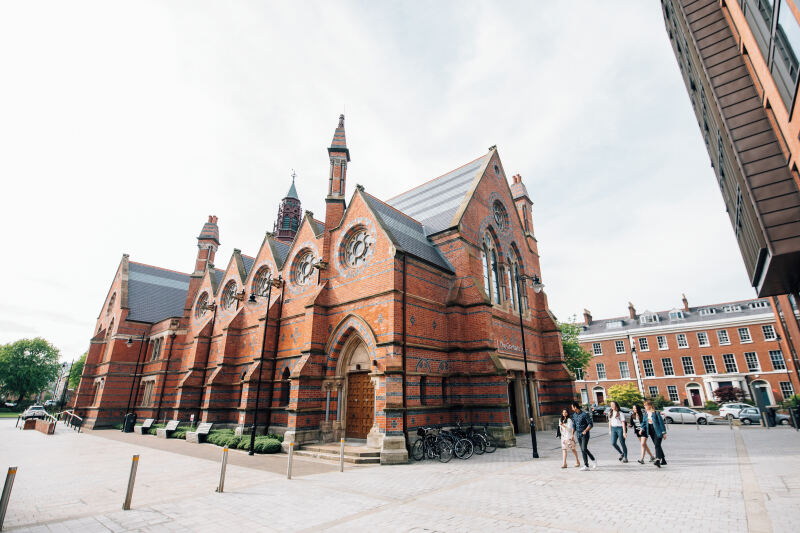
The Lynn Building

Named after its architect, William Henry Lynn, and designed in a vibrant Ruskinian Gothic style, it was originally the main library.

It is now the home to The Thomas J Moran Graduate School, having been sympathetically restored and remodeled in 2015.
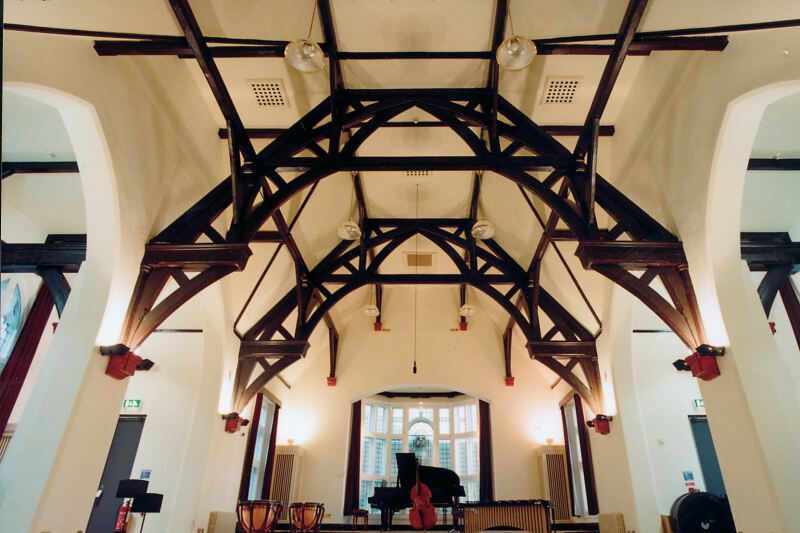
School of Music Harty Room

With a splendid hammer-beam vaulted roof and warm acoustic, the Harty Room (seating 120) is situated within the Music building where the regular lunchtime recitals and evening concerts take place. It is also the main rehearsal space for choirs and orchestras at Queen's.

It houses two full-concert Steinway grand pianos, a double-manual harpsichord, fortepiano, chamber organ and many percussion instruments.

The Harty Room is also equipped with a large projector screen and audio PA system suitable for events such as concerts and seminars.
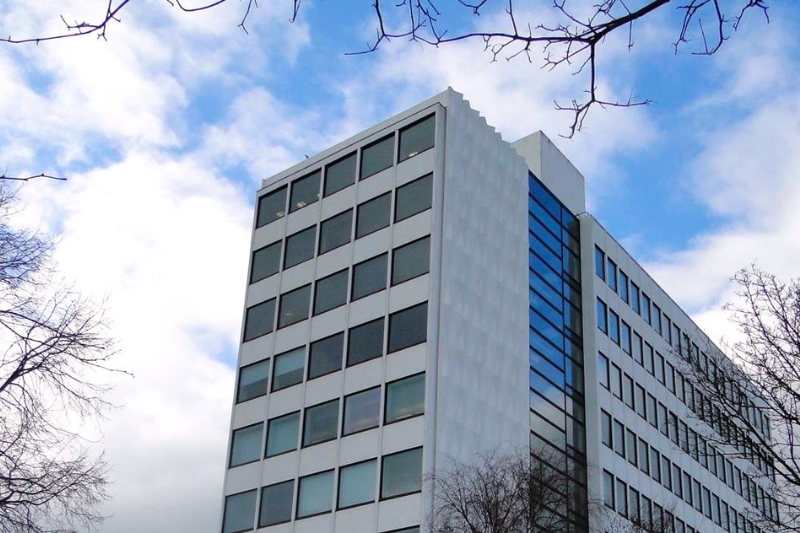
Ashby Building

Situated on the Stranmillis Road, the Ashby is home to the School of Mechanical and Aerospace Engineering and features one large lecture theatre and 13 rooms.
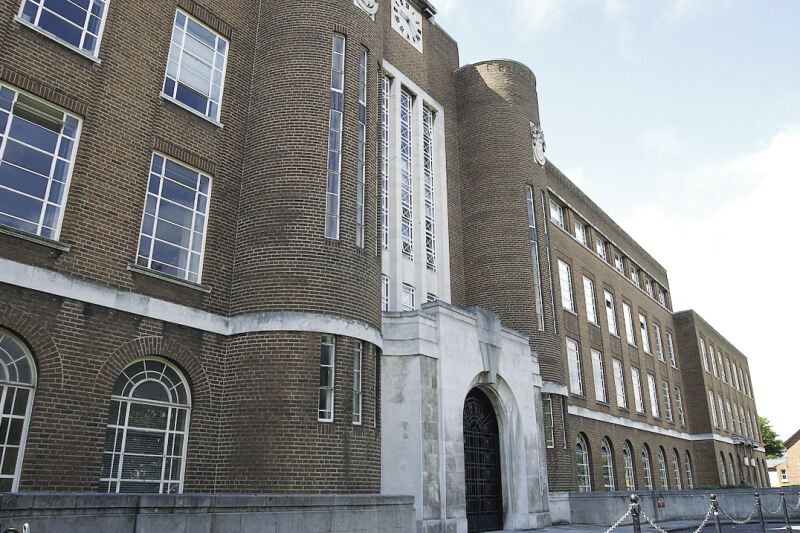
David Keir Building

The David Keir Building is named after the eminent Vice-Chancellor Sir David Lindsay Keir (1895–1973). Opened in 1959, the construction of the building marked the beginning of a great expansion of the University following the Second World War.

Located opposite the Friar’s Bush Graveyard (thought to be Belfast’s oldest Christian burial ground) and close to the site of a former monastic settlement believed to date back to the third or fourth century AD, the David Keir building has its own share of ghost stories.