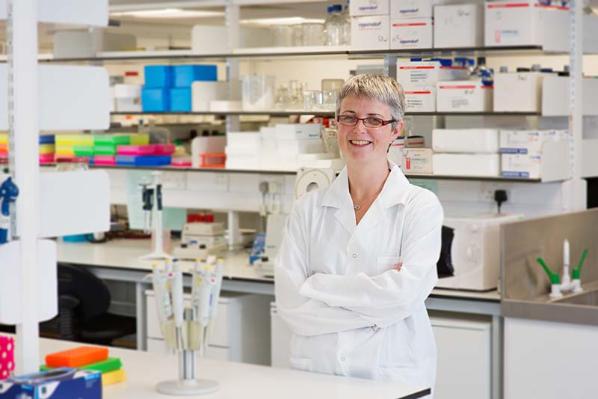
 Professor Stuart Elborn
Health

Our Research
Our world-leading researchers focus on the development and treatment of new avenues for the prevention, diagnosis and treatment of major public health problems that affect millions of people globally.
These medical problems include eye disease, diabetic complications, cardiovascular disease, antibiotic resistance and common lung illnesses such as asthma, COPD, cystic fibrosis and pneumonia.
Our inter-disciplinary research delivers innovative and translational science research, alongside insightful health services discoveries, leading to real-world impact in health and healthcare, beyond the lab.
LEARN HOW WE'RE MAKING AN IMPACT
Sign up to find out more about our research.
Case Studies
Research topics
-
Vision, Ophthalmology and Vascular Medicine
The Vision and Vascular Medicine Theme includes 16 PI-led teams working on clinical trials, diagnostics, molecular pathology, and drug discovery. Research focuses on diabetic retinopathy and age-related macular degeneration, exploring early disease mechanisms and potential therapies. Clinical trials, such as the DIAMONDS Trial, are evaluating treatments for diabetic macular oedema. Beyond eye disease, the institute also investigates diabetic cardiomyopathy, peripheral vascular disease, and nephropathy, with a focus on microvascular dysfunction and regenerative approaches using stem and progenitor cells.
- Respiratory Medicine
Our Respiratory Medicine research groups focus on translational research for asthma, COPD, cystic fibrosis, and acute respiratory distress syndrome, involving pre-clinical development and Phase I-III clinical trials. These trials are a mix of investigator-led and industry collaborations. Research also aims to establish quality criteria and outcome measures for clinical trials. Fundamental research complements this by exploring the molecular and cellular mechanisms of these diseases.
Key discoveries include the dysregulation of the immune response in lung inflammation, the role of the lung microbiome in cystic fibrosis, and asthma biomarkers. This work informs pre-clinical studies on therapies like anti-protease inhibitors and stem cells to treat lung conditions.
- Anti-microbial resistant infections
Research in this area focuses on enhancing the prevention, detection, and treatment of infections.
Efforts are centered on preventing antimicrobial resistance through better antimicrobial stewardship, improving infection detection using molecular and sensor technologies, and preventing infections with innovative anti-infective biomaterials. Additionally, the research aims to improve infection control strategies and develop new antibiotics, antibiotic adjuvants, and markers to guide more effective, evidence-based antibiotic selection.
- Cancer Research
Our mission in cancer research is to improve patient outcomes, train the next generation of scientists/clinicians and enhance the competitiveness of the UK life sciences sector.
The Patrick G Johnston Centre for Cancer Research at Queen's University Belfast is a cross-Faculty, interdisciplinary research centre with over 300 clinical and basic researchers from across the world and is committed to the highest quality of research excellence. Our world-leading research harnesses a close, collaborative interaction between clinical and laboratory research experts that ultimately enhances the quality and scope of our integrated basic and clinical research programmes in cancer as well as other diseases.
- Geriatric Research
Queen’s on Ageing is a cross-disciplinary research network that unites scholars from across the university to address issues related to ageing. Key research areas include dementia, delirium, neuroinflammation, perioperative brain health, nutrition, lifestyle, and big data analytics through the NICOLA project; the largest public health study in Northern Ireland talking to people from 50 years old right up to 100 years and beyond. Queen’s researchers engage with international groups, advisory boards, and cross-border initiatives like CARDI and CHITIN, and are affiliated with the Global Brain Health Institute.
Work at the Wellcome-Wolfson Institute further supports geriatric research through studies on eye health, antibiotic resistance, and neuroimmunology. In 2024, Queen’s joined UKAgeNet, a national network amplifying the collective voice of ageing research in the UK.
-
Psychology
The School of Psychology conducts research within the Behavioural Sciences cluster, addressing societal challenges through five interlinked themes: Development and Cognition, Health and Welfare, Brain and Behaviour, Trauma and Mental Health, and Social Psychology. Our research mission is to deliver high-quality research that explores the determinants of behaviour and tackles major contemporary issues.
We conduct studies in both fundamental psychological processes and applied areas, fostering strong partnerships with external organisations in Health, Social Care, and Education. Our work combines regional impact in Northern Ireland with global significance.
- Cardiology
Queen’s research in cardiology focuses on understanding cardiovascular diseases, improving diagnostic techniques, and developing new treatments.
The research covers heart failure, hypertension, and vascular complications, with significant work on understanding the molecular and genetic mechanisms driving these conditions. Our research aims to enhance clinical outcomes through personalised medicine, pioneering therapeutic strategies, and advancing preventative measures for heart disease. These efforts contribute to major advancements in cardiovascular healthcare and patient quality of life.
- Drug Delivery and Biomaterials
The research theme focuses on developing advanced materials for medical devices that interface with the body, offering functionalities like drug delivery, infection resistance, and health monitoring.
Key areas include fabricating biomaterials with enhanced anti-infective and biocompatibility properties, using non-antibiotic methods like in situ generation of reactive oxygen species to combat bacterial resistance. Sensor research emphasises blood-free diagnostics with microneedles, biocompatible scaffolds, and point-of-care tests for infections. Other areas of application involve innovative polymer synthesis, surface modifications, and drug-eluting materials to improve device performance and minimise adverse host responses.
- Healthcare technologies and biomedical engineering
Queen's research in bioengineering has been at the forefront of innovation, improving patient quality of life through novel healthcare technologies. The interdisciplinary approach adopted by Queen's researchers has led to groundbreaking developments in the design and application of biomaterials with multiple functions, catering to the diverse needs of medical interventions. The exploration of bioresorbable materials has opened new avenues in implant technology, providing solutions that are both effective and environmentally conscious.
Additionally, Queen's has been instrumental in the integration of 3D printing technologies in bioengineering, revolutionising the manufacturing of custom implants and prosthetics. This comprehensive research portfolio not only contributes significantly to the field of bioengineering but also translates into tangible advancements in patient care and medical technology.
- Nursing and Midwifery
Within the School of Nursing and Midwifery our area of strength is health innovation through co-design and rigorous evaluation of health promoting and healthcare interventions with policymakers, practice partners, patients and carers. Research themes encapsulate lifespan health research from conception to end-of-life.
The Maternal and Child Health theme adopts a multidisciplinary approach to high-risk groups during pregnancy, childbirth, infancy, and childhood, focusing on maternity care and child health from population-level studies to individual care needs. The Chronic Illness and Palliative Care theme explores the experiences of cancer survivors, palliative care patients, and their carers, aiming to enhance survivorship and end-of-life care.
-
Anaesthetics, Chronic Illness and Palliative Care
Queen's interdisciplinary research teams tackle challenges such as using AI for personalised heart failure support, sustained release systems for local anaesthetics, nonsteroidal anti-inflammatory agents to enhance postoperative recovery, advanced care planning for dementia and kidney disease, and co-designing solutions like social prescribing, cancer support platforms, and exercise prescriptions.
Research in critical care improves outcomes for critically ill patients through innovations in sepsis management, respiratory failure, and critical care systems. Using clinical trials, translational research, and biotechnology, Queen's researchers develop evidence-based practices that enhance care and quality of life. Global collaborations ensure rapid translation of advancements into clinical practice.
- Epigenetics
At Queen’s, Dr Atlasi and his team focuses on stem cell and cancer epigenetics, with an emphasis on how cell signalling pathways interact with chromatin regulation. They explore how these processes function in normal stem cells and how their disruption contributes to cancer progression and chemotherapy resistance.
Using models such as embryonic stem cells and tissue-derived organoids, they integrate advanced genomics, proteomics, and computational biology techniques. A recent paper published in Genes and Development, outlines how the Hao-Fountain syndrome protein USP7 controls neuronal differentiation via BCOR–ncPRC1.1. Research at Queen's aims to uncover fundamental biological insights that can inform new strategies to tackle major health challenges.
- Public Health Nutrition
The Public Health Nutrition Group focuses on advancing nutrition research and promoting public health across all age groups. Collaborating with the Centre for Public Health, the School of Biological Sciences, and the Institute for Global Food Security, they also maintain a wide network of national and international partners, including Harvard TH Chan School of Public Health and the University of California San Francisco.
Current projects include research on school food, food-based biomarkers, diet quality, cardiovascular health, neurocognitive aging in diabetes, and weight management during pregnancy. The group has a strong record of supervising postgraduate students and provides a vibrant, supportive environment for nutrition research with regular meetings.
- Featured Publications
- Trends in adult visual impairment certification in Northern Ireland: a 10-year analysis
- Exercise for advanced prostate cancer: a multicomponent, feasibility, trial protocol for men with metastatic castrate-resistant prostate cancer (EXACT)
- Post‐intensive care syndrome: a growing and under‐recognised condition
- Dietary flavonoid intake and psychological well-being – a bidirectional relationship
- Infants have rich visual categories in ventrotemporal cortex at 2 months of age
- A deep learning system for detecting silent brain infarction and predicting stroke risk
Our Academics
 Professor Jose Bengoechea
 Professor Christopher Scott
 Professor Frank Kee
 Professor Mark Lawler
 Professor Tunde Peto
 Professor Donna Fitzsimons
 Professor Joanne Reid
 Dr Áine Aventin
 Professor Helen McCarthy
 Dr Garry Laverty
 Dr Deirdre Gilpin
OUR RESEARCH HUBS
Our research integrates the full translational and innovation spectrum, spanning from fundamental discovery science, leveraging molecular/cellular/human models, to co-design and evaluation of health and healthcare solutions with end-users and developing innovative solutions and therapeutics to benefit industry and healthcare.