Keeping Progression Conversations Moving: iRISE-REC Workshop During Storm Chandra
Despite Storm Chandra and associated campus closures, the Joint iRISE-REC Academic Progression Workshop achieved a positive outcome on Tuesday 27 January 2026
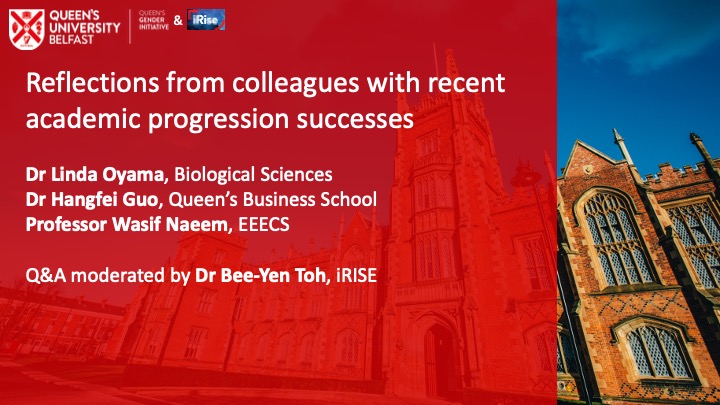
On Tuesday 27 January 2026, colleagues from across Queen’s came together for the Joint iRISE-REC Academic Progression Workshop, a practical session designed to support colleagues from Black, Asian, Minority Ethnic and International backgrounds who are considering applying for academic progression, now or in the future.
Although originally planned as an in-person event, Storm Chandra and associated campus closures meant the session had to move online at very short notice. Despite the disruption, the workshop went ahead successfully, offering an accessible space for colleagues to connect, reflect, and gain clarity on the progression process.
The workshop was structured to support evidence-informed application planning. The session was opened by Lauren Gallagher, REC Project Manager, followed by a formal welcome and introduction from Professor Peter Robertson, Associate PVC (Equality, Diversity and Inclusion).
Following the introductions, Professor Wei Sha, School of Natural and Built Environment and also the Academic Lead for Race and Cultural Inclusion, guided attendees through the previous year’s Academic Progression data to illuminate the wider progression landscape.
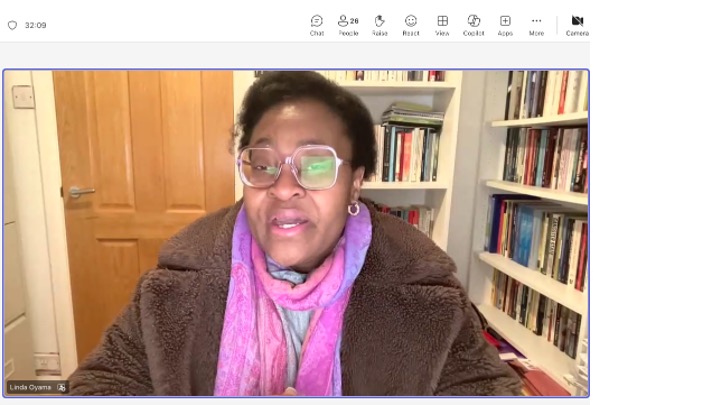
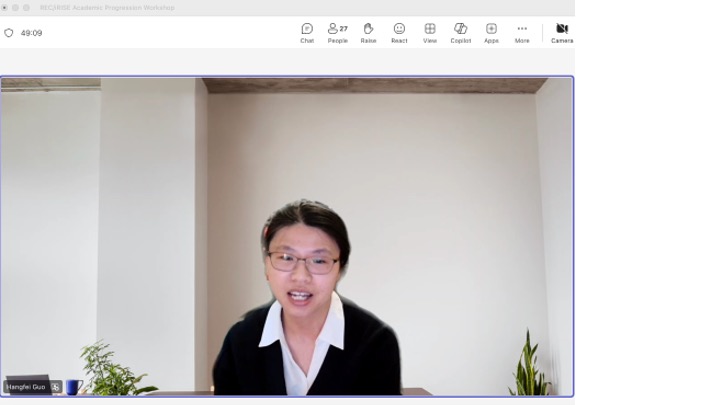
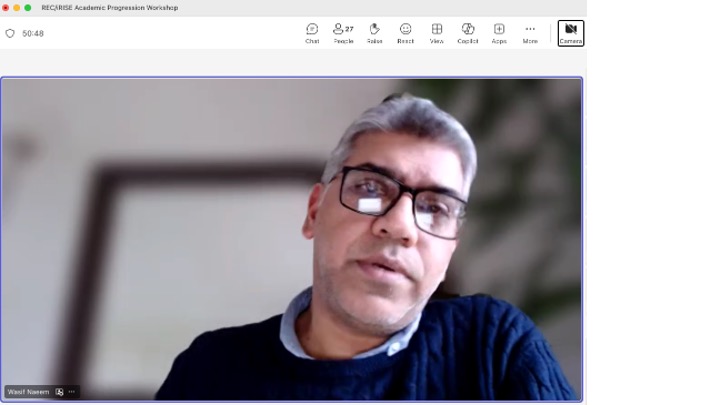
A central part of the workshop was the speaker reflections. Facilitated by Dr Bee-Yen Toh, Co-Chair of iRISE, the panel featured three recently progressed speakers who shared candid insights into preparing strong cases:
- Dr Linda Oyama, promoted to Senior Lecturer
- Dr Hangfei Guo, promoted to Reader
- Professor Wasif Naaem, promoted to Professor
Dr Bee-Yen Toh also facilitated a Q&A with the speakers, helping attendees to better understand expectations, demystify aspects of the process, and consider their next steps with increased confidence. The session also included a further opportunity for questions to People and Culture, with Nichola Donnelly responding to queries from participants.
Post-workshop feedback highlighted the value of combining progression data with first-hand reflections from recently progressed colleagues, particularly with one attendee who noted that the session was useful overall, even where some points did not apply to their current application, which they felt was “very understandable”.
Thank you to our speakers, facilitators and colleagues from REC and People and Culture for their contributions, and to everyone who attended and engaged in the discussion. iRISE and REC remain committed to supporting fair access to information, peer learning, and a strong sense of belonging as colleagues plan their academic careers at Queen’s.