Credits
20
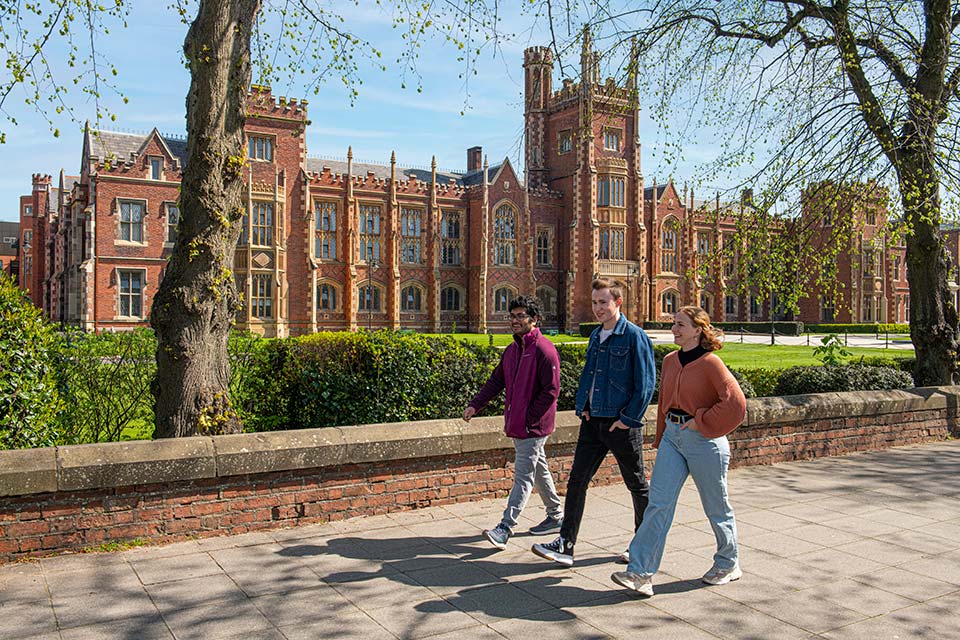
Chemistry is a core science subject that touches almost every aspect of our daily lives and will become increasingly important in our future knowledge-based society. Chemists develop life-saving drugs, medical devices, materials and sensors that can enhance our quality of life and environment beyond measure.
On our Chemistry courses you will build a deep understanding of chemical principles, from molecular structure and reaction mechanisms to analytical and practical laboratory skills, giving you a solid foundation in both theoretical and experimental chemistry. You will also gain transferrable problem-solving, quantitative and research skills that are valuable for careers in science, industry, education, or further studies.
Four-year MChem degrees and five-year MChem (with a Year in Industry) degrees are available for high-calibre students with the ability and aspiration to practice Chemistry at the highest levels. BSc students with excellent performance may transfer to the MChem up to the end of Stage 3.
A highly ranked Chemistry programme in a dynamic and internationally recognised School which combines world-leading research in applied sciences and engineering with innovative teaching to address global challenges.
This course is accredited by the RSC. It partially fulfils the academic requirements for Chartered Chem (CChem).
The course is also accredited by the Institute of Chemistry in Ireland.
We regularly consult with a large number of employers including, for example, Almac and Seagate and have close links with QUB spin-off companies (particularly in the Sustainability sector) including Nuada, Ionic Technologies, Catagen and Green Lizard Technologies.
QUB Chemistry degrees provide skills sets that have applications in diverse chemical industries, education and research. Employers in these and other sectors recognise the level of problem solving, data analysis, communication skills and creativity that our degrees require.
Significant investment has resulted in the installation and use of some of the most modern instrumentation available as well as a state of the art digital learning platform.
Ranked No. 1 in the Russell Group for overall student positivity (National Student Survey 2025) and 13th in the UK for Chemistry (Complete University Guide 2026), the School of Chemistry & Chemical Engineering pairs inspiring teaching with exceptional student support. Combine these academic credentials with Belfast’s affordable living costs and its vibrant cultural and social scene, and students will find the ideal environment in which to excel, both academically and personally.
In the School there are excellent opportunities to study for PhD degrees in Chemistry or to undertake taught Masters programmes such as the highly regarded MSc in Pharmaceutical Engineering.
NEXT
Course content
While providing dedicated subject-specific learning, our Chemistry degrees strongly emphasise opportunities to develop generic problem-solving and reflective-working practices applicable to a range of career paths and patterns of employability.
Many of the elements of the BSc are in common with the MChem programme, and allow students to transfer between the two pathways, subject to meeting the appropriate programme requirements.
In year one of the Chemistry degree, students develop essential foundational knowledge through a structured suite of modules.
Fundamentals of Chemistry introduces core ideas such as atomic structure, bonding, and thermodynamics, while Physical Chemistry 1 examines the principles that govern chemical behaviour.
Organic Chemistry 1 and Inorganic Chemistry 1 provide grounding in carbon-based and element-based chemistry, respectively.
Practical competence is cultivated through Fundamental Laboratory Skills and Practical Skills for Chemistry 1, where students learn key techniques, laboratory safety, and scientific reporting.
The year concludes with Instrumental Methods of Analysis, which trains students in modern analytical approaches—including spectroscopy and chromatography—crucial for identifying and quantifying chemical substances.
Students are required to take six modules of chemistry, designed to extend their knowledge of the traditional subject areas of analytical, inorganic, organic and physical chemistry, in addition to introducing aspects of applied chemistry, spectroscopy and theoretical chemistry. Each of the modules contain both practical and coursework components allowing students to develop, practice and demonstrate a wide range of professional skills.
Stage 2 courses are outlined below:
Physical Chemistry 2
Structural Chemistry
Organic Chemistry 2
Inorganic Chemistry 2
Industrial and Green Chemistry
Quantum Theory, Spectroscopy and Bonding
In addition to taking modules which develop knowledge of the key subject areas students also take an options module and a double-weighted research project directly supervised by a member of staff which will help them experience the full breadth of key areas in Chemistry and acquire both subject-specific and generic skills to act as a springboard to a successful career. Within this Advanced Practical work all students carry out inorganic, organic and physical chemistry project work.
Stage 3 courses are outlined below:
Inorganic Chemistry 3
Physical Chemistry 3
Advanced Chemistry Options
Organic Chemistry 3
Advanced Practical Work in Chemistry
Different pathways offer opportunities to specialise. The specialist pathways available consist of additional elements which are detailed below:
MChem Chemistry with Study Abroad:
Students spend their third year in an overseas academic institution then return to Queen's for a final year of study.
BSc Chemistry with a Year in Industry:
Students spend their third year working in industry - subject to the availability of a suitable placement - then return to Queen's for a final year of study.
MChem Chemistry with a Year in Industry:
Students spend their fourth year working in industry - subject to the availability of a suitable placement - then return to Queen's for a final year of study.
BSc Medicinal Chemistry:
Students take modules which include Biochemistry and Medicinal Chemistry and undertake a medicinal chemistry project.
There are also MChem, BSc and MChem with a Year in Industry courses in Medicinal Chemistry.
Chem & Chemical Engineering
Dr Lagunas is interested in molecular sensors, catalysis, luminescent materials, coordination chemistry and electrochemistry. She is an Athena Swan champion.
Chem & Chemical Engineering
Professor Muldoon's research is research is focused on homogeneous catalysis with a particular emphasis on selective oxidation reactions.
6 (hours maximum)
6 hours of practical classes or workshops each week; laboratory hours will increase as more project work is undertaken at Levels 3-4 (as applicable)
7 (hours maximum)
7 hours of lectures or seminars
24 (hours maximum)
22–24 hours studying and revising in your own time each week, including some guided study using handouts, online activities, etc.
2 (hours maximum)
2 hours of tutorials (or later, project supervision) each week
At Queen’s, we aim to deliver a high-quality learning environment that embeds intellectual curiosity, innovation and best practice in learning, teaching and student support to enable student to achieve their full academic potential.
On the BSc in Chemistry we do this by providing a range of learning experiences which enable our students to engage with subject experts and develop attributes and perspectives that will equip them for life and work in a global society. We make use of innovative technologies and a world class library to enhance their development as independent, lifelong learners.
Examples of the opportunities provided for learning on this course are:
This is an essential part of life as a Queen’s student when important private reading, preparation for seminars / tutorials, writing of laboratory reports can be completed. You are encouraged to undertake private reflection on feedback, and at the later stages undertake independent research using the primary literature to support project work and critically review taught course material.
Information associated with lectures and assignments is typically communicated via a Virtual Learning Environment (VLE) called Canvas. Opportunities to use IT programmes associated with data manipulation and presentation are embedded in the practicals and the project- based work.
Introduce basic information about new topics as a starting point for further directed private study/reading. Lectures also provide opportunities to ask questions, gain some feedback and advice on assessments (normally delivered in large groups to all year group peers).
Undergraduates are allocated a Personal Tutor during Level 1 and 2 who meets with them on several occasions during the year to support their academic and professional development through the discussion of selected topics.
These are essential to the training in this laboratory based subject area. You will have opportunities to develop technical skills and apply theoretical principles to real-life or practical contexts. Most of the core taught modules at Stages 1 and 2 have practical components associated with them, whilst stage 3 has a double weighted practical module. Typically at stage 1 you would be in the lab for two afternoons and in stages 2 to 3 it is two full days per week.
Significant amounts of teaching are carried out in small groups (typically 6-10 students). These provide an opportunity for students to engage with academic staff who have specialist knowledge of the topic, to ask questions of them and to assess their own progress and understanding with the support of peers. You should also expect to make presentations and other contributions to these groups as well as using them as a route to provide individual feedback.
Assessments associated with this course are outlined below:
As students progress through their course at Queen’s they will receive general and specific feedback about their work from a variety of sources including lecturers, module co-ordinators, placement supervisors, personal tutors, advisers of study and peers. University students are expected to engage with reflective practice and to use this approach to improve the quality of their work. Feedback may be provided in a variety of forms including:
The School of Chemistry and Chemical Engineering has seen substantial strategic investment in building new state-of-the-art research laboratories for synthetic and analytical chemistry, as well as catalysis research, with accommodation for over 50 researchers.
A £4 million investment in research and teaching laboratory space has significantly modernised and further extended our facilities, with recently added equipment including an environmental SEM facility, powder and single crystal X-ray diffraction equipment, a high-end confocal Raman microscope, 400 & 600 MHz nuclear magnetic resonance spectrometers, and a 500 MHz solid-state NMR spectrometer, the first instrument of this type in Northern Ireland. A further investment of £1.2M resulted in an Ion-mobility qTOF MS and a SAXS instrument - both unique in Northern Ireland - being added to the School's instrument facilities.
Further School facilities include two additional NMR spectrometers, three mass spectrometers, and additional powder XRD, ICP-OES, BET and Hg porosimetry equipment, a CD spectrometer and a HPLC/GC instrumentation, as well as standard spectrometer and computational facilities.
An in-house team provides analytical services to internal and external stakeholders using their dedicated instrument suite. 15 technicians provide support for microanalysis, glass-blowing, mechanical engineering, electronics, computer management and laboratory safety.
https://www.qub.ac.uk/schools/SchoolofChemistryandChemicalEngineering/OurSchool/Facilities/
The information provided in this Course Finder reflects the module details for the current year of study (2025/26). Please note that modules are subject to annual review and changes may occur in response to various factors, including student feedback and academic developments. Prospective students will be notified of any significant changes to module offerings before the start of the new academic year.
1. Elements, Atoms, ions, electrons and the periodic table. (8h)
This course aims to give an introduction to the fundamental principles of atoms from the
chemists’ viewpoint. Starting from a simple model and using the results of quantum mechanics
a more appropriate model of the atom is presented. From this model trends in atomic and ionic
properties which enable us to explain differences and similarities and predict the properties of
different elements can be deduced. The following topics are covered:
* The Basics: element, the periodic table, atom, mole.
* Electromagnetic radiation: energy, wavelength and frequency.
* The Atom: the Bohr atom.
*The Electron: wave-particle duality and the Schrödinger wave equation, probability density, radial distribution function, orbitals, quantum numbers, s and p orbitals, phase, d orbitals.
* More than one electron: filling orbitals, the Aufbau principle, the Pauli exclusion principle, Hund’s rules, penetration, shielding, effective nuclear charge, Slater’s rules, size.
* Trends: ionisation energy, electron attachment enthalpy (affinity), electronegativity, ionic
radii, polarisability and polarising power, hydration enthalpies.
* Redox reactions: assigning oxidation numbers, oxidising and reducing agents, redox
potentials. How to balance simple redox reactions.
* Percentage composition, empirical formula and molecular formula, determining limiting reactant.
2. Introduction to Chemical Reactivity (8h)
* Introduction to chemical reactivity and the differing concepts of thermodynamic and kinetic control
* Factors affecting reaction rate: concentration, molecule shape, temperature and catalyst for successful collisions
* Concentration - time relationships for zero, first and second order reactions: rate equations and shapes of concentration – time graphs. Molecularity, stoichiometry and reaction order. Rate constants and units.
* Integrated rate equations: Graphical methods for determining the reaction order and the rate constant
* Half-life and first order kinetics
* Collision and transition state theory. The Arrhenius Equation and activation energy
* Reaction Mechanisms: Complex reactions and the rate determining step
* Relevant industrially important examples from all areas of science and engineering
3. Structure and Bonding. (8h)
This course introduces some important theories of bonding. Theories of bonding are discussed in some detail for discrete molecules. The discussion of bonding in molecular species centres on the valence bond and molecular orbital theories. Intermolecular forces between molecules are also discussed.
* Introduction to bonding: Discussion of types of structure and common bonding theories, examples of representative structures.
* Homonuclear Diatomic Molecules: Interatomic distance and covalent radii, Potential energy curves, attractive and repulsive forces, bond energy and enthalpy. Lewis structures, filled shells, the octet rule. Wavefunction, introduction to valence bond theory and molecular orbital theory, Valence bond theory: ionic and covalent contributions, resonance; Molecular orbital theory: molecular orbitals, linear combinations of atomic orbitals, orbital overlap, bonding and antibonding orbitals, MO diagrams, some shapes of MO’s, labelling MO’s, examples of simple MO diagrams, bond order.
* Heteronuclear Diatomic Molecules: Lewis structures, valence bond approach, Molecular orbital theory, energy matching, symmetry, non-bonding orbitals; electronegativity, electric dipole moments, carbon monoxide, isoelectronic molecules.
* Polyatomic Molecules: Metal complexes and covalent polyatomics, coordination number, common geometries, molecules obeying the octet rule, valence bond theory, expanding the octet, hybridization (sp, sp2, sp3), single, double and triple carbon-carbon bonds, molecular shapes; molecular orbital theory: ligand group orbitals; comparison of VB and MO, macromolecules, fullerenes, proteins and hydrogen bonding.
4. Introduction to Organic Structure. (8h)
* Structural formula to represent organic compounds, identify isomers and convert structural formula to molecular formula.
* Structure-property relationships of common organic functional groups, giving rise to stability, reactivity and solubility.
* Conformation and stereoisomerism including R&S, E&Z, and D&L notation.
5. Chemistry, Society & Sustainability. (7h)
* Impacts of chemistry: UN’s Sustainable Development Goals, medicines, clean water.
* Introduction to green chemistry and the 12 Principles.
* Toxicity, biodegradability and the environment.
* Critical resources and element scarcity, EuChemS Periodic Table.
Assessment/Quiz (3h total)
* In person class test on units 1&2.
* In person class test on units 3&4.
* In person class test on unit 5.
On completion of this module a learner should be able to:
*Students should aim to achieve a solid grounding in the fundamental principles of atomic structure, the principal quantum numbers and s and p orbitals and the periodic table, including the ability to answer problems related to these concepts. They should be able to explain and use the aufbau principle. They should aim to achieve a good understanding of, and be able to explain, the trends in atomic and ionic properties in the periodic table. They should develop the ability to use these concepts to explain and predict the properties of the different elements.
* Students should understand the factors that govern chemical reactivity.
* Students should be able to draw Lewis structures for simple molecules that obey the octet rule and be able to use hybridisation to describe more complex structures and especially single, double and triple bonds to carbon. They must be able to understand how and why resonance is used to describe a structure.
* They should understand the significance of molecular orbital diagrams, be able to draw them for simple molecules and be able to use the molecular orbital diagram to work out the order and suggest the stability of bonding.
* Students should be able to contrast the valence bond and molecular orbital theory. Important parameters that help to describe bonding will be discussed and the students must be able to define and apply these terms in a qualitative way. Students will receive an introduction to solids and understand the main classes of solids and how they differ.
* Students will become familiar with chemical descriptions of matter. What matter is made up of, how it can be organised into the periodic table and how we can start to understand it from a scientific perspective.
* Students will learn about organic compounds, their structures, how they are named and understanding important functional groups.
• Understand the potential impact of chemistry on society and the environment.
• Learn about tools and resources to help increase the sustainability and improve the positive impact of chemistry.
Learners are expected to demonstrate the following on completion of the module:
* Ability to write and predict atomic structure and properties.
* Describe, calculate and make predictions regarding chemical reactivity.
* Ability to explain and understand bonding.
* Ability to recognise functional groups in organic chemistry and name compounds.
* Ability to evaluate chemistry from a sustainability perspective.
20
CHM1201
12 weeks
INTRODUCTION TO ORGANIC REACTIVITY
*Reading an organic reaction, recognition of nucleophiles and electrophiles
*Role of mechanism in organic chemistry and the use of curly arrows
*Nucleophilic substitution at saturated carbon
*Elimination reactions
*Alkene addition reaction
CARBONYL CHEMISTRY AND ACIDITY
*Develop an understanding of the pKa and pKaH scales.
*Appreciate how the pKaH scale can be used to determine nucleophile strength and leaving group ability.
*Reason through the factors that affect the stability of a conjugate base and appreciate how to use this knowledge to predict approximate pKa values and positions of equilibrium.
*Understand factors that govern nucleophilic addition to the carbonyl group.
*Understand the differences between acid and base catalysed mechanisms.
*Understand factors that govern nucleophilic substitution at the carbonyl group.
*Be able to predict whether a nucleophilic substitution to a carbonyl group is likely to proceed.
*Appreciate the differences in reactivity of α,β-unsaturated carbonyl compounds
*Understand the factors that control the regioselectivity of 1,2- vs 1,4-addition in such α,β-unsaturated systems
*Understand the impact of kinetic and thermodynamic control in organic reactions.
OXIDATION AND REDUCTION REDOX PROCESSES
*Definition of REDOX processes.
*Functional group interconversions based on REDOX processes.
*Classes of oxidants including oxygen, ozone, N-oxides, peroxides, peroxyacids, transition metal and p-block elements in high oxidation states.
*Classes of reductants including hydrogen, hydrides of boron and aluminium, and electropositive elements such as sodium and magnesium.
AROMATICITY AND AROMATIC CHEMISTRY
*The Huckel Rule of Aromaticity
*The bonding in benzene: concepts of resonance, delocalisation and aromatic stabilisation.
*Nomenclature of substituted aromatics.
*Electrophilic Aromatic Substitution Reactions: mechanisms and prominent (name) reactions: nitration, halogenation, acylation, and alkylation.
*Directing Effects in Electrophilic Aromatic Substitution Reactions.
*Aromatic amines and diazonium salts: preparation and reactions of.
*Electrophilic substitution of heteroaromatic compounds.
*Diazotisation of aniline, Nucleophilic substitution of diazonium species. Preparation of phenols.
*Synthesis and strategies in preparation of polysubstituted benzenes.
On successful completion of this module students will:
*Have a good working knowledge of the fundamental reactions and reagents of synthetic organic chemistry and of the chemistry of important, commonly encountered, organic functional groups.
*Be capable of drawing basic organic reaction mechanisms and have a good awareness of key stereochemical principles and factors determining organic molecule reactivity.
*Begin to develop an understanding of the pKa scale and its uses for understanding reactivity
*Understand the fundamentals of carbonyl chemistry, particularly addition and substitution reactions
*Understand what is required for an oxidation or reduction reaction to occur
*Develop an understanding of the chemistry surrounding aromatic molecules
Learners are expected to demonstrate the following on completion of the module:
*You will learn how to take good notes from lectures.
*You will begin to understand the principles of mechanistic organic chemistry and ‘curly-arrow’ pushing and learn the basic language that we speak in the organic chemistry world.
*You will understand the different mechanisms behind nucleophilic substitution, elimination, and alkene addition, and be able to reason products from given starting materials by suggesting a mechanism through which the transformation occurs
*You will be able to estimate pKa values for protons in different environments
*You will be able to predict whether a given carbonyl substitution reaction will be likely to proceed
*You will determine the best reagents and conditions to choose to conduct an oxidation or reduction reaction of a given starting material
*You will be able to reason through inductive and mesomeric effects of differing functional groups on an aromatic ring and their relative abilities to direct electrophilic aromatic substitution reactions to predict the products of a given reaction
20
CHM1205
12 weeks
Practical classes content (9 sessions, 3h each)
1. Introduction to laboratory safety & basic techniques
• Pipetting, weighing, and solution preparation.
• Safety and lab notebook introduction.
2. Excel Workshop 1
• Hands-on experience using Microsoft Excel to analyse and interpret experimental data.
• Application of data processing techniques to determine rate order, rate constants, and
associated errors.
• Development of clear and effective data presentation for scientific analysis.
3. Excel Workshop 2
• Hands-on experience using Microsoft Excel to analyse buffer data and calculate key
parameters
• Application of statistical methods to determine buffer index and standard deviation.
• Development of clear and effective data presentation for scientific reporting.
4. Kinetic Study of Ester Hydrolysis
• Hydrolysis of ethyl acetate in acidic solution.
• Monitoring reaction progress via pH or spectrophotometry.
• Determining reaction order from experimental data.
5. Buffers and pH Measurement
• Preparation of buffer solutions with a specific target pH.
• Calculation of buffer composition using acid-base equilibria and pKa values.
• Measurement of buffer capacity by titration with acid and base.
6. Determination of the Activation Energy of a Reaction
• Study of the temperature dependence of reaction rates using the Arrhenius equation.
• Measurement of dissolution rates of effervescent tablets at varying temperatures.
• Calculation of activation energy (Ea) from an Arrhenius plot.
7. Concentration Cells and Electrode Potentials
• Construction of a Zn-Cu electrochemical cell to measure and validate theoretical cell potentials.
• Application of the Nernst equation to determine cell voltage under non-standard conditions.
• Creation of a lemon battery using different electrode materials to generate electrical energy.
8. Heat of Fusion and Heat of Solution
• Determination of the heat of fusion of ice using calorimetry.
• Measurement of the heat of solution for different ionic compounds.
• Analysis of spontaneous processes using enthalpy (ΔH), entropy (ΔS), and Gibbs free energy
(ΔG).
9. Chemical Equilibria: Solubility and Le Chatelier’s Principle
• Determination of the solubility product (KSP) of calcium hydroxide using titration.
• Application of Le Chatelier’s Principle to equilibrium shifts in copper(II) chloride solutions.
• Observation of equilibrium shifts through colour changes in response to concentration and
temperature variations.
On completion of this module students should be able to:
Perform essential lab techniques, including weighing, measuring, and dispensing solids and
liquids, handling common lab glassware, using reagent tables and performing standard lab
based calculations
Follow laboratory safety protocols, handle chemicals and equipment correctly, and maintain an accurate lab notebook.
Process and interpret experimental data using Microsoft Excel, including statistical analysis, graphing, and trendline fitting to extract meaningful parameters such as buffer index and standard deviation.
Determine and analyse reaction kinetics by calculating reaction orders, rate constants, and activation energies using experimental data and graphical methods.
Apply electrochemical principles to construct galvanic cells, measure electrode potentials, and use the Nernst equation to predict and validate cell voltages under varying conditions.
Investigate thermodynamic properties such as heat of fusion and heat of solution, and assess the spontaneity of chemical processes using enthalpy, entropy, and Gibbs free energy.
Understand and apply chemical equilibrium concepts by determining solubility products (KSP) and demonstrating equilibrium shifts using Le Chatelier’s Principle.
Students are expected to demonstrate the following on completion of the module:
Ability to follow standard laboratory procedures while maintaining accurate records, performing
quantitative measurements, and critically analysing experimental results.
Ability to utilise Microsoft Excel for scientific data analysis, including statistical processing,
graphing, and trendline fitting to extract relevant parameters.
Ability to conduct kinetic experiments and analyse reaction rates, rate constants, and activation
energies using graphical methods and data interpretation.
Ability to set up and operate electrochemical cells to measure electrode potentials, apply the
Nernst equation, and evaluate redox reactions.
Ability to perform thermodynamic calculations to determine enthalpy, entropy, and Gibbs free
energy changes, assessing the spontaneity of chemical processes.
Ability to apply principles of chemical equilibrium by determining solubility products (KSP) and
predicting equilibrium shifts using Le Chatelier’s Principle.
10
CHM1204
12 weeks
Summary of Lecture Content:
Introduction to separations and chromatography
Liquid Chromatography
Gas Chromatography
Infrared Spectroscopy
Nuclear Magnetic Resonance
Mass spectrometry
Hyphenated analytical techniques
Summary of Workshop Content:
HPLC instrumentation
HPLC method development
NMR spectroscopy
Mass spectrometry
On completion of this module students should be able to:
Understand the principles, instrumentation, and applications of chromatography, spectroscopy,
and mass spectrometry.
Explain the fundamentals of Liquid Chromatography (LC) and Gas Chromatography (GC),
including key factors affecting separation efficiency.
Interpret chromatographic, IR, NMR, and MS data to identify compounds and assess analytical
performance.
Compare the strengths, limitations, and applications of different instrumental techniques.
Understand the advantages of hyphenated techniques (e.g., LC-MS, GC-MS).
Students are expected to demonstrate the following skills on completion of the module:
Explain the principles and applications of key analytical techniques (LC, GC, NMR, IR, MS).
Interpret chromatographic, IR, NMR, and MS data to identify compounds.
Troubleshoot common issues in chromatography and spectroscopy.
Evaluate analytical data for accuracy, precision, and reliability.
Use software tools for spectral analysis and data interpretation.
Communicate findings clearly in a scientific format.
10
CHM1207
12 weeks
Practical Classes Content (1 session of 1.5h, 10 sessions of 3h each, 4 sessions of 6h each)
1. Purification of a Solid Organic Compound
• Separation of an unknown compound from impurities using filtration and crystallization.
• Vacuum and gravity filtration to remove insoluble impurities.
• Melting point analysis to assess purity.
2. Reduction of Benzophenone with Sodium Borohydride
• Reduction of a ketone to an alcohol using sodium borohydride.
• Thin Layer Chromatography (TLC) to monitor reaction progress and purity.
• Crystallization and melting point analysis to purify and confirm product identity.
3. Resolution of α-Phenylethylamine (α-Methylbenzylamine)
• Separation of enantiomers via chiral resolution using (+)-tartaric acid.
• Extraction and purification using a separating funnel, drying agents, and rotary evaporation.
• Polarimetry to determine the enantiomeric purity of the resolved product.
4. Synthesis of Triphenylmethyl Bromide
• Nucleophilic substitution reaction mechanism to form triphenylmethyl bromide from triphenylmethanol.
• Recrystallization and solvent testing to determine the optimal purification method.
• Infrared spectroscopy and melting point analysis to assess product purity.
5. Preparation of 3-Methyl-1-Butyl Ethanoate
• Esterification reaction between 3-methylbutan-1-ol and acetic anhydride.
• Reflux and distillation for reaction completion and product purification.
• Extraction and drying using a separating funnel and drying agents to isolate the ester.
6. Preparation of Paracetamol and Aspirin and Identification of Analgesics in Common Medications
• Synthesis of active pharmaceutical ingredients through acylation reactions.
• TLC to compare purity against commercial samples.
• Recrystallization and melting point analysis to confirm product identity and purity.
7. Reductive Amination
• Formation of C-N bonds via reductive amination using sodium triacetoxyborohydride.
• TLC to monitor reaction progress and optimize eluent ratio.
• Recrystallization and melting point analysis to purify and confirm the final product.
8. Synthesis of Acetanilide and 4-Bromoacetanilide
• Electrophilic substitution reaction to prepare acetanilide and its brominated derivative.
• TLC to confirm reaction completion and product identity.
• Recrystallization and melting point analysis to purify and characterize the final product.
9. Thermochromism in Metal Complexes
• Observing colour changes in metal complexes due to temperature variations.
• Synthesis of thermochromic nickel and copper complexes.
• Use of vacuum filtration and fume-hood techniques for synthesis and purification.
10. Lewis Acidity and 31P NMR Analysis
• Investigating the interaction between Lewis acids and a phosphine oxide probe.
• Synthesizing and analysing metal chloride adducts using NMR spectroscopy.
• Quantifying Lewis acidity through chemical shift measurements.
11. Solid State Chemistry - Thermite Process
• Reduction of metal oxides using aluminium powder.
• Extreme heat generation leading to molten iron and slag formation.
• Observing solid-state reactions and physical property changes.
12. Complexes of Cobalt
• Synthesis of cobalt(II) complexes with different ligands.
• Investigation of ligand effects on coordination number and bonding modes.
• Infrared spectroscopy analysis to determine thiocyanate binding mode.
13. Kinetic Study of Ester Hydrolysis
• Hydrolysis of ethyl acetate in acidic solution.
• Monitoring reaction progress via pH or spectrophotometry.
• Determining reaction order from experimental data.
14. Complexes of Cobalt
• Investigating the formation of metal-ligand complexes, with a focus on iron(II) and bipyridine.
• Determining the stoichiometry of iron(II) complexes using spectrophotometry.
• Preparing and isolating a bipyridine-iron complex through a synthesis procedure.
15. Practical Skills Assessment
• Reaction setup and polarimetry to measure optical activity and handle analytical balances.
• TLC to assess reaction progress and product purity.
• Workup and purification using separating funnels, drying agents, and recrystallization. Melting point analysis to confirm compound purity and identity
On completion of this module students should be able to:
Apply fundamental organic chemistry techniques to synthesise, purify, and characterise organic compounds effectively.
Set up and conduct chemical reactions using appropriate glassware, reagents, and experimental conditions.
Analyse reaction progress and product purity using TLC, melting point determination, and spectroscopic techniques.
Perform work-up and purification procedures such as liquid-liquid extraction, drying, recrystallisation, and rotary evaporation.
Interpret experimental data and spectroscopic results to confirm the structure and purity of synthesised compounds.
Demonstrate safe and responsible laboratory practice, including proper handling of chemicals, waste disposal, and adherence to health and safety protocols.
Students are expected to demonstrate the following on completion of the module:
Ability to perform fundamental chemistry techniques, including reflux, distillation, recrystallization, and vacuum filtration.
Ability to set up, monitor, and assess reactions, including the use of TLC for reaction progress and purity evaluation.
Ability to execute workup and purification methods, such as liquid-liquid extraction, drying agents, and rotary evaporation.
Ability to accurately measure and analyse compounds, including weighing with an analytical balance and performing melting point analysis.
Ability to practice safe and efficient laboratory procedures, including handling hazardous reagents, proper waste disposal, and adherence to health and safety regulations.
10
CHM1208
12 weeks
Summary of Lecture Content:
Lecture 1: Numbers, units, and scientific notation
Lecture 2: Algebra and rearranging equations
Lecture 3: Functions and graphing in Chemistry
Lecture 4: Logarithms and exponentials in Chemistry
Lecture 5: Differentiation: rates of change in Chemistry
Lecture 6: Applications of differentiation in Chemistry
Lecture 7: Integration: accumulation and area
Lecture 8: Introduction to differential equations
Lecture 9: Vectors and matrices in Chemistry
Lecture 10: Complex numbers and their chemical applications
Lecture 11: Statistics and error analysis
Lecture 12: Revision and problem-solving strategies
Summary of Workshop Content:
Workshop 1: Algebra, functions, and graphing
Workshop 2: Calculus in Chemistry
Workshop 3: Matrices, vectors and statistics
Workshop 4: Applied problem solving
On completion of this module students should be able to:
Apply numerical, algebraic, and graphical techniques to solve chemical problems, including
unit conversions, scientific notation, and equation manipulation.
Use logarithms, exponentials, and calculus to describe chemical processes such as pH,
reaction kinetics, and thermodynamics.
Differentiate and integrate functions to determine rates of change, accumulation, and reaction
progress in chemistry.
Solve basic differential equations relevant to chemical kinetics and equilibrium.
Apply vectors, matrices, and complex numbers in quantum chemistry, molecular symmetry, and
spectroscopy.
Use statistical methods and error analysis to interpret experimental data, including regression
and uncertainty calculations.
Students are expected to demonstrate the following on completion of the module:
Ability to apply numerical, algebraic, and graphical methods to solve chemical problems.
Ability to use calculus and differential equations in chemical kinetics, thermodynamics, and
equilibria.
Ability to apply vectors, matrices, and complex numbers in chemistry.
Ability to analyse experimental data using statistical methods and error propagation.
10
CHM1203
12 weeks
Main Group Chemistry:
Definitions: Oxidation Number and State, Valency.
Brønsted and Lewis acidity and basicity; hard and soft principles.
Chemistry of the s-block.
Introduction to the chemistry of the p-block elements, emphasizing:
Halides and hydrides.
Multiple bonding.
Molecular geometries (VSEPR theory).
Effective atomic number rule (Octet Rule).
Hypervalency.
Hydrogen Bonding.
Introduction to Coordination Chemistry:
Introduction to coordination chemistry of the d-block elements.
Trends and generalized properties, oxidation states.
Complexes and ligands, (Lewis acids / bases).
Co-ordination number, geometry, denticity, and chelates.
Nomenclature
Isomerism; geometrical, optical, ionisation, hydration, ligand, linkage and co-ordination.
Crystal field theory d-orbital splitting in octahedral, tetrahedral and square planar complexes, Δ,
high / low spin.
Exploration of thermodynamic stability.
Redox Potentials
Introduction to Solids:
States of matter and intermolecular forces
Structure, energy and chemical bonding of solids
Basic principles of chemistry in the solid state
Structures of the elements, packing of spheres and metal structures
Relationship between electronic structure, chemical bonding and crystal structure
Salts, metals, ceramics, semiconductors and polymers
Basic chemical and physical properties of solids
Applications in materials chemistry
On successful completion of this module a learner should be able to:
Understand electronic configurations and the fundamentals of bonding,
Understand Brønsted and Lewis acidity,
Determine the oxidation state, valency and molecular geometry in simple inorganic compounds,
Have a general overview of s and p-block chemistry,
Have a general overview of d-block chemistry,
Have a general overview of the principles of chemistry in the solid state,
Perform simple synthetic procedures following a method,
Obtain and analyse data from physico-chemical phenomena.
Students should aim to achieve a solid grounding in the fundamental principles of atomic
structure, the principal quantum numbers and s and p orbitals and the periodic table, including
the ability to answer problems related to these concepts.
They should be able to explain and use the aufbau principle.
They should aim to achieve a good understanding of, and be able to explain, the trends in
atomic and ionic properties in the periodic table.
They should develop the ability to use these concepts to explain and predict the properties of
the different elements.
Students should be able to draw Lewis structures for simple molecules that obey the octet rule
and be able to use hybridisation to describe more complex structures and especially single,
double and triple bonds to carbon.
They must be able to understand how and why resonance is used to describe a structure.
They should understand the significance of molecular orbital diagrams, be able to
draw them for simple molecules and be able to use the molecular orbital diagram
to work out the order and suggest the stability of bonding.
Students should be able to contrast the valence bond and molecular orbital theory.
Students will receive an introduction to solids and understand the main classes of solids and
how they differ.
Learners are expected to demonstrate the following on completion of the module:
(All below are practised only):
Communication – some spoken during practicals and help sessions but in general written.
Numeracy – Level 3 attainment in maths and numbers
Improving own learning & performance – Basic level of time management
Problem-solving – Basic level of solving problems in exams, class tests. seminars and
laboratories.
Safe handling of chemical materials, taking into account their physical and chemical properties,
including any specific hazards associated with their use
Standard laboratory procedures involved in synthetic and analytical work.
20
CHM1206
12 weeks
Chemical Equilibria (8 hours lectures, 2 hour seminar):
1.1 Units and dimensional analysis: mass, moles and mole fraction. mass and concentration
calculations
1.2. Chemical Equilibria: Definitions and calculations involving equilibrium constants Kc and Kp, and
the reaction quotient Q, including examples of homogeneous and heterogeneous equilibria
(Ksp). Definitions and calculations involving enthalpy of reaction and solution and lattice energy.
Application of Le Chatelier’s Principle to determine the effect of change in concentration,
pressure, temperature and catalyst on the composition of the reaction mixture and the
equilibrium constant. Solubility rules, precipitation and the Common Ion Effect.
1.3. Acids and Bases: Definitions of conjugate acid and base; strong and weak acids and bases.
Calculation of pH, pKa and pKb. The special case of water Kw and pKw Terminology in
acid/base titrations, calculation of pH at the end point, and indicators. Definition of a buffered
solution and calculation of its pH and on addition of acid or base. Examples of polyfunctional
acids and their behaviour in titrations.
Basic Thermodynamics, (12 hours lectures, 3 hours seminars):
2.1. The zeroth and first laws of thermodynamics. Introduction to zeroth law of thermodynamics, the
first law of thermodynamics, state function, standard conditions, enthalpy of formation.
2.2. The direction of spontaneous change. Spontaneous vs non-spontaneous change. Entropy as
criterion for spontaneous change. Reversible and irreversible processes. Classical and
molecular basis of entropy.
2.3. The second law of thermodynamics. Examples and calculations using standard entropies;
entropy changes with volume, temperature, phase transitions and chemical reactions.
2.4. Absolute entropy and the third law of thermodynamics.
2.5. Chemical equilibrium: Gibbs energy and spontaneity, energy minimum, direction of chemical
change and influence of enthalpy and entropy. Variation of Gibbs energy with temperature,
pressure and concentration. Gibbs energy relationship with equilibrium and the equilibrium
constant. Examples and calculations.
2.6. Gibbs energy and phase equilibria. The thermodynamics of transition. Review of one
component and two component phase diagrams. Liquid-liquid equilibria, phase separation,
critical solution temperature, distillation of partially miscible liquids. Examples of extractions,
separations and molecular interactions.
Phase Equilibria (8 hours lectures, 2 hours seminars):
3.1. States and Properties of Matter: States of matter, solutions, mixtures and colloids. Changes in
state, heating and cooling curves and P-T phase diagrams. Material properties: ideal gas law,
molar volume.
3.2. Relating intermolecular forces and physical properties: ionic, dipole-dipole, London-dispersion
forces, induced dipole, H-bonding (mpt, bpt, vapour pressure, volatility, surface tension).
3.3. One Component Systems: Vapour pressure – temperature relationships: examples using the
Clapeyron and Clausius-Clapeyron Equations, the Antoine Equation.
3.4. Two-component systems (vapour-liquid equilibria of ideal systems): Raoult’s Law,
Dalton’s Law applied to two component systems, mole fraction – Pressure diagrams (ideal and
non-ideal systems relating to intermolecular forces) volatility and relative volatility,
constant pressure diagrams (x,y and T-x,y) and the Lever rule.
3.5. Introduction to non-ideal solutions: An azeotrope being a mixture that vaporizes and
condenses without a change in composition; a eutectic being a mixture that freezes and
melts without change of composition.
3.6. Colligative properties: Relative lowering of vapour pressure, boiling point elevation
and boiling point depression in binary solutions containing non -volatile solutes; osmotic
pressure.
On completion of this module a learner should be able to:
Explain and use equations to describe chemical systems at equilibrium. A1.2, Level B, Point 3.
A2.2 Level B, Point 3 and 4
Describe the general principles of phase equilibria as applied to single and binary component
systems. A1.2, Level B, Point 3. A2.2 Level B, Point 3 and 4
Understand and apply the basic rules of chemical kinetics. A1.2, Level B, Point 3
Describe and apply the general principles of the first and second laws of thermodynamics. A1.2,
Level B, Point 3. A2.2 Level B, Point 3 and 4
Describe equilibria of electrochemical cells and discuss applications of electrochemical theory.
Learners are expected to demonstrate the following on completion of the module:
Basic thermodynamic, kinetic and electrochemistry knowledge.
Thermodynamic and kinetic problem solving (including numerical)
Communication – spoken during seminars and written in class tests and exam. A5.2, Level B, Point 2
Numeracy – basic algebra and calculus.
Improved independent learning and time management.
Problem-solving – solving problems in seminars, quizzes and exams and seminars.
20
CHM1202
12 weeks
Symmetry and Vibrational Spectroscopy
* Basic concepts of symmetry. Molecular shape. Symmetry operations and elements. Basics of group theory.
* Vibrational spectroscopy:
Basic concepts. Interpretation of spectra. Characteristic organic groups frequencies. Characteristic frequencies of common ligands in metal complexes. Application of group theory to the interpretation of spectra.
NMR Spectroscopy: Basic Concepts And Application To Inorganic Chemistry:
• Revision of Magnetism
• Spin, the Electromagnetic Spectrum and Boltzmann Distribution.
• Chemical Shift and factors that affect it; Shielding Constant.
• Continuous Wave and Fourier Transform NMR Spectroscopy.
• Relaxation. Coupling. Satellites.
• Examples of NMR Spectroscopy applied to Inorganic Chemistry: 19F, 31P, 195Pt., etc.
Crystal Chemistry, X-Ray Diffraction And Crystallography:
• Crystal Chemistry
Classification of solids. Structures of molecular, ionic, covalent and metallic crystals. Lattices, lattice points, unit cells and cell dimensions. Crystal systems and Bravais lattices. Crystal symmetry and symmetry elements. Point groups and space groups. Miller indices. * * Powder Diffraction (XRD)
Microcrystalline aggregates. The Debye-Scherrer Method. Uses of XRD – advantages and limitations. Ab initio structure determination from powder data – the Rietveld method
• Diffraction of X-Rays by Single-Crystals
• Production and diffraction of X-rays. The Bragg equation. Scattering of X rays by atoms and by unit cells. Variation in diffraction intensity. Electron density. The phase problem. Structural factors. Solution and refinement of crystal structures. Experimental methods.
By the end of this course students should be able to:
• Know the principles of molecular symmetry and be able to classify molecules according to their symmetry.
• Know the principles of vibrational and NMR spectroscopies, and X-ray diffraction, and understand what information each technique provides.
• Be able to derive the structures of compounds by a combination of techniques
Learners are expected to demonstrate the following on completion of the module:
Subject specific problem-solving skills in workshops
(includes team working).
Working with numbers, including data handling and
calculation.
20
CHM2002
12 weeks
Reactive Intermediates
Radicals
Reintroduction to radicals, homolytic bond strengths and cleavage, radical stabilities, radical precursors, initiators and acceptors, nucleophilic and electrophilic radicals, chain reactions, halogenations, cyclisations, rearrangements, substitutions, aromatic radical chemistry, oxidations, deoxygenations and reductions, hydrogen abstractions.
Carbenes and Nitrenes
Structure (singlet vs. triplet), stability, synthesis, N-heterocyclic carbenes, cyclopropanation, aziridination, C-H insertion, benzoin and Stetter reactions, rearrangements, ring expansions, reactions of dichlorocarbene, uses in synthesis.
Alicyclic Chemistry
This course describes the structures of carbon-based ring systems. Ring strain will be used to rationalise the conformational preferences of these molecules. The thermodynamics and kinetics of ring formation as a function of ring size will be discussed. Baldwin’s Rules governing kinetically-controlled ring-closing reactions will be introduced.
Key strategies for the synthesis of cyclic compounds:
(i) Cyclisation reactions – to include intramolecular alkylation (SN2-like) of enolates; Dieckmann condensation; Robinson ring annulation; ring-closing metathesis.
(ii) Cycloadditions reactions – to include carbene insertion e.g. Simmons-Smith (cyclopropanes); [2+2]-photocycloaddition (cyclobutenes); Diels-Alder [4+2] cycloaddition (cyclohexenes).
(iii) Ring expansion and contraction reactions, e.g., Favorskii, Wolff and Tiffeneau-Demjanov rearrangements.
Reagents for C-C Bond Formation
Carbon-electrophiles and carbon-nucleophiles.
Relative acidities of CH bonds and bases.
Organo-magnesium, lithium, zinc and copper reagents as C-nucleophiles: formation, structure and reactivity.
Malonates, enolates, enamines and reactions thereof.
Decarboxylation of -ketoacids.
Wittig reaction. Chemoselectivity and protecting groups.
Role of Lewis acids in organic chemistry.
Heterocyclic Chemistry
This course introduces the properties, chemistry and synthesis of aromatic heterocyclic compounds. Material will include:
Six-membered heterocycles: pyridine and derivatives; quinolines and isoquinolines. Structure, aromaticity and preparation. Amine reactions. Electrophilic and nucleophilic substitution. Oxidation and reduction, substituted pyridines and substituent reactivity.
Five-membered ring heterocycles: pyrrole, thiophene, furan and derivatives. Indole. Structure and reactivity. Electrophilic and nucleophilic substitution.
Rings containing more than one heteroatom: pyrimidine and purine: natural occurrence and importance in biology. Imidazoles, oxazoles, thiazoles, triazoles, tetrazoles: reactivity and applications in synthesis.
Natural products: The Primary Metabolites
Introduction to primary metabolites (1 lecture)
Understand biological relevance of each class of compound; know basic structures of monomers and polymers; D- / L- and alpha- / beta-descriptors.
Carbohydrate chemistry (2 lectures)
Selective hydroxyl-group protection / activation; chemical glycosylation strategies,
alpha/beta-anomeric control.
Nucleoside chemistry (2 lectures)
Preparation of nucleosides with modified and unmodified sugars, nucleobases, phosphate esters.
Amino acid chemistry (1 lecture)
Selective protection of amino acid functional groups.
Coursework assignments:
Tutorials
Tutors: members of the Organic Teaching Staff
Five 1.5-hour tutorials, fortnightly from Week 4 (plus revision tutorial if requested)
The lecture material will be supported by small group (≤ 6-12) tutorials held in weeks 4, 6, 8, 10 and 12. The tutorials will be structured around questions from a tutorial booklet, circulated at the beginning of term, but these sessions are also an opportunity to discuss aspects of the course material that are causing problems or are difficult to assimilate.
Full details of the tutorial programme will be provided in the CHM2003 Tutorial Booklet
By the end of this course students should have:
An understanding of chemical terminology, nomenclature and conventions, to be achieved through the recognition and application of reagents e.g. electrophiles / nucleophiles, carbocations, carbanions, radicals, carbenes and nitrenes.
Some appreciation of new types of chemical reactions in the context of reagents for carbon-carbon bond formation, cyclisation reactions, condensation reactions (especially of heterocycles and natural products).
An ability to compare and contrast the distinctive structural and electronic features of the main classes of heterocyclic compounds.
A knowledge of the principal synthetic methods for preparing heterocycles and examples of reactions typical of each class.
A knowledge of the chemical structure of primary metabolites including sugars, oligosaccharides and nucleotides, the key reactions used for their formation.
Learners are expected to demonstrate the following on completion of the module:
Subject specific skills will have been acquired by the students.
20
CHM2003
12 weeks
COORDINATION CHEMISTRY:
The aim of this course is to extend your knowledge and understanding of transition metal chemistry. We will consolidate and extend on the material from your Coordination Chemistry lectures in year 1, beginning with fundamental properties of, and trends in, the d-block, brief revision of basic aspects of coordination complexes, including oxidation states, geometries, isomerism, etc., and how to write their chemical formulae and name them. We then revise and extend Crystal Field Theory, cover Ligand Field Theory and HSAB theory, all of which help to explain the observed characteristics of these complexes (e.g. colours, magnetism, geometries, stabilities etc). As the course progresses you should make sure that you are clear on which theories explain which observations, what the limitations of each theory are, and be able to apply them to solving problems. We finish with the basics of organometallic compounds of the transition metals.
Introduction: General properties of, and trends within, the transition elements: sizes, electronegativities, oxidation states, etc. Revision of important basics of coordination chemistry from year 1: ligands (Lewis bases), Lewis acids. How to write formulae and name coordination complexes. Deducing oxidation states and d-electron configurations.
The coordination sphere: Revision and extension of coordination numbers, geometries, denticity, chelating ligands. The chelate and macrocyclic effects. Types of isomerism: geometrical, optical, ambidentate ligands.
Hard and soft acids and bases (HSAB theory): Which combinations of ligands and metals form strong bonds and which form weak bonds?
Crystal Field Theory: Brief revision of the concepts from year 1: shapes of the d-orbitals, deducing crystal field splitting diagrams for octahedral and tetrahedral complexes. Square-planar and trigonal bipyramidal geometries. Crystal field stabilisation energies. Hydration enthalpies of M2+ ions. Factors influencing ∆. The spectrochemical series. High-spin and low-spin complexes. Jahn-Teller effects.
Seminar: consolidation of topics 1-4 and problem solving.
Colour d-d transitions, metal-to-ligand charge transfer, UV-visible spectra.
Magnetism magnetic moments, the spin-only formula.
Ligand Field Theory pure σ-donor ligands, π-donors, π-acceptors. Molecular orbital diagrams for octahedral complexes, effects of π-bonding. Full explanation of the spectrochemical series.
Metal-metal bonding: description of bonding in dimetal compounds
Introduction to transition metal organometallic compounds: Complexes containing simple organic ligands such as hydride, alkyl groups, and CO.
Seminar: consolidation of topics 6-10 and problem solving.
INORGANIC REACTION MECHANISMS:
This course describes some pathways by which molecular inorganic compounds react in solution. Firstly we will discuss why inorganic molecules react and what determines their stability and reactivity and then outline some common reaction mechanisms and factors that influence the path of reactivity.
Introduction: The study of reaction mechanisms is useful in industrial, bioinorganic and synthetic chemistry; methods of study include use of in situ spectroscopy, Beer-Lambert Law.
What Determines Reactivity? Reaction profile, transition state, activation barrier, stability.
Stability: Formation constant, sterics and electronics, theories of bonding, MO theory, crystal field theory, Irving - Williams series, CFSE, chelate and macrocyclic effect.
Reaction Kinetics and Rate: Reaction profiles and rate, EACT, labile / inert complexes, theory of microscopic reversibility, elementary reactions, Arrhenius equation, revision of rate laws, first, second and pseudo-first order.
Reaction Types: Introduction to addition, dissociation, substitution; changes in geometry and stereochemistry, allogons, Berry pseudorotation, insertion / elimination, oxidation / reduction, oxidative addition / reductive elimination.
Insertion and Elimination: Insertion, 1,1-migratory insertion, 1,2-migratory insertion; insertion of CO: isotope labelling, factors effecting rate, Lewis Acid promotion; insertion of alkenes: stereochemistry, coplanar transition state, polymerisation; elimination: β elimination, α,γ,δ-elimination, cyclometallation.
Oxidation/Reduction: Inner sphere mechanism: bridging ligands; outer sphere mechanism: reorganisation and rearrangement energy, Marcus theory, slow electron transfer.
Oxidative Addition/Reductive Elimination: Oxidative addition: concerted addition, sigma complex, SN2, radical and ionic mechanisms; Reductive elimination; homogeneous catalysis
Substitution: Langford-Gray nomenclature, mechanisms A, Ia, Id, D, entering group; leaving group, nucleophilicity, spectator ligand, 2 and 3 coordinate complexes; tetrahedral complexes, nitrosyl complexes, square planar complexes: solvent substitution, stereochemistry, trans effect and influence; five coordinate complexes; octahedral complexes: Co(III) complexes, solvolysis, CFAE, entering, leaving and spectator group effects, base catalysed substitution, shift mechanism.
MAIN GROUP CHEMISTRY:
This course discusses general trends in main group chemistry, and then highlights these through a discussion of the significant chemistry of each of the groups in the p-block, and organometallic chemistry of the s- and p-blocks. At the end of the course, the student will be familiar with each of the elements, and be able to predict the reactivity of and synthetic procedures to common main group compounds.
Introductory Remarks: Brief revision of basic concepts including Lewis structures, valence electron calculations, oxidation states and prediction of molecular shapes, understanding of general trends in the periodic table (effective nuclear charge, radii, ionisation energy, electronegativity).
Exploration of general trends in the p-block: Transition metal and lanthanide contraction, inert pair effect, second row anomaly, diagonal relationships and colour, oxidation states, trends in Lewis acidity.
Organometallic Chemistry of the s- and p-block elements: Synthesis, bonding, reactivity and physical properties of typical lithium, sodium and potassium hydrocarbyls, Grignard reagents, organometallic chemistry of groups 12 to 14 (zinc, cadmium, mercury, aluminium, thallium, tin and lead) including synthesis structure and reactivity.
Descriptive Chemistry of Group 13: Occurrence and recovery, descriptive chemistry of the elements, halides, hydrides and boranes, oxides and the boron nitrides.
Descriptive Chemistry of Group 14: Descriptive chemistry of the elements, halides, hydrides, oxides and sulfides. Applications of silicones.
Descriptive Chemistry of Group 15: Descriptive chemistry of the elements, hydrides, oxides, oxyacids and phosphazenes.
Descriptive Chemistry of Group 16: Descriptive chemistry of the elements, hydrides, oxides, oxyacids, halides and sulfur-nitrogen compounds.
Descriptive Chemistry of Group 17: Descriptive chemistry of the elements, hydrides, oxides, oxyacids, interhalogens, polyiodides and charge transfer complexes.
Descriptive Chemistry of Group 18: Descriptive chemistry of the elements, fluorides and oxides.
Seminar: Consolidation of topics and worked example problem solving.
By the end of this course students should be able to:
Provide a comprehensive introduction to the coordination chemistry of metals and build on previous knowledge of main group chemistry.
Students should gain:
A deeper understanding of theory (e.g. Crystal Field, Ligand Field, HSAB etc) which help to explain the bonding and behaviour of transition metal compounds.
The ability to apply these theories to problem solving (e.g. predicting geometries, magnetic properties, relative stabilities, isomerism, outcomes of reactions etc).
An understanding of the relationship between structure and reactivity and the main mechanisms by which dissolved inorganic molecules react. This will enable them to suggest likely reaction mechanisms for some simple inorganic reactions and to evaluate and contrast the reactivity of similar complexes and predict likely products of reaction.
A broad overview of the fundamental properties of main group compounds and their reactivity patterns, including main group organometallic chemistry.
The ability to understand and rationalise the properties and reaction chemistry of various main group compounds on the basis of a straightforward principles.
Learners are expected to demonstrate the following on completion of the module:
Skills are mainly subject-specific involving increased understanding and knowledge of the elements and their compounds, gaining familiarity with the chemical behaviour of metals and main-group non-metals complemented by practical exercises.
The students also have the opportunity to develop written and verbal presentation and reasoning skills through tutorials, and observational and scientific reporting skills through practical work.
20
CHM2004
12 weeks
STAFF
NAME CONTRIBUTION
Dr. A.C. Marr
a.marr@qub.ac.uk Introduction to the Chemical Industry 8 Lectures, seminars. Process Design Project Facilitator- Six 2-hour workshops and final 3-hour presentation workshop.
Dr. P.C. Marr
p.marr@qub.ac.uk Module Co-ordinator; Introduction to Polymers I -10 Lectures, seminars; Introduction to Polymers II – 4 Lectures, Seminars. Process Design Project Facilitator- Six 2-hour workshops and final 3-hour presentation workshop.
Dr. G. N. Sheldrake
g.sheldrake@qub.ac.uk Introduction to Green Chemistry - 8 Lectures; Process Design Project Facilitator - Six 2-hour workshops and final 3-hour presentation workshop.
Introduction to the Chemical Industry:
The Chemical Industry is based on the efficient transformation of simple building blocks into increasingly complex and higher value-added intermediates and products. This short introduction to the subject will demonstrate how important industrial chemicals can be synthesised using catalysed reactions, starting from the feed stocks of the current chemical industry: fossil fuels.
From fossil fuels to chemicals.
Comparison of homogeneous, heterogeneous and bio-catalysis.
Heterogeneous catalysis and the synthesis of building blocks: CO, H2, NH3, olefins.
Large scale homogeneous processes.
Separations in homogeneous catalysis.
Introduction to industrial biocatalysis for chemical synthesis.
Introduction to Green Chemistry:
This course will introduce the concepts of “green” chemistry and the development of a sustainable future for chemical manufacture. Topics covered will include techniques for greener synthesis and the application of these techniques to real industrial problems. Topics covered will include:
The case for sustainability in chemical manufacture; the twelve principles of “green chemistry”; methods for evaluating and comparing the “greenness” of chemical processes
Greener reaction media: supercritical fluids, ionic liquids, sustainable organic solvents, solventless processes.
The green chemist’s toolbox: an introduction to enzyme-catalysed transformations; heterogeneous acids and bases; greener reductions and oxidations;
Greener process design.
Case studies.
Introduction to Polymers l:
This course will introduce the topic of applied materials. The course will include an introduction to polymers, polymer synthesis and applications of polymer from bulk to medical. The course will introduce green approaches to polymer synthesis and polymer recycling.
Introduction to polymers.
Overview of structure property relationships.
Biopolymers and polymers from renewable feedstocks
Polymers for medicine (structural, pharmaceutical)
Polymer recycling
Introduction to Polymers II:
Polymer characterisation, analysis, and industrial applications.
Industrially important bulk polymers.
Will include case studies of industrially important polymer manufacture. Discussion on scale up.
Coursework assignments.
Process Design Project:
This exercise will provide an opportunity to work in teams using principles of industrial and green chemistry to design a chemical manufacturing process.
Introduction to the Chemical Industry:
The Chemical Industry is based on the efficient transformation of simple building blocks into increasingly complex and higher value-added intermediates and products. This short introduction to the subject will demonstrate how important industrial chemicals can be synthesised using catalysed reactions, starting from the feed stocks of the current chemical industry: fossil fuels.
From fossil fuels to chemicals.
Comparison of homogeneous, heterogeneous and bio-catalysis.
Heterogeneous catalysis and the synthesis of building blocks: CO, H2, NH3, olefins.
Large scale homogeneous processes.
Separations in homogeneous catalysis.
Introduction to industrial biocatalysis for chemical synthesis.
Introduction to Green Chemistry:
This course will introduce the concepts of “green” chemistry and the development of a sustainable future for chemical manufacture. Topics covered will include techniques for greener synthesis and the application of these techniques to real industrial problems. Topics covered will include:
The case for sustainability in chemical manufacture; the twelve principles of “green chemistry”; methods for evaluating and comparing the “greenness” of chemical processes
Greener reaction media: supercritical fluids, ionic liquids, sustainable organic solvents, solventless processes.
The green chemist’s toolbox: an introduction to enzyme-catalysed transformations; heterogeneous acids and bases; greener reductions and oxidations;
Greener process design.
Case studies.
Introduction to Polymers l:
This course will introduce the topic of applied materials. The course will include an introduction to polymers, polymer synthesis and applications of polymer from bulk to medical. The course will introduce green approaches to polymer synthesis and polymer recycling.
Introduction to polymers.
Overview of structure property relationships.
Biopolymers and polymers from renewable feedstocks
Polymers for medicine (structural, pharmaceutical)
Polymer recycling
Introduction to Polymers II:
Polymer characterisation, analysis, and industrial applications.
Industrially important bulk polymers.
Will include case studies of industrially important polymer manufacture. Discussion on scale up.
Coursework assignments.
Process Design Project:
This exercise will provide an opportunity to work in teams using principles of industrial and green chemistry to design a chemical manufacturing process.
The students will be allocated a project in which they will be asked to solve a problem. “The company” will ask them to take an existing process and improve on it using their Green Chem. knowledge. They will work in groups to produce a report outlining their findings and also present their recommendations by means of a conference style scientific poster presentation. An individual written report of the development of the process will also be produced.
The style is intended to mirror the type of problem a team may be asked to solve in the workplace.
Workshop sessions:
Talk from careers service (PD)
Project group allocation (kick off session) (GNS) (ACM) (PCM)
Life cycle analysis (GNS).
Literature and the library (IB).
Plagiarism (CL DC).
Report writing and scientific communication skills (PCM).
Biocatalysis (SM, ALMAC - if available to present a guest lecture)
The sessions are split: The presentation is the first hour, the second hour is timetabled to provide the students a space and time for groupwork and give students the opportunity to embed the content of the workshop into their final report and presentation. Staff will be available to provide feedback and give guidance on the project.
These exercises (PCM ACM GNS) contribute:
10% Group Report 1(intro and LCA).
25% Group report 2 (Written Design Project report).
10% individual Design Project report.
15% Group Poster Presentation.
Laboratory session (GNS + PCM):
laboratory on green chemistry/biocatalysis
This exercise contributes: 20%
Class test 20% (PCM)
On completion of this module a learner should be able to:
Have learned about where industrial chemicals come from
Have learned about new classes of chemicals and chemical structure and how physical, chemical and mechanical properties of these relate to their applications
Have a working knowledge of how organic functionality can be built up from simple feedstocks.
Have an appreciation of the sorts of considerations important to the application of chemistry to industrial problems
Have earned about industrially important polymers and polymer synthesis, including greener methods and recycling
Have an appreciation of key applications of polymers learned the principles and synthetic techniques underlying green chemistry
Have an appreciation of how these techniques are applied to industrial-scale syntheses
Have an appreciation of how these principles are used in the design of more sustainable and selective industrial chemical manufacturing processes.
Learners are expected to demonstrate the following on completion of the module:
Subject specific skills, and transferable/employability skills.
Students will have developed skills in:
Report writing (written communication in a scientific style)
problem solving through teamwork
The application of technical principles to complex real-world design problems
communication and presentation of scientific results
numeracy
IT
Self management
Interview skills.
20
CHM2006
12 weeks
1. QUANTUM THEORY AND ATOMIC STRUCTURE (12 Lectures/Workshops)
Basic quantum theory: Planck and quantization: Einstein and the explanation of the photoelectric effect
Old quantum physics: the Zeeman effect and Stern-Gerlach experiments: the discovery of electron spin: Aufbau Principle: the failure to describe the helium atom and Anomalous Zeeman effect
Quantum mechanics: Solving the Schrödinger equation for the hydrogen atom and understanding the radial and angular wavefunctions
The coupling of spin and orbital angular momenta, fine structure and the complete explanation of the Stern-Gerlach and Zeeman experiments.
Atomic spectroscopy and selection rules for electric dipole transitions.
The problem of electron correlation and solving the energy levels of helium (perturbation theory): symmetric and antisymmetric wavefunctions. The Pauli Principle and its application in quantum statistics: experimental proof of Exclusion Principle. Explaining why helium triplet states must be antisymmetric orbital wavefunctions.
2. QUANTUM MECHANICS AND CHEMICAL BONDING (6 Lectures/workshops)
The quantum mechanical explanation of chemical bonding: exchange integrals. Some basic principles of chemical bonding: Linear Combination of Atomic Orbitals, (LCAO) method applied to homonuclear and heteronuclear diatomics and ‘orbital mixing’.
Drawing molecular orbital energy diagrams for 1st and 2nd row diatomics: application to hydrides.
Parity and wavefunctions: molecular Term Symbols and the Wigner-Witmer rules for diatomic molecules.
Basic rules of molecular electronic spectroscopy: Franck Condon principle, zero-point energy and vibrational wavefunctions.
A brief introduction to bonding in symmetric triatomic molecules: Walsh diagrams and the explanation of molecular geometry.
3. ROTATIONAL SPECTRA (4 Lectures/workshops)
Rotational spectroscopy. Quantized rotational energy levels of molecules. Experimental methods.
Treatment of rigid diatomic molecules: energy levels, selection rules, reduced mass, moments of inertia, isotope effects.
Determination of bond lengths in diatomic molecules using rotational spectroscopy. Non-rigid rotors. Rotations of polyatomic molecules.
Analytical applications of molecular rotational resonance spectroscopy.
Appearance of rotational fine structure in vibrational spectra, PQR and PR profiles.
4. PHOTOCHEMICAL KINETICS (6 Lectures; 1 Tutorial)
Photochemical kinetics and techniques
The Stern-Volmer equation and deviations from it.
Photochemical techniques: (i) single photon counting, (ii) phase modulation and (iii) flash photolysis.
5. INTRODUCTION TO COMPUTATIONAL CHEMISTRY (5 Lectures/Workshops)
Introduction to computational methods and software packages.
Inputting molecular structures. Energy minimization using force field methods.
Quantum mechanical methods for energy determination. Basics of density functional theory. Energy minimization using Hartree-Fock and DFT methods. Local minima and local maxima. Structure prediction using DFT, comparison with X-ray values.
Visualizing molecular orbitals and quantitative prediction of molecular energy levels.
Prediction of spectroscopic properties of molecules using QM treatments. Calculation of electronic spectra of conjugated hydrocarbons and dyes.
Prediction of vibrational spectra, visualization of normal modes of vibration and calculation of intensities.
Learning Outcomes
By the end of this module students should:
• be able to explain the basic concepts and terminology of quantum mechanics, as applied to systems of chemical interest and have a general awareness of experimental evidence for quantization;
• have an awareness of the need for approximate methods in quantum mechanics e.g. the variational principle, self-consistent field theory, perturbation theory;
• understand chemical bonding in simple quantum mechanical terms, applied to diatomic and triatomic molecules including their symmetry properties;
• describe the basic features of rotational spectra of diatomic molecules and vibration-rotation spectra of di- and simple poly-atomic molecules;
• be able to use quantum chemistry methods to model the structures of molecular compounds, calculate their energy levels and predict their spectroscopic properties.
• be able to discuss the basics of photo absorption and the decay of excited molecules;
• understand the role of the Pauli principle in the nature of atomic and molecular wavefunctions, the derivation of Slater determinants and the basis for the Hartree – Fock method.
QAA benchmark statements covered by the module
• The principles of quantum mechanics and their application to the description of the structure and properties of atoms and molecules;
• The principal techniques of structural investigations, including spectroscopy.
At the skills level, the module focuses on abilities relating to numerical problem solving in which practice is given in areas of spectroscopy and simple quantum mechanics.
In the compulsory coursework element, skills relating to the analysis of laboratory data from spectroscopy are practised.
In the compulsory practical element, skills relating to the conduct of laboratory work in spectroscopy are practised.
20
CHM2005
12 weeks
Introduction to Physical Chemistry practical chemistry:
Introduction to the basic material necessary for the performing of the practicals as well as a focus on the context of these practicals with respect to the courses taught in the module.
Basic Reaction Kinetics:
rate law and reaction order, reaction stoichiometry, molecularity, elementary and non- elementary reactions, single and multiple reactions, parallel and series reactions, multi-step processes, Arrhenius equation, manipulation and use of rate equations, diffusion-controlled and activation- controlled kinetics;
interpretation of experimental kinetic data;
integrated rate equations, equilibria kinetics.
The 'Basic kinetics' section of the course will only be examined in the open book class test, i.e. no 'Basic Kinetics' based question will appear on the exam paper
Thermodynamics:
Review of H, S and G functions, the laws of thermodynamics and Hess’s law.
Kirchhoff’s equation, Trouton’s Rule. Calculation of DH, DS and DG at temperatures other than 298 K.
The reaction Gibbs Energy, Chemical equilibrium and mixing and the Van’t Hoff Reaction Isotherm.
The Van’t Hoff Reaction Isochore, the Classius-Clapeyron equation and vapourisation.
The Clapeyron equation and melting.
Concept of activities and chemical potentials.
Ideal and real mixtures (Raoult’s and Henry’s laws).
Fractional distillation.
Phase equilibria.
Colligative properties.
Derivations of equations for elevation of boiling point, depression of freezing point and osmotic pressure.
Mean activity coefficient.
Activity vs. concentration; activity coefficient and its calculation from the Debye-Hückel equations (limited and extended).
Thermodynamic and concentration equilibrium constants.
Solubility and solubility products.
The 'Thermodynamics' section of the course will only be examined in the open book class test, i.e. no 'Thermodynamics' based question will appear on the exam paper.
Surfaces and Interfaces:
Solid-Solid, Gas-Liquid, Liquid-Liquid, Liquid-Solid and Gas-Solid
Review of important applications
Surface thermodynamics
Surface energy, surface tension, interfacial tension, surface phenomena and surface characteristics
Absorption, adsorption and reactions on surfaces
Physisorption,
Chemisorption,
Empirical and derived adsorption isotherms;
Linear
Freundlich
Langmuir
BET
Adsorption thermodynamics
Adsorption kinetics and mechanisms
Adsorption’s role in heterogeneous catalysis
Adsorption and surface chemistry in chromatography
Thermodynamics of mass distribution between phases
Electrochemistry
Revision of the Nernst equation, electrodes, electrochemical cells, cell thermodynamics.
Galvanic cells vs. electrolytic cells.
Electrochemical Kinetics
Butler-Volmer equation
Tafel equation
Transfer coefficient / symmetry factor
Over-potential, kinetic and mass transfer
Exchange current density
Charge transfer resistance
Heterogeneous electron transfer rate constant
Electrochemical reactions of importance to sustainable energy generation.
Vibrational Spectroscopy
• Ideal springs and simple harmonic motion. Quantized molecular vibrational energy and selection rules for vibrational spectra.
• Anharmonicity and bond dissociation.
• Molecular parameters obtainable from analysis of spectra, illustrated by simple examples from diatomic molecules
• Principles of Fourier transform IR spectroscopy and instrument design.
• The vibrational spectra of polyatomic molecules and the concept of normal modes of vibration.
• Raman spectroscopy: molecular polarizability: selection rules for Raman scattering (contrast with selection rules for infrared spectroscopy). Experimental techniques in Raman spectroscopy. Vibrational Raman spectroscopy: complementary role with infrared in the study of molecular vibrations. Examples of application of Raman spectroscopy.
On successful completion of this module a learner should be able to:
• Apply basic principles of thermodynamics and kinetics, physical chemical separation and their applications to selected chemical systems and dynamic electrochemistry. In particular students will be familiar with the basic terminology used in thermodynamics and kinetic and physical chemical separation and be confident to apply these principles to physical
processes and chemical transformations
• Describe the basic features of vibrational spectra of di- and simple poly-atomic molecules, including the concept of normal modes of vibration of simple polyatomic molecules;. Understand the basic principles of Raman spectroscopy and its complementary role with infrared in the study of molecular vibrations.
Learners are expected to demonstrate the following on completion of the module, and ability to solve problems, and process a wide variety of calculations, in thermodynamics, kinetics, electrochemistry and vibrational spectroscopy.
20
CHM2001
12 weeks
SECTION 7: STAFF
NAME CONTRIBUTION
Dr C. Lagunas c.lagunas@qub.ac.uk
Module Co-ordinator
Bioinorganic Chemistry (12 Lectures, Seminars)
Dr. A.C. Marr
a.marr@qub.ac.uk
Transition Metal Organometallic Chemistry And Homogeneous Catalysis (12 Lectures / Seminars
Dr M Swadzba-Kwasny m.swadzba-
kwasny@qub.ac.uk
Inorganic Materials (12 Lectures, Seminars)
Summary of Lecture Content:
Bioinorganic Chemistry (10 Lectures, 2 Seminars): This course focuses on the main roles of metal ions in biology and medicine, and on how to apply principles of inorganic and coordination chemistry to the chemistry of life, including examples of ‘synthetic mimics’ for biological processes.
* Introduction to Bioinorganic Chemistry
* Biological Chemistry of zinc, copper, iron and cobalt.
* Metals in other biological processes (e.g., photosynthesis) * Inorganic Medicinal Chemistry
* Bioinorganic Materials Transition Metal Organometallic Chemistry And Homogeneous Catalysis (12 Lectures/Seminars): The student should become proficient in the organometallic chemistry of the transition metals. He / she should understand and be able to explain important concepts in the bonding of common ligands and how these relate to the compound’s reactivity. He / she should be able to apply this knowledge to the application of transition metal organometallic complexes in homogeneous catalysis, including an understanding of, and an ability to construct, catalytic cycles.
* Organotransition Metal Chemistry.
* Introduction. * Electron counting.
* Carbonyls. * Phosphines.
* Introduction to carbene complexes.
* Sigma-Organyls and introduction to hydrides.
* Pi-Bonded organic ligands. Eta(2)-Alkene. * Carbocyclic polyenes. Eta(5)-Cyclopentadienyl and eta(6)-arene.
* Homogeneous catalysis.
* Why homogeneous catalysis, selectivity.
* Review of organometallic reactions.
* Metal-mediated organic reactions.
* Hydrogenation.
* Reactions involving carbonyl complexes.
* Polymerisations.
* Coupling reactions.
* Cyclisations.
Inorganic Materials (10 Lectures, 2 Seminars):
Summary:
The course focuses on properties and applications of range of inorganic materials. Emphasis will be placed on relating structure to functionality while creating a familiarity with the chemistry and applications of common compounds.
* Lecture 1. Introduction to inorganic materials chemistry
* Lecture 2. Semiconductors and their properties and applications
* Lecture 3. Defects, ionic conductivity and solid electrolytes
* Lecture 4. Magnetic and electronic properties of materials I
* Lecture 5. Magnetic and electronic properties of materials II
* Lecture 6. Single molecular magnets, superconductivity and high temperature-super-conductors
* Lecture 7. Superconductors II and their applications
* Lecture 8. Inorganic materials applications
* Lecture 9. Nanomaterials and nanotechnology introduction
* Lecture 10. Nanochemistry and applications of nanomaterials
At the end of the course the students should be able to describe and explain aspects of solid state chemistry, bioinorganic chemistry, organotransition metal chemistry and homogeneous catalysis.
The students should be able to:
i) understand the properties of inorganic materials,
ii) predict properties for a given compound,
iii) relate structure to functionality of given compounds,
iv) apply principles of inorganic chemistry to explain the role of metal ions in biology,
v) relate an element's chemical properties to its ability to perform biological function(s),
vi) explain how metal compounds can act as synthetic biological mimics,
vii) describe and explain the bonding in and reactions of organometallic compounds,
viii) count electrons in organotransition metal compounds and predict their stability, bonding modes and reactivity,
ix) understand and construct homogeneous catalysis mechanisms.
Subject specific problem-solving skills in exams, tutorials and seminars.
20
CHM3001
24 weeks
Summary of lecture content
1. APPLICATIONS OF GROUP THEORY 8 Lectures, 1 Seminar + 1 revision class
Lecturer: Prof. Bell (Room LG.432A) E-mail: s.bell@qub.ac.uk
Elements of Group Theory
Symmetry elements and symmetry operations, including revision of material from module CHM2002 and CHM2005; representation of symmetry operations; group multiplication tables. Symmetry classification of molecules: molecular point groups. Reducible and irreducible representations; degenerate and non-degenerate representations. Normal modes of molecular vibration as bases for representations. The structure and information content of character tables.
Use of Group Theory in the Analysis of Molecular Vibrations
Generation of a reducible representation from the 3N basis set of Cartesian vectors on the N atoms of a polyatomic molecule. Symmetries of translation and rotation; symmetries of the normal modes of vibration. Group theoretical basis for determining the infrared and Raman activity of normal modes.
Application of Group Theory to Chemical Bonding & Spectroscopy
Atomic orbitals as bases for irreducible representations; derivation of spectroscopic states from electron configurations; symmetry basis of spectroscopic selection rules. Symmetry considerations as a guide to construction of molecular orbitals; bond vectors as bases for discussion of sigma-bonding; brief introduction to use of character projection operators for derivation of symmetry-adapted linear combinations of orbitals; orbital correlation diagrams.
2. INTERMOLECULAR FORCES 9 Lectures, 2 Seminars + 1 revision class
Lecturer: Prof. Mills (Room 01.401) E-mail : andrew.mills@qub.ac.uk
This course will look at the physical processes associated with the major intermolecular forces, such as: the orientation, distortion and dispersion effects, as well as hydrogen bonding, which are responsible for much of the non-ideal behaviour of gases, liquids and solids.
3. MATHEMATICAL METHODS IN PHYSICAL CHEMISTRY* 10 lectures + 1 seminar
Lecturer: Dr Lane (Room OG.123) E-mail: i.lane@qub.ac.uk
Part 1: Mathematics in Physical Chemistry (6 lectures)
The classical model of light including polarisation. The use of vectors and vector products (dot and cross). A brief introduction to vector calculus: the divergence and the curl. Maxwell’s equations of light and the mathematical description of waves including Euler’s formula. Magnetic and electric fields: the (probably fictitous) magnetic vector potential. Selection rules of electric dipole transitions in atoms and molecules.
Background revision of quantum theory: angular momentum operators and the ladder operators; determining eigenvalues of operators using matrix methods; the electronic structure of atoms and molecules; the wave function and matrix versions of quantum mechanics; the Pauli Principle and the use of matrix (Slater) determinants in quantum chemistry; the epistemic and ontological interpretations of a wavefunction; hyperfine structure.
Part 2: The science of NMR (4 lectures)
The minimal coupling model of electromagnetic interactions. The introducing of the Pauli vector and matrices to include spin. The idea of a magnetic moment and it’s relationship to the spin. The definition of the g-factor and gyromagnetic ratio. The Zeeman shift in a magnetic field. The discovery of nuclear spin and the Pauli principle for identical nuclei: nuclear spin statistics. Effect on spectroscopy of homonuclear diatomics and the liquefaction of molecular hydrogen. Calculating the magnetic vector potential of a magnetic moment and the internal magnetic field. The Dirac delta function and the Fermi contact potential. Origin of scalar (Fermi) coupling. Hydrogen atom in a magnetic field. Creating a matrix Hamiltonian. 1st and 2nd order effects in NMR. Diamagnetic shielding as a 2nd order response to an external field.
Mathematical topics covered include: the commutator; complex numbers; complex conjugates; Levi-Civita symbol; introduction to matrices; the adjoint; matrix operations; matrix determinants; differentiation (product rule); Dirac delta function; the curl of a vector field; diagonalising a matrix.
*The final examination will not include material from the mathematical methods in physical chemistry component.
Learning outcomes: Upon completion of this module students should:
have a working understanding of the group theoretical basis for the classification of molecules into symmetry point groups and have a working knowledge of the use of character tables to deduce symmetry classifications of normal modes of vibration and of the electronic states of molecules;
be able to apply such information to consideration of selection rules for vibrational and electronic transitions and for the construction of molecular orbitals;
display a general knowledge of mathematical theory and it’s application to general problems in classical physics (electromagnetic fields including waves) and quantum mechanics (in particular the use of angular momentum operators);
understand the importance of the Pauli Principle both in quantum chemistry (the use of a matrix determinant to represent a many-electron wavefunction) and nuclear spin statistics;
understand the basic science behind NMR (Nuclear Magnetic Resonance) and the interaction of external magnetic fields with quantum mechanical spin;
have an appreciation of the role of internuclear forces, such as hydrogen bonding, in molecular behaviour.
Skills associated with module:
The module focuses on cognitive abilities relating in particular to numerical problem solving, specifically in the areas of spectroscopy, quantum mechanics and chemistry, photodynamics and statistical thermodynamics. Problem solving in these areas is practiced.
20
CHM3003
12 weeks
STAFF
NAME CONTRIBUTION
Dr. A. Doherty
a.p.doherty@qub.ac.uk Module CHM3005D Physical Chemistry Of Separations and chromatography, 13 Lectures. Each half module Seminar Feedback (1-2 hrs).
Dr J.Holbrey
j.holbrey@qub.ac.uk Module CHM3005A Aspects Of Industrial Chemistry (Resources In The Energy And Chemical Industries, 6 lectures, 1 workshop.) Each half module Seminar Feedback (1-2 hrs).
Dr. M. Huang
m.huang@qub.ac.uk Module CHM3005C Computational Chemistry In Drug Discovery And Design, 9 lectures and 3 workshops -9 hours. Each half module Seminar Feedback (1-2 hrs).
Dr. P. Kavanagh
p.kavanagh@qub.ac.uk Module CHM3005B Energy Storage And Information Processing (Electrochemical Energy Storage And Conversion, 15 Lectures); Each half module Seminar Feedback (1-2 hrs).
Dr J. Thompson
jillian.thompson@qub.ac.uk Module CHM3005A - Aspects of Industrial Chemistry (Industrial Catalysis,6 lectures);
Process Development and Scale-Up, 4 lectures) Each half module Seminar Feedback (1-2 hrs).
Module 3005A - Aspects Of Industrial Chemistry:
Industrial Catalysis (6 Lectures):
Understand the importance of catalysts in industry; describe methods of preparation, characterisation and deactivation of catalysts in industry; apply this theory to discuss and evaluate industrial case studies including steam reforming, Fischer-Tropsch, ethylene epoxidation, zeolite catalysed reactions and automotive catalysis.
Resources In The Energy And Chemical Industries (6 Lectures):
This course explores the changes taking place in the energy and chemicals industries as we move from petrochemical to renewable resources, using case studies to illustrate the drivers and technologies available to supply current and future energy and materials demands.
Process Development And Scale-Up (4 Lectures) :
Discuss challenges in transferring lab-scale chemistry into pilot and full-scale industrial processes; Discuss principles of process development and scale up including route selection, process optimisation, thermal and mass transfer, health, safety and environmental considerations and hazard evaluation; apply these principles to case studies from the bulk and pharmaceutical industries.
Module CHM3005B - Electrochemical Energy Storage And Conversion (15 Lectures):
State of the art batteries, hydrogen fuel cells & supercapacitors.
Beyond Li-ion batteries: next generation batteries.
Working principles of electrochemical cells.
Cell Design – electrode materials, electrolytes, membranes.
Electrochemical techniques for cell performance evaluation.
Next generation electrochemical energy conversion and storage devices.
Module CHM3005C - Computational Chemistry In Drug Discovery And Design (9 Lectures/3 workshops:
Introduction to molecular modelling (2 lectures)
Search of reaction coordinates (2 lectures)
Conformational analysis approaches (1 lecture)
Protein structure prediction (1 lecture)
Protein-ligand docking methods (1 lecture)
Virtual screening of drug hits (2 lectures)
Workshops:
- Drug molecular optimization and frequency calculations
- Molecular orbital and electron density calculations
- Organic Reaction pathways
Module 3005D - Physical Chemistry Of Separations (13 Lectures):
Lectures 1-5, 10-13 Separations based on equilibrium:
Classification of separation technologies
Distribution thermodynamics (distribution coefficients, distribution constants, distribution ratios).
Distribution isotherms (nernst and henry distribution law) and thermodynamic ideality.
Equilibrium solvent extraction.
Counter-current distribution.
Log p and quantitative structure- activity relationships (qsar).
Distribution equilibria with coupled chemical equilibria (ph, metal ion complexation, ion-pair formation).
Non-equilibrium distribution - chromatography (distribution in in flowing systems).
Plate and rate theories of chromatography (selectivity vs. Efficiency).
Analysis and description of chromatograms viz-a-viz distribution and rate theory.
Lectures 6-9 Separation based on rates:
(ultra)-centrifugation theory, applications and practice in molecular biology and nanotechnology
Electrophoresis
Electroendo-osmosis theory. Capillary electrophoresis
Applications and practice of electrokinetic separations.
Module CHM3005A - Aspects Of Industrial Chemistry:
By the end of the module students should be aware of the issues involved in obtaining chemical feedstocks and their conversion to chemical products, through the exploration of a number of industrial processes.
Module CHM3005B - Energy Storage And Information Processing:
Having successfully completed this module, the student will be able to demonstrate knowledge and understanding of:
Fundamental principles of electrochemical energy storage and conversion.
Design, assembly and operation of batteries, fuel cells & supercapacitors.
How to evaluate electrochemical cell performance.
Module CHM3005C - Computational Chemistry In Drug Discovery And Design:
Having successfully completed this module, the student will be able to demonstrate knowledge and understanding of:
They will understand the fundamental concepts of computational chemistry. and acquire cutting-edge methods in computer-aided drug discovery and optimization.
They will also gain modern practical skills of computational modelling so that they:
Be familiar with open source software for computational modelling of molecules;
Be able to conduct biomolecular simulations, geometry optimization and reaction calculations.
Module CHM3005D - Physical Chemistry of Separations:
By the end of this Module the students will be have a firm understanding of;
Distribution thermodynamic
Distribution equilibria and coupled chemical equilibria effects
Distribution under non-equilibrium conditions
Chromatographic theories
Sorption mechanisms
Centrifugation and ultracentrifugation
Electrophoresis
The following skills are common to all sub-modules:
The following skills are common to all sub-modules:
Subject specific and problem-solving skills, including the demonstration of independent learning ability, experimental data analysis data and critical thinking.
20
CHM3005
12 weeks
Staff
NAME CONTRIBUTION
Dr P. C. Knipe
p.knipe@qub.ac.uk Stereochemistry and Stereocontrol 8 lectures/seminars
Dr. S. Cochrane
s.cochrane@qub.ac.uk Peptide And Protein Synthesis - 6 Lectures/Seminars.
Dr. P. Dingwall
p.dingwall@qub.ac.uk Physical Organic Chemistry - 6 Lectures/Seminars
Dr. M .McLaughlin
mark.mclaughlin@qub.ac.uk Applications Of Organometallic Reagents In Organic Synthesis - 8 Lectures/Seminars
Dr. G Sheldrake
g.sheldrake@qub.ac.uk Synthesis of Biocatalysis - 5 Lectures/1 Workshop
Physical Organic Chemistry (6 Lectures/Seminars):
This section of the module studies some of the physicochemical principles which provide the foundations of organic chemistry. It introduces the subject in terms of the concepts and the terms which are commonly encountered. In particular, it examines the basis of linear free energy relationships as applied to the effects arising from substituents and by solvents. Some examples of these will be considered. One of the situations under which linear free energy relationships break down will be studied, as well as its consequences. As an example of this, we will study the participation of neighbouring groups in reactions.
Learning outcomes: by the end of the module the students should -
understand and be able to apply the fundamental concepts and terminology;
be able to identify functional groups and substituents within a chosen molecule;
have a grasp of linear free energy relationships;
have an understanding of the different substituent effects in terms of substituent parameters;
have an understanding of the different medium effects in terms of solvent parameters;
have an understanding of situations where linear free energy relationships break down, e.g. neighbouring group participation.
Stereochemistry and Stereocontrol (8 Lectures/Seminars):
This course will provide an in-depth and detailed discussion of stereochemistry in organic molecules, including:
Definitions and concepts – types of isomer; stereochemical relationships between stereocentres and between molecules; types of chirality; types of topicity.
Resolution and spectroscopy – methods for separating and measuring stereoisomeric mixtures; e.e., e.r., d.e. and d.r.; NMR of molecules containing stereogenic centres.
Cyclic stereocontrol – nucleophilic addition to cyclohexanones; bicyclic systems and exo/endo approach; opening epoxides (the Furst-Plattner rule)
Acyclic stereocontrol – addition to carbonyl with adjacent stereocentres (Felkin-Anh control); Felkin chelate and polar models; stereoselective in the Aldol reaction (Ireland model for enolization, Zimmerman-Traxler cyclic transition state).
The fundamentals of pericyclic chemistry – stereocontrol in cycloadditions and sigmatropic rearrangements.
Applications Of Organometallic Reagents In Organic Synthesis (8 Lectures/Seminars):
Basic transformations involving transition metal based organometallic reagents;
Formation of C-C bonds in cross-coupling reactions;
Heck, Suzuki and Stille reactions;
Application of cross-coupling reactions in organic synthesis;
the Grubbs, the Hoveyda and related Ru-alkylidene RCM catalysts;
Furstner's ring-closing diyne metathesis reaction;
Peptide And Protein Synthesis 6 Lectures/Seminars:
In this lecture series we will learn how synthetic chemists synthesize peptides and proteins. Topics will include the structure of amino acids and peptides, common protecting groups used in peptide synthesis, the concept of solid-phase peptide synthesis, total protein synthesis using native-chemical ligation and KAHA ligation, and biorthogonal chemistry applied to post-translational protein modifications.
Biocatalysis (6 lectures of which 3 assessed)
Introduction to Biocatalysis for Organic synthesis
What does an enzyme do, and why use one?
Assessing an enzyme: Michaelis Menten kinetics and related measurements.
Mode of application. Isolated enzyme versus whole cell biocatalysis.
Classes of enzyme, by reaction catalysed.
Cofactor and cofactor recycling.
Immobilization.
Industrial Application of Enzymes for Organic Synthesis (delivered by Stefan Mix, Almac group)
Where do industrial biocatalysts come from?
Enzyme discovery and genome mining.
Enzyme engineering.
Recombinant expression systems.
Genes to GMP: work flow from screening to bulk: examples.
Bioprocess design.
On completion of this module students will be able to think about organic chemistry in a clear and logical manner which will build the foundations for them becoming ‘problem solvers.’ In particular they will be confident with the mental manipulation of organic structures, including natural products, and will be able to predict the likely chemistry and reactivity of unseen organic molecules with given reagents and experimental conditions. Student will be able to perform these mental tasks in reverse and possess the ability to predict and identify reaction mechanisms and pathways. The students will be able to apply a wide range of chemical methods to the analysis or planning of multi-step syntheses, and understand the role of protecting groups. Students will appreciate the principal roles of natural products (primary metabolites), understand their structural and chemical properties, and be able to devise methods for their preparation.
A strong emphasis on mechanism, stereochemistry, synthesis and retrosynthesis will provide the necessary tools to achieve these outcomes.
Subject specific problem-solving skills in exams and seminars.
Ability to recognise and analyse novel problems and plan strategies for their solution.
20
CHM3002
12 weeks
NAME CONTRIBUTION
Dr Cochrane
s.cochrane@qub.ac.uk Medical Project Lead
Dr Dingwall
p.dingwall@qub.ac.uk Physical Project Lead
Prof Holbrey
j.holbrey@qub.ac.uk Inorganic Project Lead
Dr Kavanagh
p.kavanagh@qub.ac.uk Physical Project Lead
Dr Muldoon
m.j.muldoon@qub.ac.uk Inorganic Project Lead.
Prof Stevenson
p.stevenson@qub.ac.uk Organic Project Lead
Summary of Lecture Content:
Each student will carry out 3 labs (further details below). All students will carry out the inorganic and organic labs. Students on the chemistry pathway will carry out the physical lab and those on the medicinal chemistry pathway will carry out a medicinal based lab instead of the physical lab.
Below are some more details about all the individual labs, and further details will be given by project leads prior to each lab commencing. The planned running order will be organic, inorganic, and then physical and medicinal labs will run in parallel in the second semester.
Organic Chemistry Lab (20% of module mark):
Overview and learning outcomes:
On completion of the organic miniproject, students will have developed a broad foundation of laboratory-based skills in synthetic organic chemistry. This lab will involve following a three step literature preparation, of an alkene, under inert conditions, and practise in the use of crystallisation as a purification technique. There will also get practise in collecting and organising analytical data and in the interpretation of both 1D and 2D NMR spectra.
Skills associated with lab:
Working with anhydrous solvents and air sensitive reagents.
Syringe techniques.
Laboratory record keeping
Time management
Use of tlc to monitor reactions and to establish purity of final products.
Practise at using basic skills first taught in first and second year, particularly liquid-liquid extraction and crystallisation. This is a literature preparation, which is brief and concise, and assumes that the end user is proficient with basic chemical techniques.
Lab Requirements: Preparation and submission of at least two of the three samples along with a laboratory notebook.
Assessment: Product samples / NMR Spectra / lab report. Further details / rubric will be given on Canvas.
Inorganic Chemistry Lab (40% of module mark):
Overview and learning outcomes:
This lab project will be student led. Students will be given a list of available chemicals and asked to plan a study for a catalytic oxidation reaction using homogeneous catalysts. Students will be given time prior to lab work commencing to read the scientific literature and then design a study which they will carry out over 4 weeks (2 days per week (Thursday and Friday)). At the end of the lab, students will submit a final report which will demonstrate their understanding of the general area and the results they have obtained in the laboratory. Students will gain experience in a number of areas, including: research skills, experimental design, problem solving, assessment of health and safety, data interpretation and report writing.
Lab Requirements: Prior to any laboratory work, a project plan and COSHH form must be submitted by each student. A final report discussing the obtained results must be submitted after the lab.
Assessment: Final written report. Further details / rubric will be given on Canvas.
Physical Chemistry Lab (40% of module mark)::
Overview and learning outcomes:
The generation of kinetic data is vital for optimising reaction conditions and understanding a reaction mechanism. In this project, students will generate kinetic data for a specified catalytic reaction by varying a number of experimental parameters. Each student will design an individual set of experiments to determine reactions rates and substrate orders. Meaningful kinetic information generated, e.g. reaction rate law, can be interpreted to provide mechanistic knowledge and inform reaction optimisation. On completion of this lab the students will have developed a broad foundation of laboratory-based skills in experimental chemistry including experimental design, practical laboratory skills, primary literature searching, data interpretation, time-management and presentation/communication of results.
Assessment: Final written report and presentation. Further details / rubric will be given on Canvas.
Medicinal Chemistry Lab (40% of module mark)::
Overview and learning outcomes:
On completion of this mini-project, students will have developed a broad foundation of laboratory-based skills in medicinal chemistry. This will include experimental design, literature searching, solid-phase synthesis of antimicrobial compounds, analysis of their purity using high-performance liquid chromatography and the use of in vitro assays to evaluate biological activity and compound stability, data interpretation, time-management and presentation/communication of results. This will also give a flavour for the research that is currently ongoing in the School.
Assessment: Final written report and presentation. Further details / rubric will be given on Canvas.
On completion of this module the students will have developed a broad foundation of laboratory-based skills in experimental chemistry. These will include experimental design, practical laboratory skills, literature searching, data interpretation, time-management and presentation/communication of results. This will also give a flavour for the research that is currently ongoing in the School.
Laboratory skills, numeracy and literacy skills, data interpretation and research methods.
40
CHM3015
24 weeks
PREV
Course content
NEXT
Entry requirements
BBB including Chemistry and a second Science subject + GCSE Mathematics grade C/4.
A maximum of one BTEC/OCR Single Award or AQA Extended Certificate will be accepted as part of an applicant's portfolio of qualifications with a Distinction being equated to a grade B at A-level.
H3H3H3H3H4H4/H3H3H3H3H3 including Higher Level grade H3 in Chemistry and a second Science subject + if not offered at Higher Level then Ordinary Level grade O4 in Mathematics
Successful completion of Access Course with an average of 80% with no less than 70% in any module including sufficient relevant modules in Chemistry. GCSE Mathematics grade C/4 or equivalent in Access Course.
32 points overall including 6,5,5 at Higher Level to include Higher Level Chemistry and a second Science subject + GCSE Mathematics grade C/4.
Standard Level grade 4 in Mathematics would be acceptable in lieu of the GCSE requirement.
A minimum of a 2:2 Honours Degree, provided any subject requirements are also met.
All applicants must have GCSE English Language grade C/4 or an equivalent qualification acceptable to the University.
Acceptable second Science subjects:
Biology, Computer Science, ICT (not Applied), Environmental Science, Environmental Technology, Geography, Geology, Mathematics, Nutrition & Food Science, Physics, Technology & Design.
In addition, to the entrance requirements above, it is essential that you read our guidance below on 'How we choose our students' prior to submitting your UCAS application.
Applications are dealt with centrally by the Admissions and Access Service rather than by the School of Chemistry and Chemical Engineering. Once your on-line form has been processed by UCAS and forwarded to Queen's, an acknowledgement is normally sent within two weeks of its receipt at the University.
Selection is on the basis of the information provided on your UCAS form. Decisions are made on an ongoing basis and will be notified to you via UCAS.
For entry last year, applicants for BSc programmes in Chemistry offering A-level/BTEC Level 3 qualifications must have had, or been able to achieve, a minimum of five GCSE passes at grade C/4 or better (to include English Language and Mathematics), though this profile may change from year to year depending on the demand for places. The Selector also checks that any specific entry requirements in terms of GCSE and/or A-level subjects can be fulfilled.
Offers are normally made on the basis of three A-levels. Two subjects at A-level plus two at AS would also be considered. The offer for repeat candidates may be one grade higher than for first time applicants. Grades may be held from the previous year.
Applicants offering two A-levels and one BTEC Subsidiary Diploma/National Extended Certificate (or equivalent qualification) will also be considered. Offers will be made in terms of the overall BTEC grade awarded. Please note that a maximum of one BTEC Subsidiary Diploma/National Extended Certificate (or equivalent) will be counted as part of an applicant’s portfolio of qualifications. The normal GCSE profile will be expected.
For applicants offering the Irish Leaving Certificate, please note that performance at Irish Junior Certificate (IJC) is taken into account. For last year’s entry, applicants for this degree must have had a minimum of five IJC grades at C/Merit. The Selector also checks that any specific entry requirements in terms of Leaving Certificate subjects can be satisfied.
Applicants offering other qualifications, such as relevant Higher National Certificates and Diplomas, will also be considered.
For applicants offering a relevant HNC, the current requirements for admission to Stage 1 are successful completion of the HNC with 1 Distinction and remainder Merits. For those offering a Higher National Diploma, there may be the possibility of advanced entry to Stage 2 depending on relevance of the HND and first year results (at least half of the first year units must be at Merit grade). Where offers are made for entry to Stage 2 students would be required to achieve 2 Distinctions (in specified units) and remainder Merits in all units assessed in final year. Those not eligible for entry to Stage 2 would be considered for entry to Stage 1 provided at least one first year unit is at Merit grade. Students would be required to achieve Merits in all units assessed in final year. For those offering a HNC or HND, some flexibility may be allowed in terms of GCSE profile.
The information provided in the personal statement section and the academic reference together with predicted grades are noted but, in the case of degree courses in Chemistry, these are not the final deciding factors in whether or not a conditional offer can be made. However, they may be reconsidered in a tie break situation in August.
A-level General Studies and A-level Critical Thinking would not normally be considered as part of a three A-level offer and, although they may be excluded where an applicant is taking four A-level subjects, the grade achieved could be taken into account if necessary in August/September.
Candidates are not normally asked to attend for interview.
If you are made an offer then you may be invited to a Faculty/School Visit Day, which is usually held in the second semester. This will allow you the opportunity to visit the University and to find out more about the degree programme of your choice and the facilities on offer. It also gives you a flavour of the academic and social life at Queen's.
If you cannot find the information you need here, please contact the University Admissions and Access Service (admissions@qub.ac.uk), giving full details of your qualifications and educational background.
Our country/region pages include information on entry requirements, tuition fees, scholarships, student profiles, upcoming events and contacts for your country/region. Use the dropdown list below for specific information for your country/region.
An IELTS score of 6.0 with a minimum of 5.5 in each test component or an equivalent acceptable qualification, details of which are available at: http://go.qub.ac.uk/EnglishLanguageReqs
If you need to improve your English language skills before you enter this degree programme, Queen's University Belfast International Study Centre offers a range of English language courses. These intensive and flexible courses are designed to improve your English ability for admission to this degree.
Queen's University Belfast International Study Centre offers a range of academic and English language programmes to help prepare international students for undergraduate study at Queen's University. You will learn from experienced teachers in a dedicated international study centre on campus, and will have full access to the University's world-class facilities.
These programmes are designed for international students who do not meet the required academic and English language requirements for direct entry.
Studying for a degree in Chemistry at Queen’s will assist you in developing the core skills and employment-related experiences that are valued by employers, professional organisations and academic institutions. Graduates from this degree at Queen’s are well regarded by many employers (local, national and international) and over half of all graduate jobs are now open to graduates of any discipline, including chemistry.
Athena Swan:
The School has been awarded the prestigious Athena SWAN silver award for its work in promoting women in science.
BSc Chemistry graduates have entered careers in a wide variety of fields, including the pharmaceutical and fine chemicals industries, the sustainability sector, bio and nano technology firms, research roles, toxicology, forensic science, the civil service, marketing and teaching.
We regularly consult with a large number of employers including, for example, Almac and Seagate and have close links with former QUB spin-off companies (particularly in the Sustainability sector) including Nuada, Ionic Technologies, Catagen and Green Lizard Technologies.
Queen’s is a member of the Russell Group and, therefore, one of the 24 universities most-targeted by leading graduate employers.
Many of our previous students have gone on to work for companies such as:
Almac
Randox
Norbrook
Northern Ireland Water
Seagate
Pilgrim's Europe Moy Park
In addition to your degree programme, at Queen's you can have the opportunity to gain wider life, academic and employability skills. For example, placements, voluntary work, clubs, societies, sports and lots more. So not only do you graduate with a degree recognised from a world leading university, you'll have practical national and international experience plus a wider exposure to life overall. We call this Degree Plus/Future Ready Award. It's what makes studying at Queen's University Belfast special.
PREV
Entry Requirements
NEXT
Fees and Funding
| Northern Ireland (NI) 1 | £4,985 |
| Republic of Ireland (ROI) 2 | £4,985 |
| England, Scotland or Wales (GB) 1 | £9,535 |
| EU Other 3 | £26,600 |
| International | £26,600 |
1EU citizens in the EU Settlement Scheme, with settled status, will be charged the NI or GB tuition fee based on where they are ordinarily resident. Students who are ROI nationals resident in GB will be charged the GB fee.
2 EU students who are ROI nationals resident in ROI are eligible for NI tuition fees.
3 EU Other students (excludes Republic of Ireland nationals living in GB, NI or ROI) are charged tuition fees in line with international fees.
The tuition fees quoted above are the 2026-27 fees and will be updated when the new fees are known.
Tuition fee rates are calculated based on a student’s tuition fee status and generally increase annually by inflation. How tuition fees are determined is set out in the Student Finance Framework.
Students can use a locker each year but will have to provide their own padlock.
Students also have the option to join the Royal Society of Chemistry at a cost of approximately £25 per year.
Depending on the programme of study, there may be extra costs which are not covered by tuition fees, which students will need to consider when planning their studies.
Students can borrow books and access online learning resources from any Queen's library. If students wish to purchase recommended texts, rather than borrow them from the University Library, prices per text can range from £30 to £100. Students should also budget between £30 to £75 per year for photocopying, memory sticks and printing charges.
Students undertaking a period of work placement or study abroad, as either a compulsory or optional part of their programme, should be aware that they will have to fund additional travel and living costs.
If a programme includes a major project or dissertation, there may be costs associated with transport, accommodation and/or materials. The amount will depend on the project chosen. There may also be additional costs for printing and binding.
Students may wish to consider purchasing an electronic device; costs will vary depending on the specification of the model chosen.
There are also additional charges for graduation ceremonies, examination resits and library fines.
There are different tuition fee and student financial support arrangements for students from Northern Ireland, those from England, Scotland and Wales (Great Britain), and those from the rest of the European Union.
Information on funding options and financial assistance for undergraduate students is available at www.qub.ac.uk/Study/Undergraduate/Fees-and-scholarships/.
Each year, we offer a range of scholarships and prizes for new students. Information on scholarships available.
Information on scholarships for international students, is available at www.qub.ac.uk/Study/international-students/international-scholarships.
Application for admission to full-time undergraduate and sandwich courses at the University should normally be made through the Universities and Colleges Admissions Service (UCAS). Full information can be obtained from the UCAS website at: www.ucas.com/applying.
UCAS will start processing applications for entry in autumn 2027 from early September 2026.
The advisory closing date for the receipt of applications for entry in 2027 is Wednesday 13 January 2027 (18:00). This is the 'equal consideration' deadline for this course.
Applications from UK and EU (Republic of Ireland) students after this date are, in practice, considered by Queen’s for entry to this course throughout the remainder of the application cycle (30 June 2027) subject to the availability of places. If you apply for 2027 entry after this deadline, you will automatically be entered into Clearing.
Applications from International and EU (Other) students are normally considered by Queen's for entry to this course until 30 June 2027. If you apply for 2027 entry after this deadline, you will automatically be entered into Clearing.
Applicants are encouraged to apply as early as is consistent with having made a careful and considered choice of institutions and courses.
The Institution code name for Queen's is QBELF and the institution code is Q75.
Further information on applying to study at Queen's is available at: www.qub.ac.uk/Study/Undergraduate/How-to-apply/
The terms and conditions that apply when you accept an offer of a place at the University on a taught programme of study. Queen's University Belfast Terms and Conditions.
Download Undergraduate Prospectus
PREV
Fees and Funding