The Semester 2 Slump Is Real - Here’s How I’m Surviving It
Semester 2 can feel overwhelming, especially when deadlines, work, and future plans start piling up. In this honest student blog, Elayna shares what helped her reset her routine, stay motivated, and get back on track.
.png)
Semester 2 had barely started, and I already felt behind.
The cosy holiday season had passed, but winter was dragging on. The rain made everything feel heavier, and the urge to stay in bed felt very convincing. I kept telling myself I’d stay in, catch up on lectures, and finally get ahead.
But let’s be honest — that was a trap.
I knew I wouldn’t actually be productive and staying in usually made me feel worse, not better. At the same time, my thesis felt overwhelming, and postgraduate plans and job applications were starting to take priority over my current assignments.
The Main Struggles
-
- Motivation dips - Cold mornings, dark evenings, and a packed to-do list made it hard to get started — especially when everything felt equally urgent.
- Routines falling apart - Once I skipped a morning or ignored my schedule, the rest of the week quickly unravelled.
- Deadlines creeping in - I found myself focusing on important work (like my thesis) while neglecting assignments that were actually due sooner — which only added stress.

What Actually Helped (Practical Tips & Small Steps)
Colour-Coding My Schedule
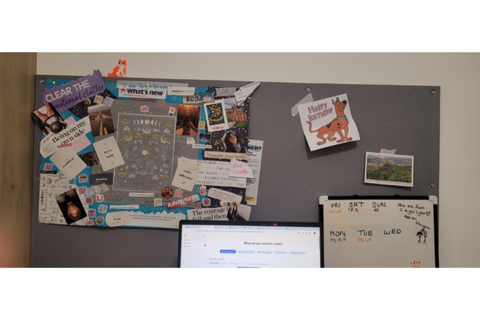
I realised I had more usable time than I thought — especially between classes or while commuting. I broke my assignments down into small manageable tasks. I started planning my week on a whiteboard, which made it easy to adjust as the week went on.
I colour-code tasks based on:
-
- Priority
- Flexibility
- Where it can be done e.g. podcasts in the gym, reading on the train
I update this every few days rather than relying on a strict weekly reset. If I finish something early or get sidetracked, I can update this schedule to accommodate that. That flexibility really matters for me to maintain progress but it’s all about finding what actually works for you.
I make a realistic schedule that I can follow. When I plan to do everything, I get overwhelmed and am setting myself up for failure. A realistic schedule that matches my plans for the week ensures that I am productive and not burning out.
Having an Accountability Buddy
Having a schedule is great – if you’re someone who can follow it. This is something that I struggle with.
This semester, I told myself that if I didn’t stick to my plan, I’d have to report my progress to my dad. Something he would enjoy… and I would not.
That “threat” alone was enough to kick me into action. This could just as easily be a friend, study partner, or even an app — the key is knowing you’re accountable to someone other than yourself.
Making Early Plans (a.k.a. “Trapping Myself at Uni”)
It’s far too easy to snooze your alarm and promise you’ll study later at home. To avoid this, you can book library desks or rooms in advance through McClay Library Booking.
Having somewhere to be in the morning forces you to get moving. Once you’re on campus, half the battle is already won. You can also:
-
- Schedule a coffee with a friend
- Make a study group
- Take an early work shift
- Plan a small reward (never underestimate the power of a sweet treat)
Bonus points if it’s all on campus — and if it means you’re still making time to see friends and have fun. Orto on Stranmillis Road has great brownie sundaes and coffee!
Prioritising Based on Deadlines (Not Just Importance)
I caught myself cramming my thesis literature review — something extremely important, but not due yet — while ignoring assignments with closer deadlines.
What helped was mapping everything out in an Excel spreadsheet and prioritising based on:
-
- Deadline
- Weighting
- Realistic time required
Importance matters, but deadlines matter more when you’re trying to stay afloat.
Reminding Myself of My Goals
I attended a Vision Board Workshop run by the Student Engagement Team in One Elmwood, and it genuinely helped reset my mindset. I keep my vision board on my desk next to my weekly schedule.
Seeing my future goals makes it easier to get out of bed on tough mornings. It also helped me think of the bigger picture and make practical changes like cutting back hours at work or saying no midweek drinks.
It also reminds me of my inspirations. These don’t need to be someone in your relevant field, or even real. Mine is Elle Woods from Legally Blonde.
“What, like it’s hard?”
I also realised how far I have come and this made me realise nothing can stop me from achieving what I set my mind to.
Having a mantra
Having a simple mantra can be surprisingly powerful when motivation dips or things feel overwhelming. Mine lives on my vision board: “You are big and brave.”
It’s something silly my sister says to me. Whenever I feel scared or out of my depth, I come back to it. I repeated it to myself on the plane to China, which felt very “big“ and “scary” at the time, and it reminded me that I’m capable of more than I think.
Take A Breath
Some weeks are harder than others. It’s okay to be less productive one week than the next. Don’t write off a whole semester based on one bad week. Progress isn’t linear and some weeks will still fall apart. That is completely normal. You just need to lock back in and try again.
One Thing I’d Tell Someone Who Feels Behind
Feeling behind doesn’t mean you’ve failed.
You don’t need to fix everything at once — you just need one small reset. One decision to get up, go in, or try again. And if today doesn’t go to plan, you’re allowed to start over tomorrow.
Or even later today.
You’ve got more time than you think — and you’re doing better than it feels.
My ‘Reset Plan’ for the Week
-
- Rewrite my schedule with realistic goals
- Get onto campus early at least three days
- Finish something small every day
- Update my plan mid-week instead of giving up
- Let go of the idea of a “perfect” week
You can restart at any point — even halfway through the week.
Support
If you’re finding things particularly difficult, professional support is available.
There is so much support at Queen’s, make sure to use it when you need it. You don’t need to wait until you’re “struggling enough” to get support.
-
- The Student Disability and Wellbeing Service has a daily drop-in Monday - Friday, 11 am – 3 pm, Level 1, One Elmwood Student Centre.
- The Wellbeing Team are available to meet with students in a safe, confidential, and non-judgemental space. They will work alongside you to empower you to realise your full potential and to equip you with the tools you will need to look after your own physical, mental, and emotional wellbeing as you progress.
- The Learning Development Service provides academic skills to undergraduate students through One-to-One Appointments. They offer guidance on time management, exam preparation, academic writing, referencing, academic integrity, and research.